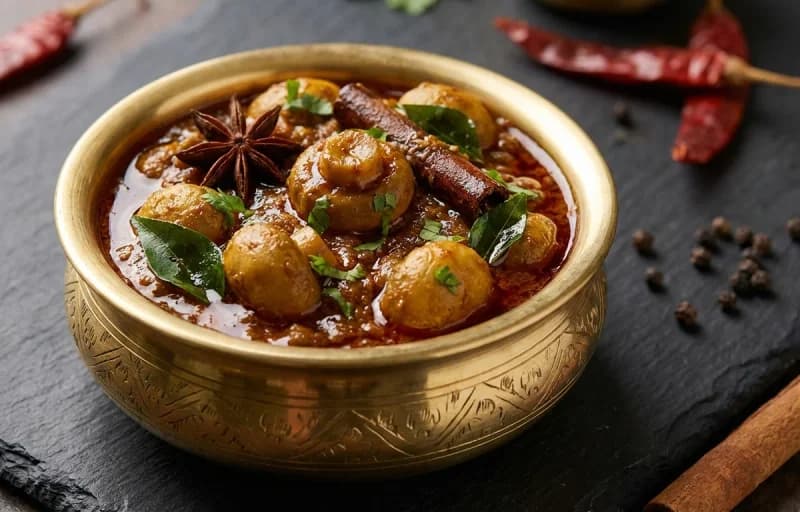
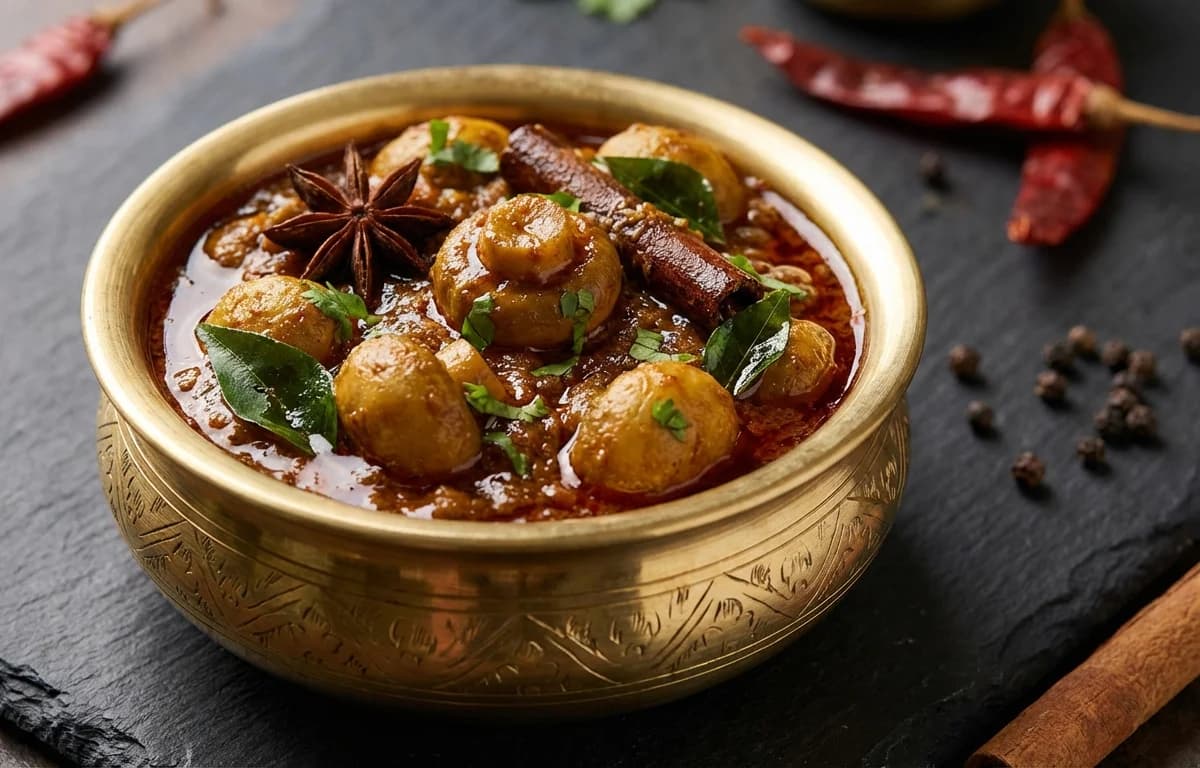
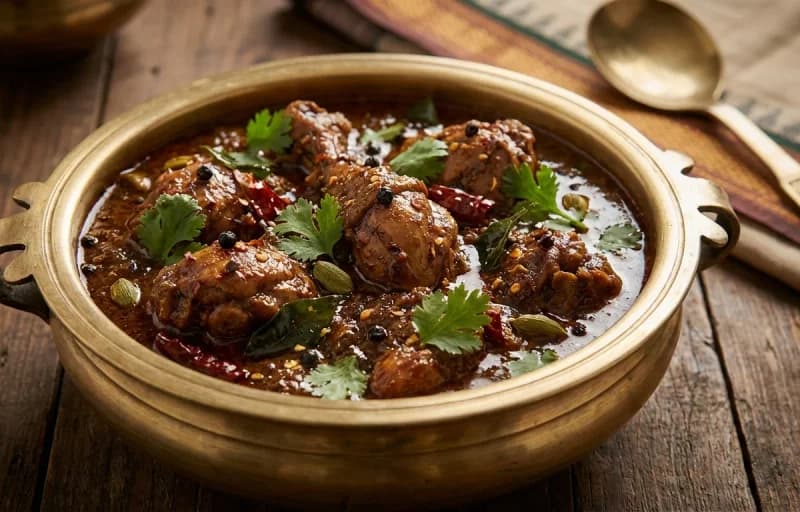
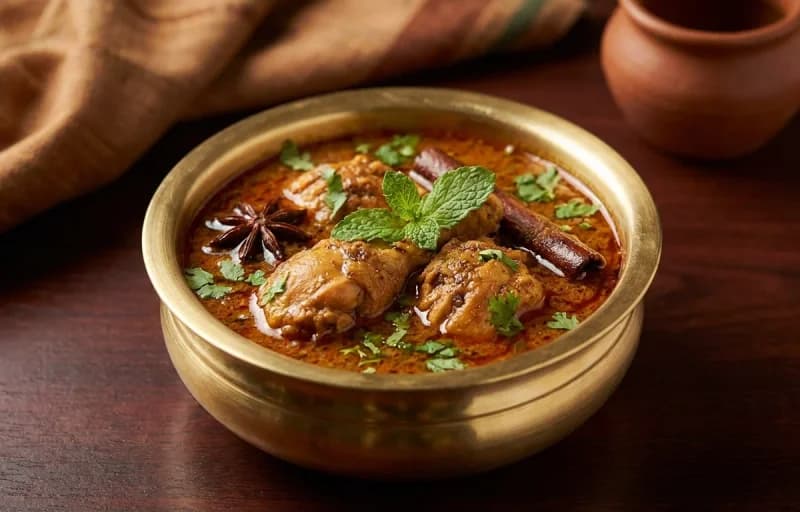
Earthy mushrooms simmered in a fiery, aromatic gravy made from a freshly ground Chettinad spice blend. This classic South Indian curry brings a burst of complex flavors, perfect with parotta or steamed rice.
Prep20 min
Cook30 min
Servings4
Serving size: 1 serving
216cal
6gprotein
20gcarbs
15g
Ingredients
1.5 tbsp Coriander Seeds
1 tsp Cumin Seeds
1 tsp Fennel Seeds
1 tsp Black Peppercorns
5 count Dry Red Chilies (Adjust quantity based on desired heat level)
1 inch Cinnamon Stick
4 count Cloves
2 count Green Cardamom
1 count Star Anise
1 tsp Stone Flower (Also known as Kalpasi; optional but highly recommended for authentic flavor)
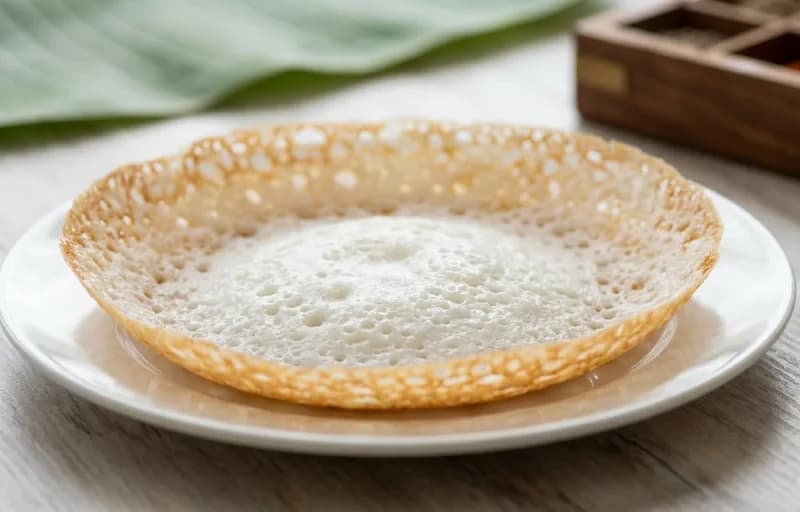
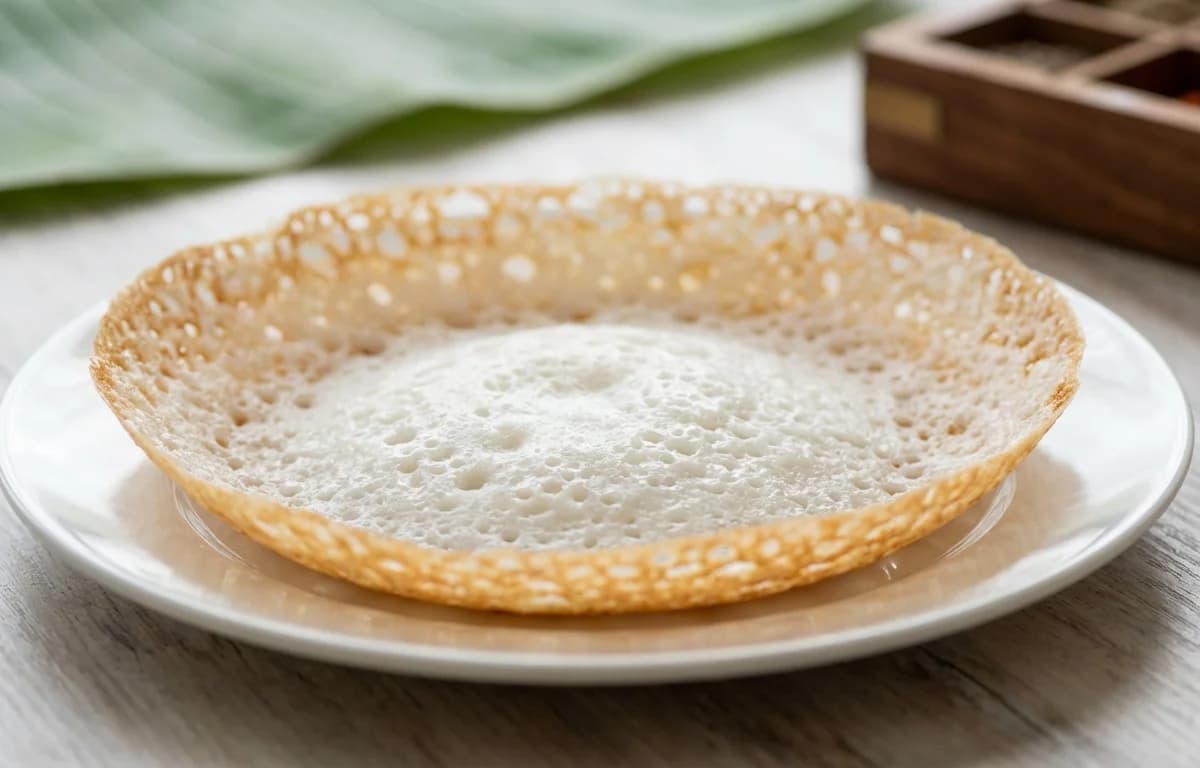
Soft, lacy pancakes from Kerala with crispy edges and a spongy center. This fermented rice and coconut classic is naturally vegan and gluten-free, pairing wonderfully with vegetable stew or egg curry.
Protein-packed Mushroom Chettinad Masala with soft Appam – an aromatic, perfectly spiced comfort food!
This chettinad dish is perfect for dinner. With 594.63 calories and 13.47g of protein per serving, it's a high-fiber option for your meal plan.
fat
0.25 cup Grated Coconut (Fresh or desiccated can be used)
1 tsp Poppy Seeds (Also known as Khus Khus)
400 g Mushrooms (Button or cremini, cleaned and halved or quartered)
3 tbsp Gingelly Oil (Also known as Indian sesame oil)
1 tsp Mustard Seeds
10 count Curry Leaves (Fresh leaves are preferred)
2 count Onion (Medium-sized, finely chopped)
1.5 tbsp Ginger-Garlic Paste
2 count Tomato (Medium-sized, pureed)
0.5 tsp Turmeric Powder
1 tsp Tamarind Paste (Diluted in 2 tbsp warm water)
1.25 tsp Salt (Adjust to taste)
1 cup Water (For the gravy, adjust as needed)
2 tbsp Coriander Leaves (Freshly chopped, for garnish)
Instructions
1
Prepare the Chettinad Masala Paste
Heat a heavy-bottomed pan over low-medium heat. Add coriander seeds, cumin seeds, fennel seeds, black peppercorns, dry red chilies, cinnamon, cloves, cardamom, star anise, and stone flower. Dry roast for 2-3 minutes until fragrant, stirring continuously to prevent burning.
Add the grated coconut and poppy seeds to the pan. Continue to roast for another 1-2 minutes until the coconut turns light golden brown.
Remove the spice mixture from the heat and allow it to cool completely.
Once cooled, transfer the mixture to a blender or spice grinder. Add 2-3 tablespoons of water and grind to a smooth, thick paste. Set this Chettinad masala paste aside.
2
Sauté the Aromatics
In the same pan, heat the gingelly oil over medium heat. Once hot, add the mustard seeds and let them splutter.
Add the fresh curry leaves and sauté for about 30 seconds until they turn crisp.
Add the finely chopped onions and cook for 6-8 minutes, stirring occasionally, until they become soft and golden brown.
Stir in the ginger-garlic paste and sauté for another 1-2 minutes until the raw aroma disappears.
3
Cook the Mushrooms and Masala
Pour in the tomato puree. Cook for 4-5 minutes until the mixture thickens and you see oil separating at the edges.
Add the turmeric powder and salt. Mix well.
Add the cleaned and halved mushrooms. Sauté for 5-7 minutes. The mushrooms will release water and shrink in size.
Add the prepared Chettinad masala paste. Stir well to coat the mushrooms and cook for 3-4 minutes, allowing the flavors to meld.
4
Simmer and Finish the Curry
Pour in the diluted tamarind water and 1 cup of fresh water. Stir everything together to combine.
Bring the curry to a gentle boil. Then, reduce the heat to low, cover the pan with a lid, and let it simmer for 8-10 minutes.
Continue simmering until the gravy reaches your desired consistency and oil begins to float on the surface.
Turn off the heat, garnish with freshly chopped coriander leaves, and serve hot.
Servings4
Serving size: 1 serving
378cal
8gprotein
68gcarbs
8gfat
Ingredients
1.5 cup Raw Rice (Pachari or any short-grain variety works best)
2 tbsp Urad Dal
0.25 cup Cooked Rice (Leftover plain white rice is ideal for softness)
1 cup Grated Coconut (Fresh or frozen (thawed))
2 tsp Sugar (Helps with fermentation and browning)
0.25 tsp Instant Yeast
1 tsp Salt (Adjust to taste)
1.5 cup Water (For grinding, add more if needed)
1 tbsp Vegetable Oil (For greasing the pan)
Instructions
1
Soak Rice and Dal
Rinse the raw rice and urad dal together under cool running water until the water runs clear.
Place them in a large bowl and cover with at least 3 inches of fresh water.
Let them soak for 5 to 6 hours.
2
Grind the Batter
Drain the soaking water completely from the rice and dal.
Transfer the soaked grains to a high-speed blender.
Add the grated coconut, cooked rice, and 1 cup of water.
Blend on high speed for 3-4 minutes, scraping down the sides occasionally, until you have a completely smooth, fine batter. There should be no grit when you rub it between your fingers.
Add the remaining 1/2 cup of water, or more as needed, to achieve a smooth, flowing consistency, slightly thinner than pancake batter.
3
Ferment the Batter
Pour the batter into a large, non-reactive bowl (ensure it's only half-full to allow room for rising).
Stir in the sugar, salt, and instant yeast until well combined.
Cover the bowl with a lid or plastic wrap and place it in a warm, draft-free spot for 8 to 12 hours, or overnight.
The batter is ready when it has doubled in volume, is light and airy, and has a pleasant, slightly sour fermented aroma.
4
Cook the Appams
After fermentation, gently stir the batter once or twice. Do not overmix, as this will deflate the air bubbles that make the appam spongy.
Heat an appam pan (appachatti) over medium heat. Lightly grease it with a few drops of oil using a paper towel.
Pour one ladleful (about 1/3 cup) of batter into the center of the hot pan.
Immediately lift the pan off the heat and, holding both handles, gently swirl it in a circular motion to spread the batter thinly along the sides, leaving a thicker, spongy center.
Place the pan back on the stove, reduce the heat to low-medium, cover with a lid, and cook for 2-3 minutes.
The appam is done when the center is cooked through and full of tiny holes, and the edges are golden brown and crispy. Do not flip the appam.
Carefully remove the appam from the pan using a spatula.
5
Serve
Repeat the process with the remaining batter, greasing the pan lightly between appams if necessary.
Serve the hot, fresh appams immediately with your favorite curry, such as Kerala Vegetable Stew (Ishtu) or Egg Curry.