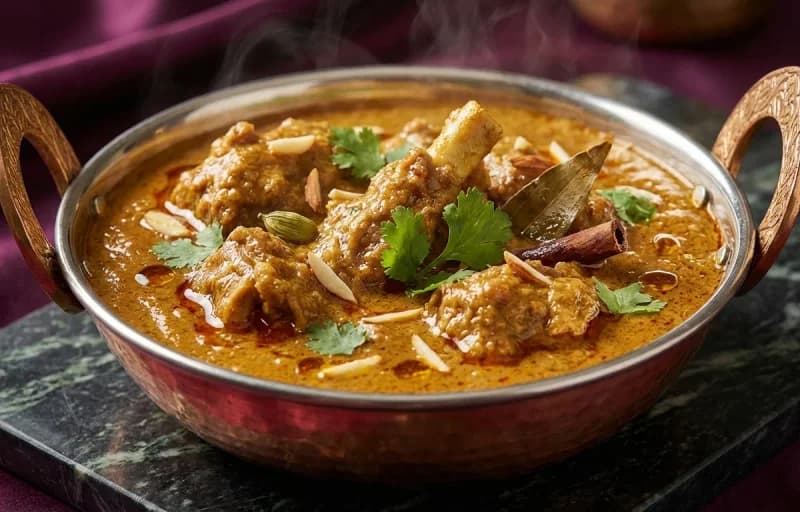
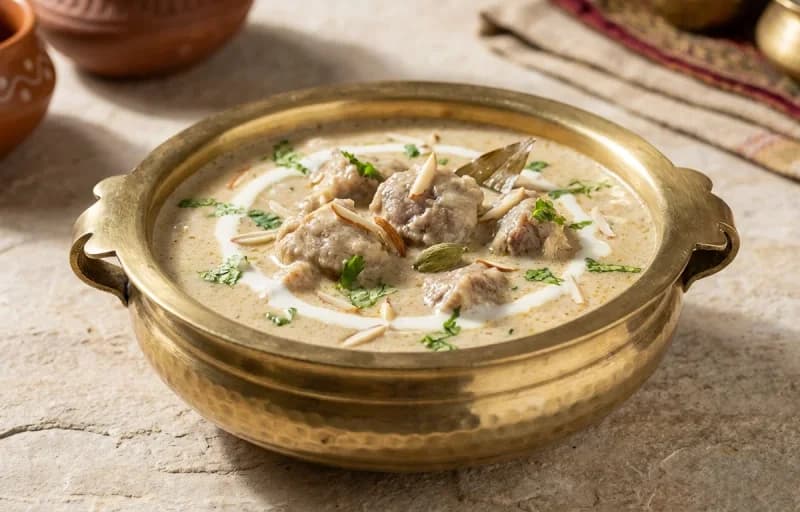
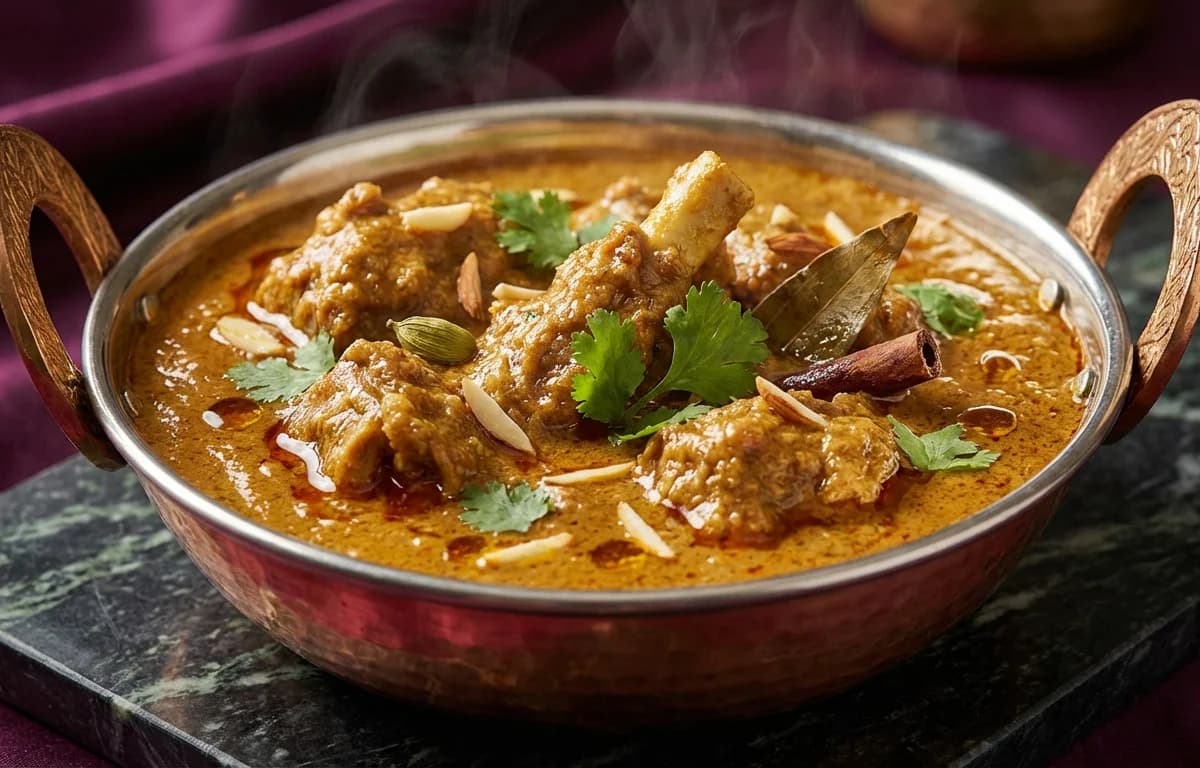
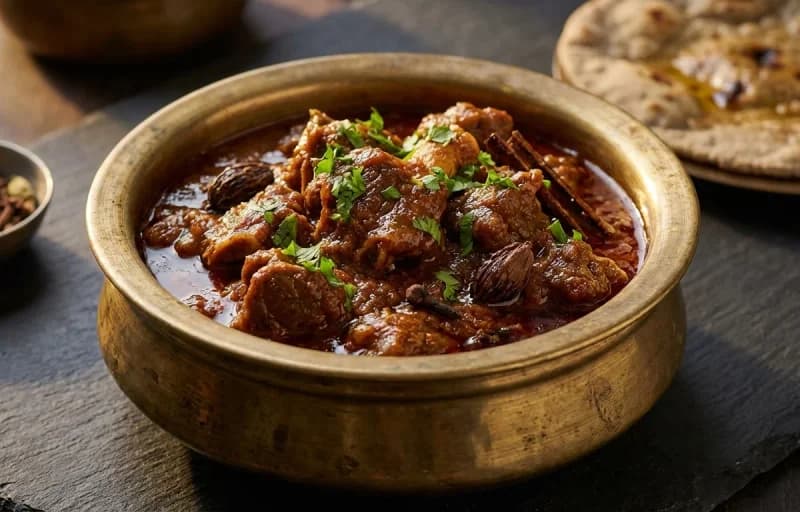
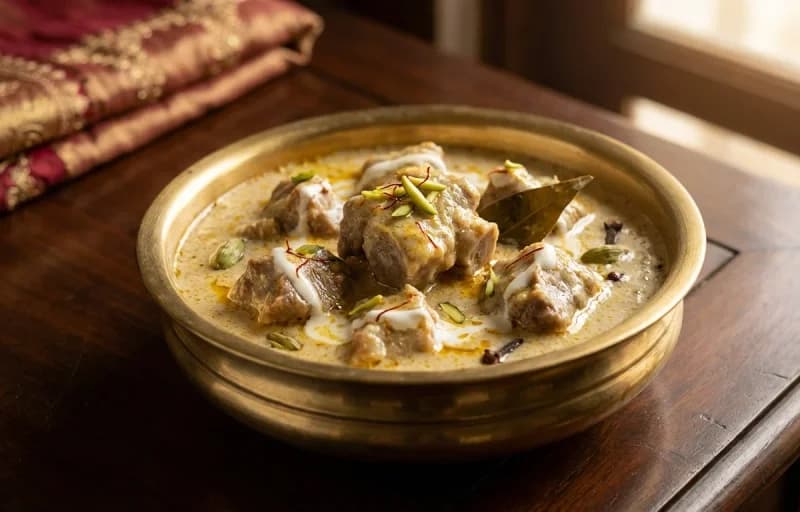
Tender mutton pieces slow-cooked in a luxurious, creamy gravy made from yogurt, fried onions, and a blend of aromatic spices. A classic Mughlai dish perfect for special occasions, best enjoyed with naan or pulao.
Prep30 min
Cook70 min
Soak15 min
Servings4
Serving size: 1 serving
598cal
56gprotein
17gcarbs
Ingredients
750 g Mutton (bone-in, from leg or shoulder, cut into 2-inch pieces)
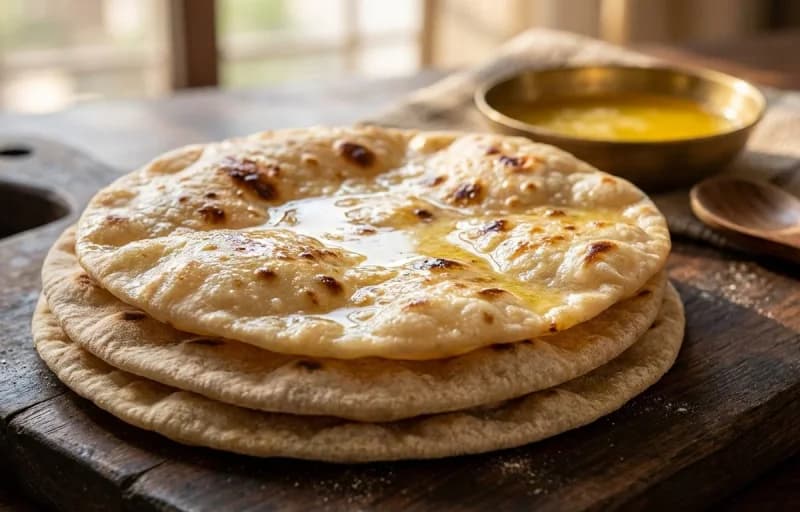
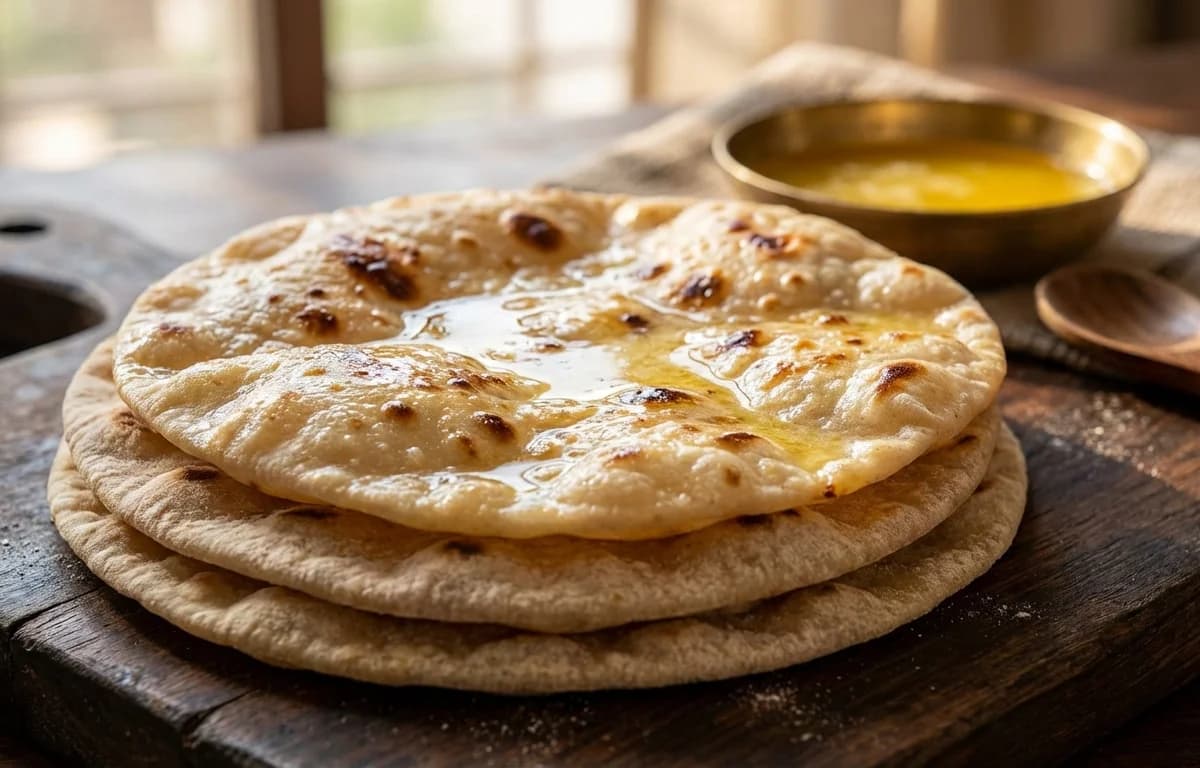
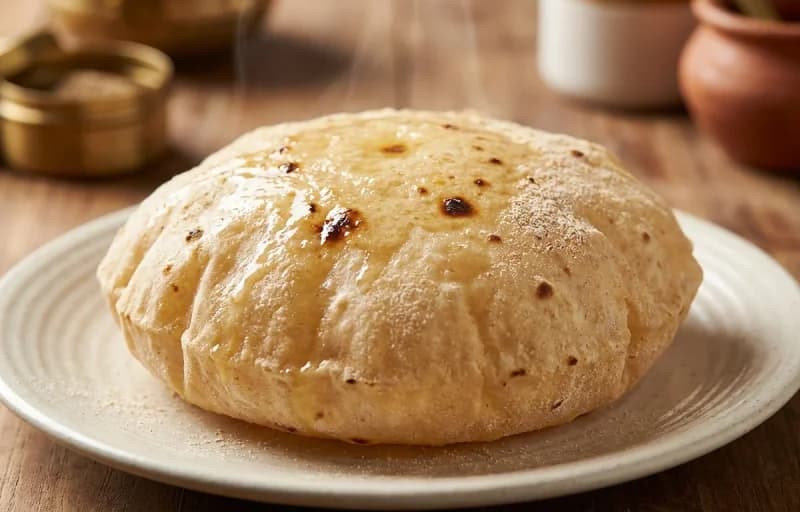
A staple in Indian households, these soft and thin whole wheat flatbreads are perfect for scooping up curries and dals. Made with just a few simple ingredients, they puff up beautifully on the flame, a hallmark of a perfectly made chapati.
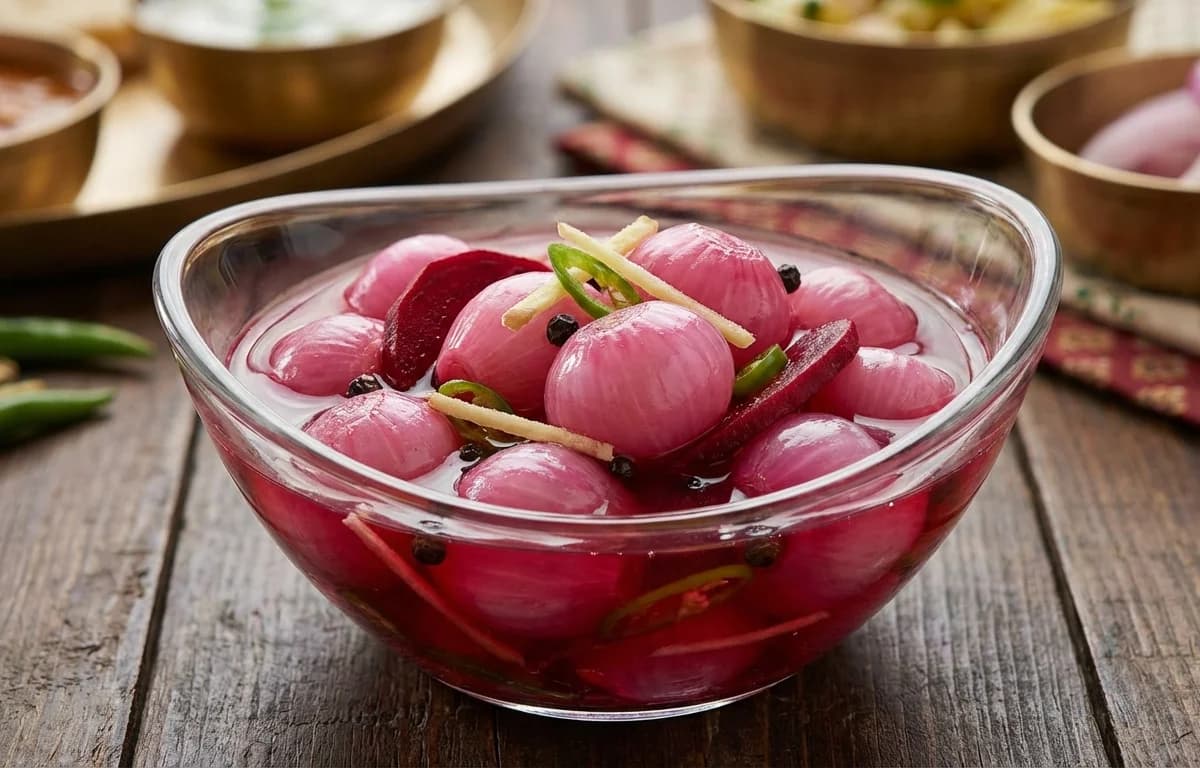
Crisp, tangy pickled pearl onions soaked in a sweet and sour vinegar brine. This classic Indian restaurant-style condiment adds a refreshing crunch to rich curries and tandoori dishes.
Creamy, aromatic Mutton Korma with soft rotis – a protein-packed, melt-in-mouth comfort food!
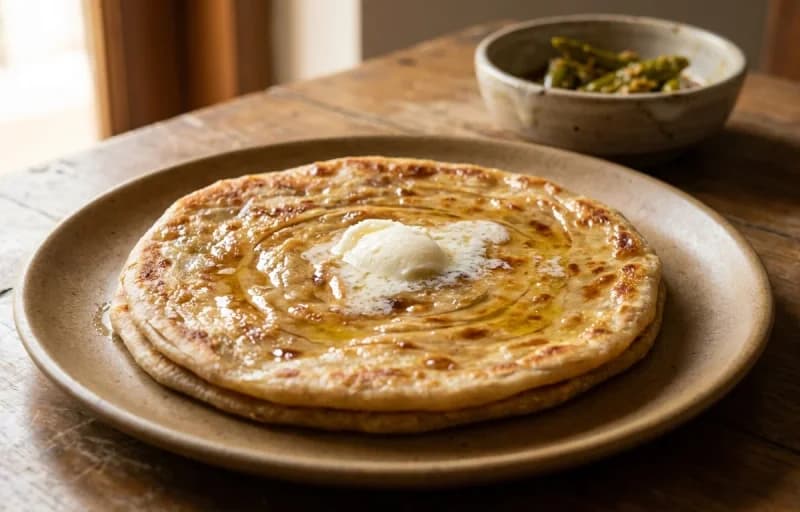
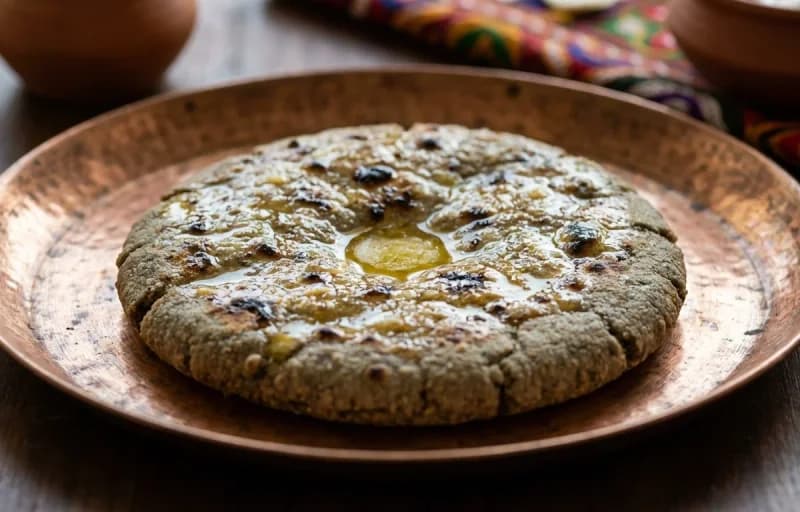
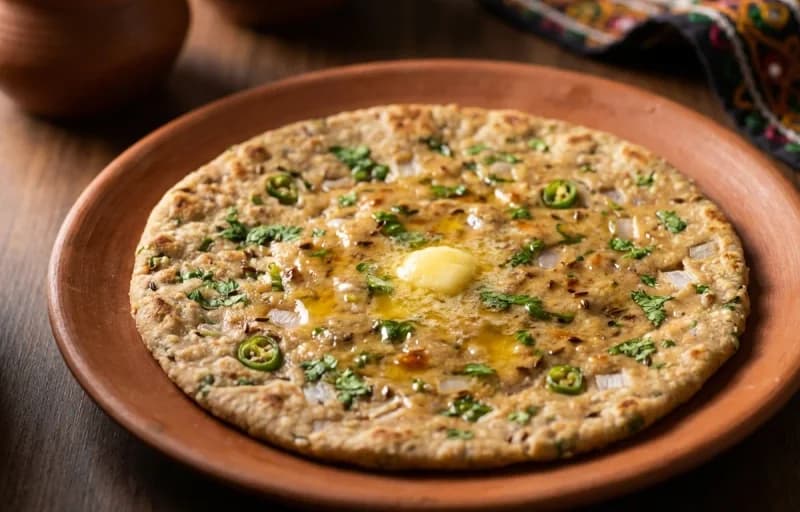
This rajasthani dish is perfect for lunch. With 843.86 calories and 64.8g of protein per serving, it's a nutritious choice for your meal plan.
34gfat
Cinnamon Stick
4 whole Green Cardamom Pods
4 whole Cloves
8 whole Black Peppercorns
1 tsp Kashmiri Red Chili Powder (for color and mild heat)
2 tsp Coriander Powder
0.25 tsp Turmeric Powder
1 tsp Garam Masala
1.5 tsp Salt (or to taste)
1 tsp Kewra Water (optional, for fragrance)
2 cup Hot Water
2 tbsp Coriander Leaves (chopped, for garnish)
Instructions
1
Marinate the Mutton
In a large bowl, combine the mutton pieces, whisked curd, ginger-garlic paste, Kashmiri red chili powder, coriander powder, turmeric powder, and 1 tsp of salt.
Mix thoroughly to ensure each piece of mutton is evenly coated.
Cover the bowl and let it marinate for at least 30 minutes at room temperature, or for best results, refrigerate for 2-4 hours.
2
Prepare the Onion and Nut Pastes
Heat vegetable oil in a wide pan over medium heat. Add the thinly sliced onions and fry, stirring frequently, for 12-15 minutes until they are uniformly golden brown and crisp. Do not let them burn.
Remove the fried onions (birista) with a slotted spoon and spread them on a paper towel to drain excess oil and cool completely.
Once cool and crisp, crush the birista into a coarse powder using your hands or a grinder (do not add water).
Soak the cashew nuts and almonds in 1/4 cup of hot water for 15 minutes. Drain and grind them into a very smooth paste, adding a tablespoon or two of water if needed.
3
Temper the Whole Spices
Heat ghee in a heavy-bottomed pot or pressure cooker over medium heat.
Add the whole spices: bay leaves, cinnamon stick, green cardamom pods, cloves, and black peppercorns.
Sauté for 30-40 seconds until they release their aroma.
4
Cook the Mutton and Build the Gravy
Carefully add the marinated mutton to the pot. Increase the heat to high and sear the mutton for 5-7 minutes, stirring occasionally, until it's browned on all sides.
Reduce the heat to medium-low. Add the crushed onion (birista) and the nut paste. Sauté for 4-5 minutes, stirring constantly, until the raw smell disappears and you see oil separating from the masala.
Pour in 2 cups of hot water and add the remaining 0.5 tsp of salt. Stir well to combine everything, scraping the bottom of the pot.
5
Slow Cook to Perfection
Bring the gravy to a boil. Then, reduce the heat to the lowest setting, cover the pot with a tight-fitting lid, and let it simmer for 60-70 minutes, or until the mutton is fork-tender.
For Pressure Cooker: Secure the lid and cook on medium heat for 5-6 whistles (approximately 20-25 minutes). Turn off the heat and allow the pressure to release naturally.
6
Finish and Serve
Once the mutton is cooked, open the lid. Stir in the garam masala and the optional kewra water.
Simmer uncovered for another 2-3 minutes to allow the flavors to meld and the gravy to thicken slightly.
Garnish with freshly chopped coriander leaves. Let the korma rest for 10 minutes before serving. This allows the flavors to settle and deepen.
Serve hot with naan, sheermal, or basmati rice.
213cal
8gprotein
44gcarbs
2gfat
Ingredients
2 cup Atta (Also known as whole wheat flour)
1 cup Lukewarm Water (Adjust as needed, amount varies by flour type)
0.5 tsp Salt
1 tsp Ghee (For adding to the dough (optional))
Instructions
1
Prepare the Dough
In a large mixing bowl, combine 2 cups of atta and salt. If using, add 1 tsp of ghee and mix it into the flour with your fingertips until it resembles coarse crumbs.
Gradually add lukewarm water, a little at a time, mixing and gathering the flour to form a dough.
Knead the dough on a clean surface for 8-10 minutes, pressing and stretching with the heel of your hand. The final dough should be soft, pliable, smooth, and not sticky. It should have a texture similar to an earlobe.
Cover the dough with a damp cloth or a lid and let it rest for at least 20-30 minutes. This step is crucial for relaxing the gluten and ensuring soft chapatis.
2
Divide and Roll the Chapatis
After resting, knead the dough again for one minute to make it smooth.
Divide the dough into 8 equal-sized portions and roll them into smooth balls.
Take one ball and flatten it between your palms. Dip it into the dry atta for dusting, coating it lightly on both sides.
Place it on a rolling board (chakla) and roll it out into a thin, even circle of about 6-7 inches in diameter. Use minimal dry flour for dusting to avoid making the chapati hard.
3
Cook the Chapatis
Heat a tawa (flat griddle) on medium-high heat. To check if it's ready, sprinkle a pinch of dry flour; it should sizzle and turn brown quickly.
Carefully place the rolled chapati on the hot tawa. Cook for about 15-20 seconds until you see small bubbles forming on the surface.
Using tongs, flip the chapati. Cook the other side for about 30-40 seconds until light brown spots appear.
Using the tongs, lift the chapati and place it directly on a high gas flame. It should puff up like a balloon within 2-3 seconds.
Immediately flip it to cook the other side on the flame for another 2 seconds. Be careful not to burn it.
4
Finish and Serve
Remove the puffed chapati from the flame and place it in a casserole or a container lined with a clean kitchen towel. This traps the steam and keeps them soft.
Brush the top with a little ghee. This adds flavor and helps keep it soft.
Repeat the rolling and cooking process for the remaining dough balls.
Serve hot with your favorite dal, sabzi, or curry.
Peel the pearl onions. To make peeling easier, blanch them in hot water for 2 minutes, then immediately transfer to a bowl of ice-cold water.
Trim the root and stem ends of each onion, keeping them whole.
Make a small, shallow cross-shaped incision on the top of each onion. This helps the brine penetrate deeper for better flavor.
2
Make the Pickling Brine
In a non-reactive saucepan (like stainless steel or enamel), combine the water, white vinegar, sugar, and salt.
Add the julienned ginger, slit green chilies, and black peppercorns.
Bring the mixture to a rolling boil over medium-high heat, stirring occasionally until the sugar and salt dissolve completely. This should take about 3-5 minutes.
3
Assemble the Pickle
Place the peeled pearl onions and the thin slice of beetroot into a clean, sterilized 500ml (16 oz) glass jar.
Carefully pour the hot pickling brine over the onions, ensuring they are fully submerged. Gently tap the jar on the counter to release any air bubbles.
4
Cool, Store, and Serve
Allow the jar to cool to room temperature on the counter, which may take 1-2 hours.
Once completely cool, seal the jar with an airtight lid and place it in the refrigerator.
For the best flavor and crunch, let the onions pickle for at least 24 hours before serving. The flavor will continue to develop and intensify over the next few days.