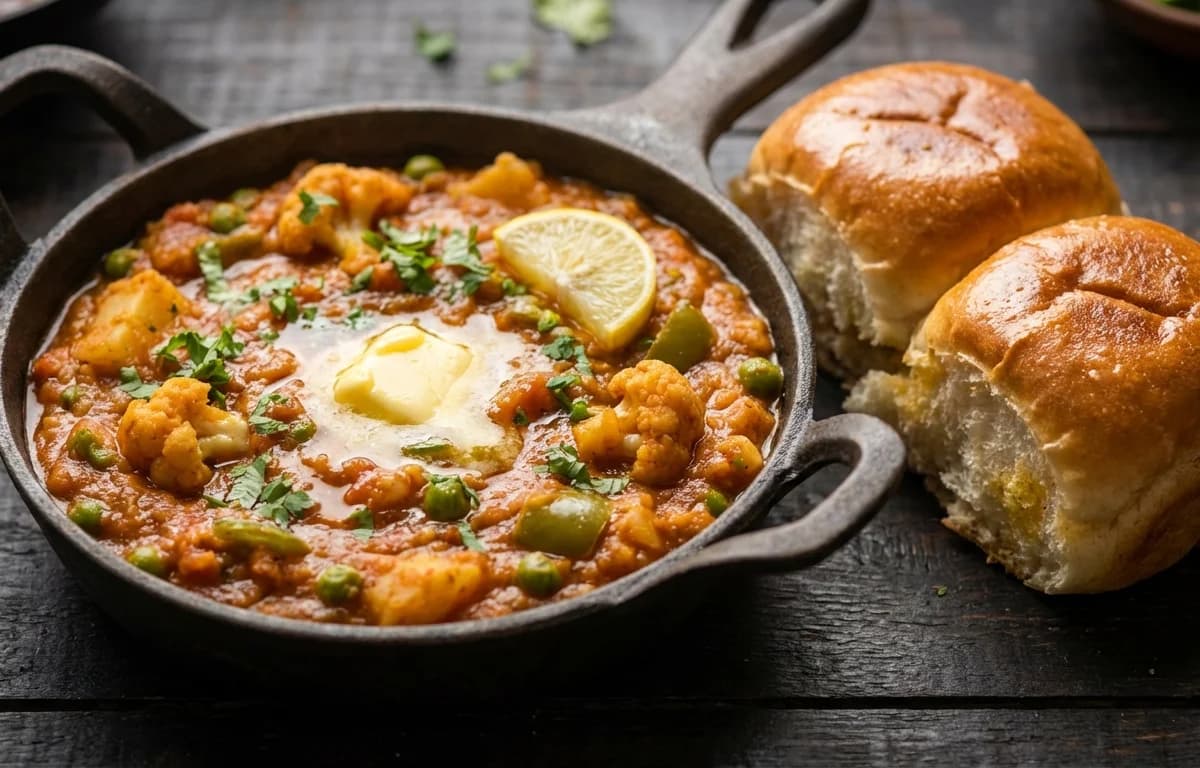
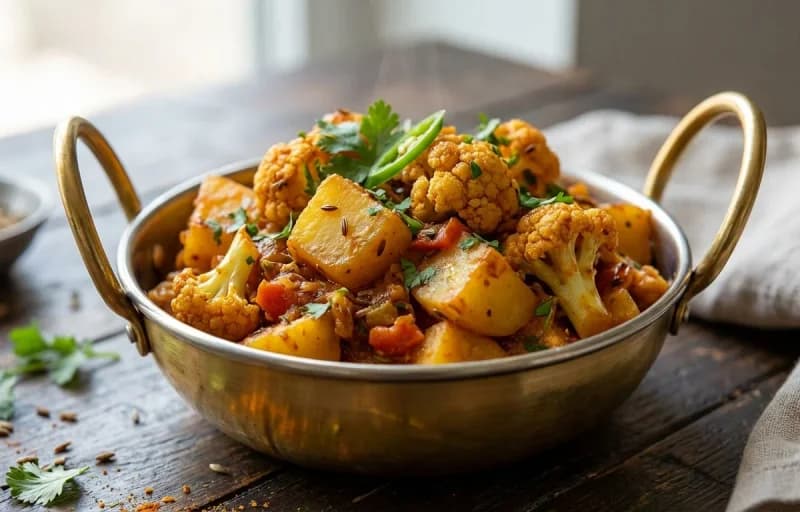
The ultimate Mumbai street food! A vibrant medley of mashed vegetables cooked in a spicy, tangy tomato gravy, served with soft, buttery toasted buns. It's a flavor-packed, satisfying meal that's perfect for any occasion.
Prep25 min
Cook40 min
Servings4
Serving size: 1 serving(One serving is approximately 1.5 cups of bhaji with 2 pav buns.)
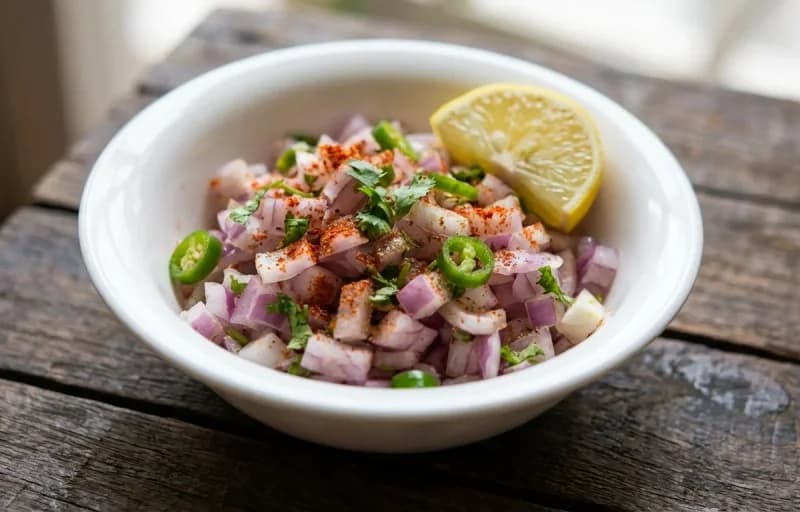
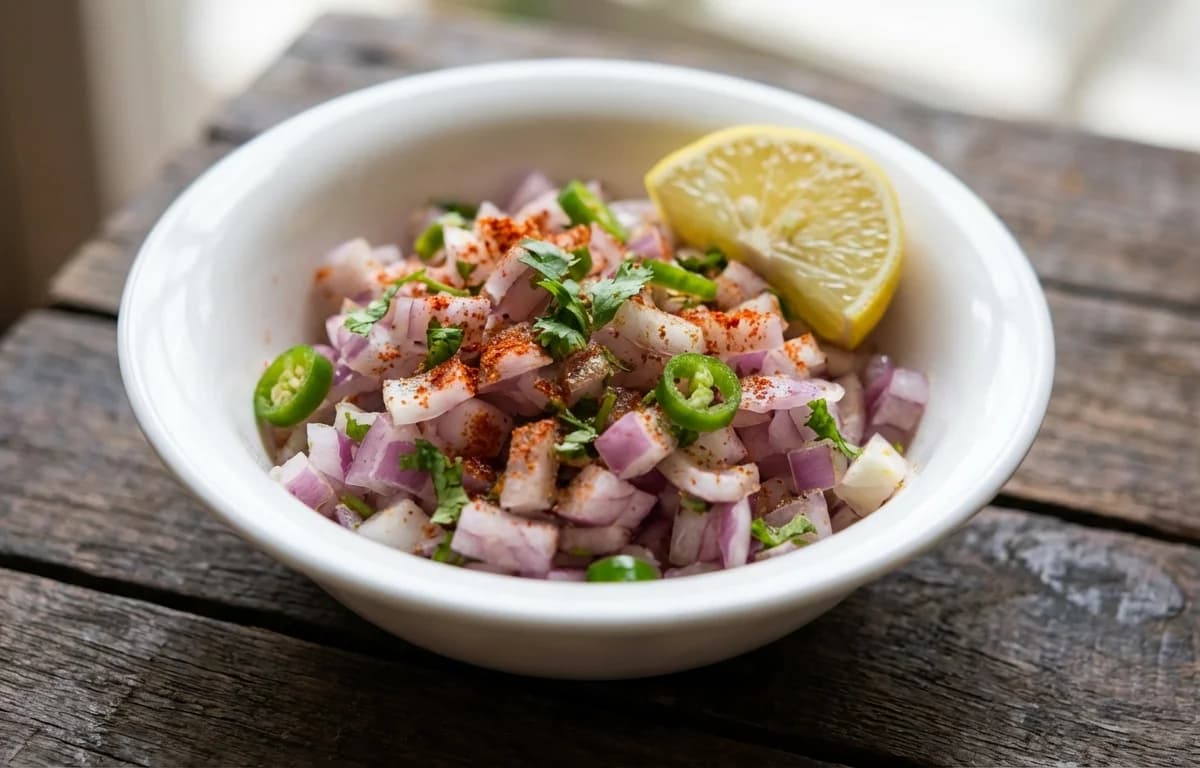
A crisp and tangy Indian onion salad, seasoned with lemon juice, chili, and fresh herbs. This simple side, often called lachha pyaaz, is the perfect fresh counterpoint to rich curries and grilled meats.
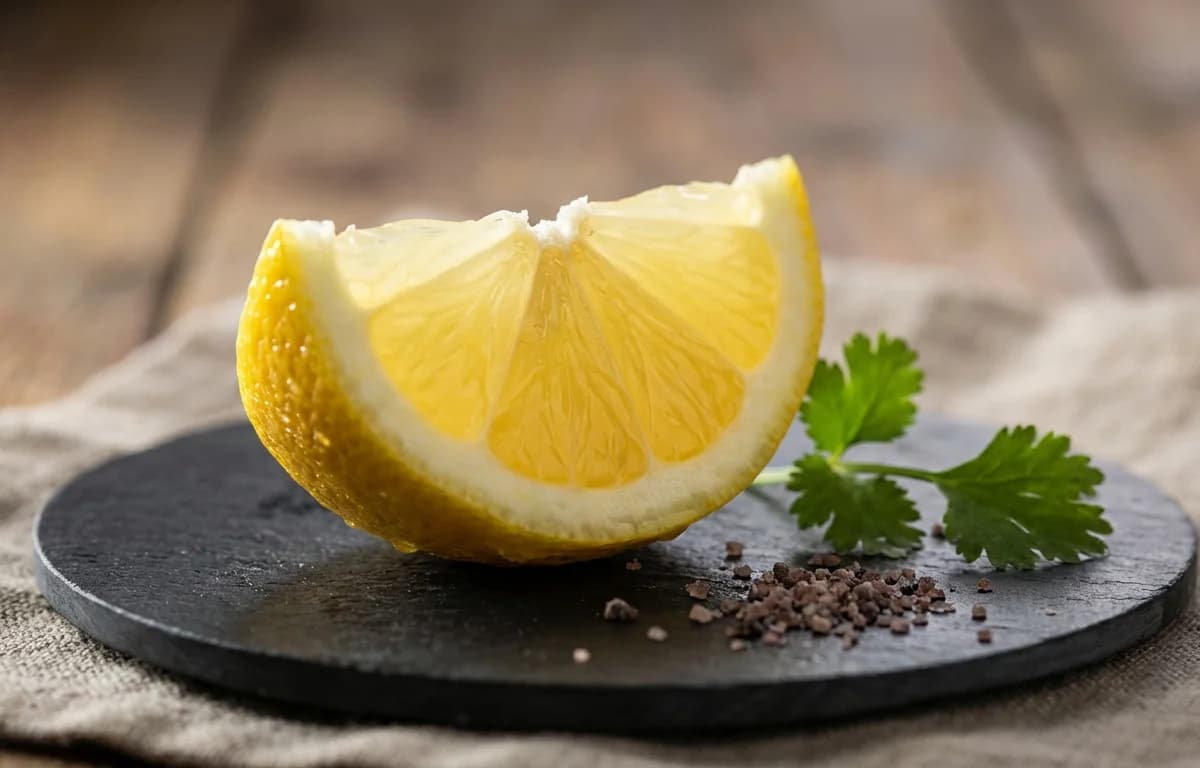
A simple, essential garnish for countless Indian dishes. Freshly cut lemon wedges add a bright, tangy kick to dals, curries, and snacks, balancing rich flavors with a burst of acidity.
About Pav Bhaji, Chopped Onion Salad and Lemon Wedge
Perfectly spiced, soul-satisfying Pav Bhaji – the ultimate comfort food that's always a hit!
This north_indian dish is perfect for lunch. With 738.06 calories and 16.950000000000003g of protein per serving, it's a nutritious choice for your meal plan.
fat
1.5 tbsp Ginger-Garlic Paste
2 pcs Green Chili (finely chopped, adjust to taste)
500 g Tomatoes (finely chopped or pureed)
3 tbsp Pav Bhaji Masala (use a good quality brand)
2 tsp Kashmiri Red Chili Powder (for color, adjust to heat preference)
0.5 tsp Turmeric Powder
1.5 cups Water (plus reserved vegetable stock)
2 tbsp Lemon Juice (freshly squeezed)
0.25 cup Coriander Leaves (finely chopped, plus more for garnish)
8 pcs Pav Buns (ladi pav is traditional)
1 pcs Lemon (cut into wedges for serving)
Instructions
1
Cook the Vegetables
In a pressure cooker, combine the cubed potatoes, cauliflower florets, chopped carrots, and green peas.
Add 2 cups of water and 0.5 tsp of salt. Secure the lid and cook on medium-high heat for 3-4 whistles, or until the vegetables are very soft (about 10-12 minutes).
If not using a pressure cooker, boil the vegetables in a large pot with enough water to cover them for 20-25 minutes until fork-tender.
Once cooked, drain the vegetables but reserve about 1.5 cups of the cooking liquid (vegetable stock). Lightly mash the vegetables with a potato masher and set aside.
2
Prepare the Bhaji Base (Masala)
Heat a large, heavy-bottomed pan or a tawa over medium heat. Add 4 tablespoons of butter and 2 tablespoons of oil.
Once the butter melts, add the finely chopped onions. Sauté for 5-7 minutes until they become soft and translucent.
Add the ginger-garlic paste and chopped green chilies. Sauté for another minute until the raw aroma disappears.
Add the finely chopped capsicum and cook for 3-4 minutes until it softens.
3
Cook Tomatoes and Spices
Add the finely chopped or pureed tomatoes to the pan. Cook for 8-10 minutes, stirring frequently, until the tomatoes break down completely and the oil starts to separate from the masala.
Reduce the heat to low. Add the pav bhaji masala, Kashmiri red chili powder, and turmeric powder. Stir well and cook for 1 minute until fragrant.
Add 1/4 cup of the reserved vegetable stock to prevent the spices from burning and to help them cook.
4
Combine and Finish the Bhaji
Add the mashed vegetables to the pan along with 1.5 tsp of salt. Mix everything thoroughly.
Using a potato masher, mash the vegetables directly in the pan, incorporating them into the masala base. Continue mashing for 3-4 minutes to achieve a relatively smooth, integrated texture.
Gradually add the reserved vegetable stock and additional water as needed to reach your desired consistency. The bhaji should be thick but pourable.
Bring the bhaji to a simmer and let it cook for 8-10 minutes, stirring occasionally. This allows the flavors to meld beautifully.
Stir in the lemon juice, 2 tablespoons of butter, and half of the chopped coriander leaves. Mix well and cook for one more minute. Turn off the heat.
5
Toast the Pav (Buns)
Heat a flat tawa or griddle over medium heat. Melt the remaining butter on it.
For extra flavor, sprinkle a pinch of pav bhaji masala onto the melting butter.
Slice the pav buns horizontally, keeping one edge intact. Open them like a book and place them face down on the buttery tawa.
Press down gently and toast for 30-60 seconds on each side until golden brown and slightly crisp.
6
Serve Hot
Ladle the hot bhaji into serving bowls. Top each with a small dollop of butter.
Garnish with finely chopped raw onions and the remaining coriander leaves.
Serve immediately with the hot, toasted pav and lemon wedges on the side.
Servings
4
Serving size: 1 serving
27cal
1gprotein
6gcarbs
0gfat
Ingredients
2 pcs Red Onion (medium-sized, about 220g total)
4 cup Water (for soaking onions)
1 cup Ice Cubes (for soaking onions)
1 pcs Green Chili (finely chopped, adjust to taste)
2 tbsp Lemon Juice (freshly squeezed)
0.5 tsp Kashmiri Red Chili Powder (for color and mild heat)
0.5 tsp Chaat Masala
0.5 tsp Salt (or to taste)
2 tbsp Coriander Leaves (freshly chopped)
Instructions
1
Prepare the Onions (15 minutes)
Peel the red onions and slice them very thinly into rings or half-moons. A mandoline slicer works best for uniform slices.
Place the sliced onions in a large bowl. Add 4 cups of cold water and 1 cup of ice cubes.
Let the onions soak in the ice water for 15 minutes. This crucial step removes their sharp pungency and makes them incredibly crisp.
After soaking, drain the onions thoroughly in a colander. Gently pat them dry with a clean kitchen towel or paper towels to remove all excess moisture.
2
Season the Salad (2 minutes)
Transfer the dry, crisp onions to a mixing bowl.
Add the finely chopped green chili, freshly squeezed lemon juice, Kashmiri red chili powder, chaat masala, and salt.
Using your hands or a fork, gently toss everything together until the onion rings are evenly coated with the spices. Be gentle to avoid breaking the rings.
3
Garnish and Serve (1 minute)
Add the freshly chopped coriander leaves and give the salad one final, gentle toss.
Wash the lemons thoroughly under running water. Pat them completely dry with a clean cloth or paper towel. This removes any surface dirt or wax.
2
Optional but recommended: Firmly roll each lemon on your countertop for 15-20 seconds. This helps break down the internal membranes, making the lemon juicier and easier to squeeze.
3
Place a lemon on a cutting board. Using a sharp knife, carefully slice off the top (stem end) and the bottom (blossom end). This creates two flat, stable surfaces.
4
Stand the lemon on one of its flat ends. Slice it in half lengthwise, from top to bottom.
5
Lay each lemon half with the cut-side facing down. Slice each half lengthwise into two equal wedges. You will now have four wedges from the first lemon.
6
Repeat the process with the second lemon to get a total of eight wedges. Use the tip of your knife to flick out any visible seeds before serving.