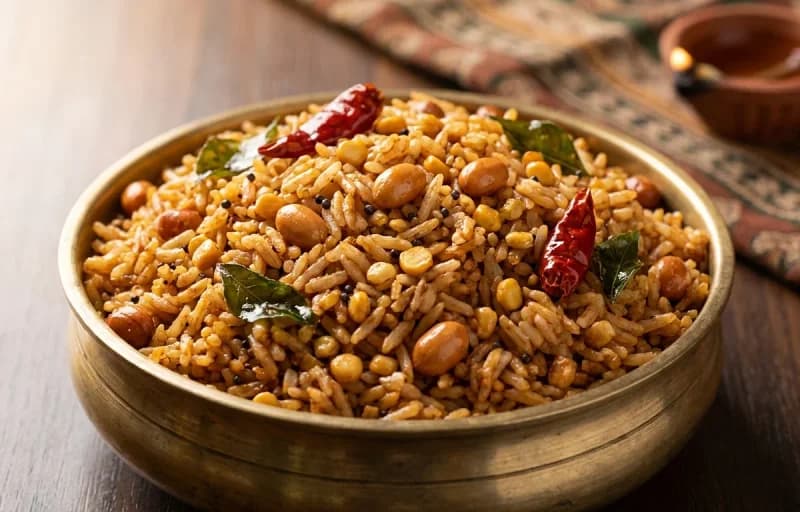
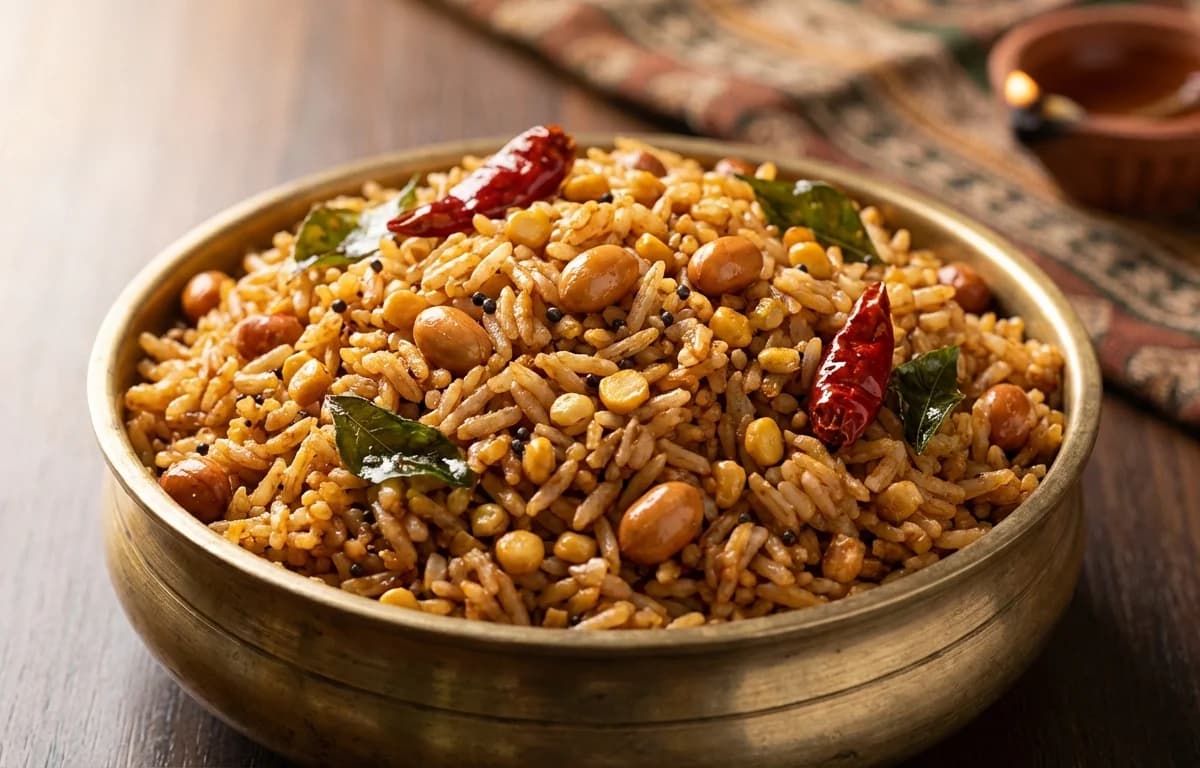
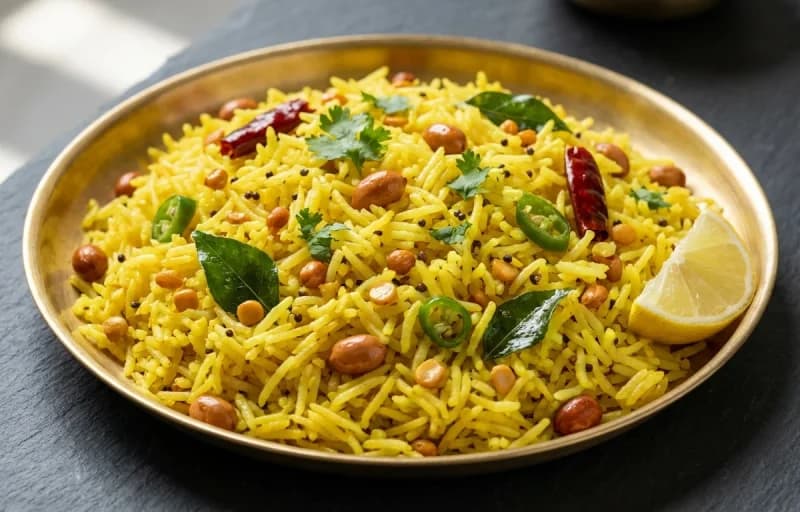
A classic South Indian tamarind rice, bursting with tangy, spicy, and savory flavors. This beloved temple-style dish features rice mixed with a special tamarind paste and crunchy peanuts.
Prep20 min
Cook40 min
Soak30 min
Servings4
Serving size: 1 serving
616cal
11gprotein
75gcarbs
Ingredients
1.5 cup Sona Masuri Rice (Or any short-grain rice)
3 cup Water (For cooking rice)
50 g Tamarind (Seedless, about a large lemon-sized ball)
1.5 cup Hot Water (For soaking tamarind)
7 tbsp Gingelly Oil (Also known as Indian sesame oil)
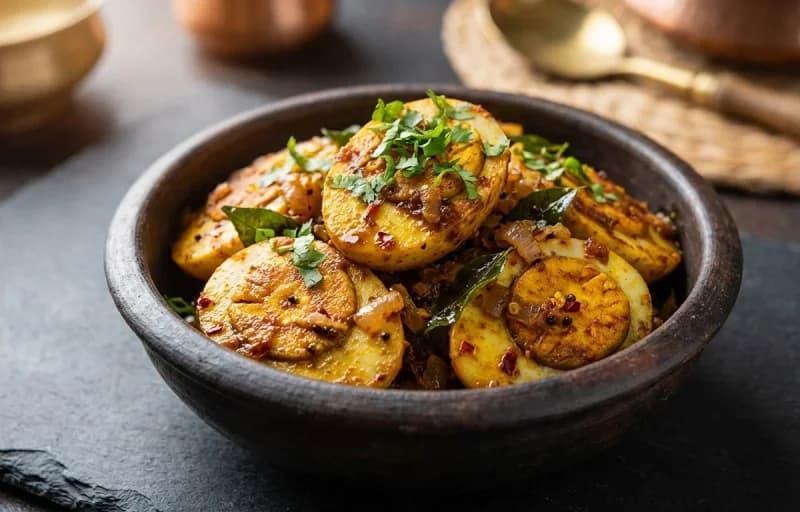
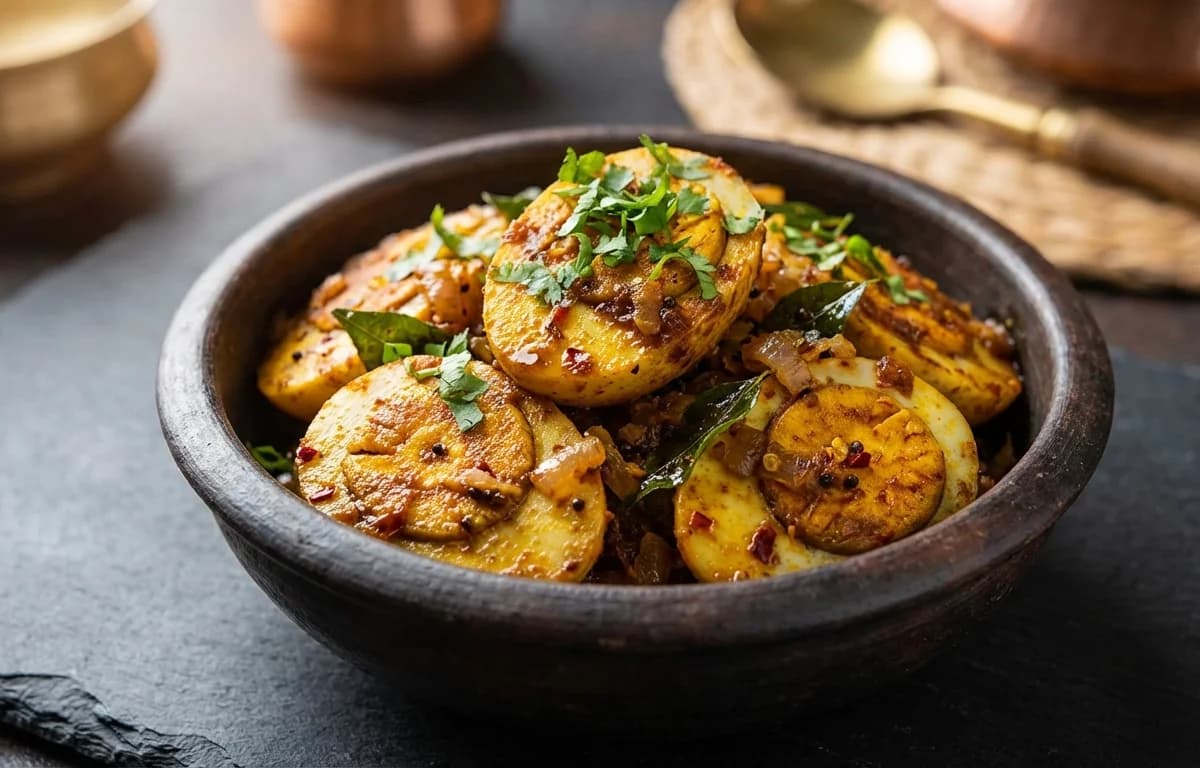
A quick and spicy South Indian stir-fry made with hard-boiled eggs and aromatic spices. This simple dish is ready in under 20 minutes and makes a perfect protein-packed side for rice and sambar.
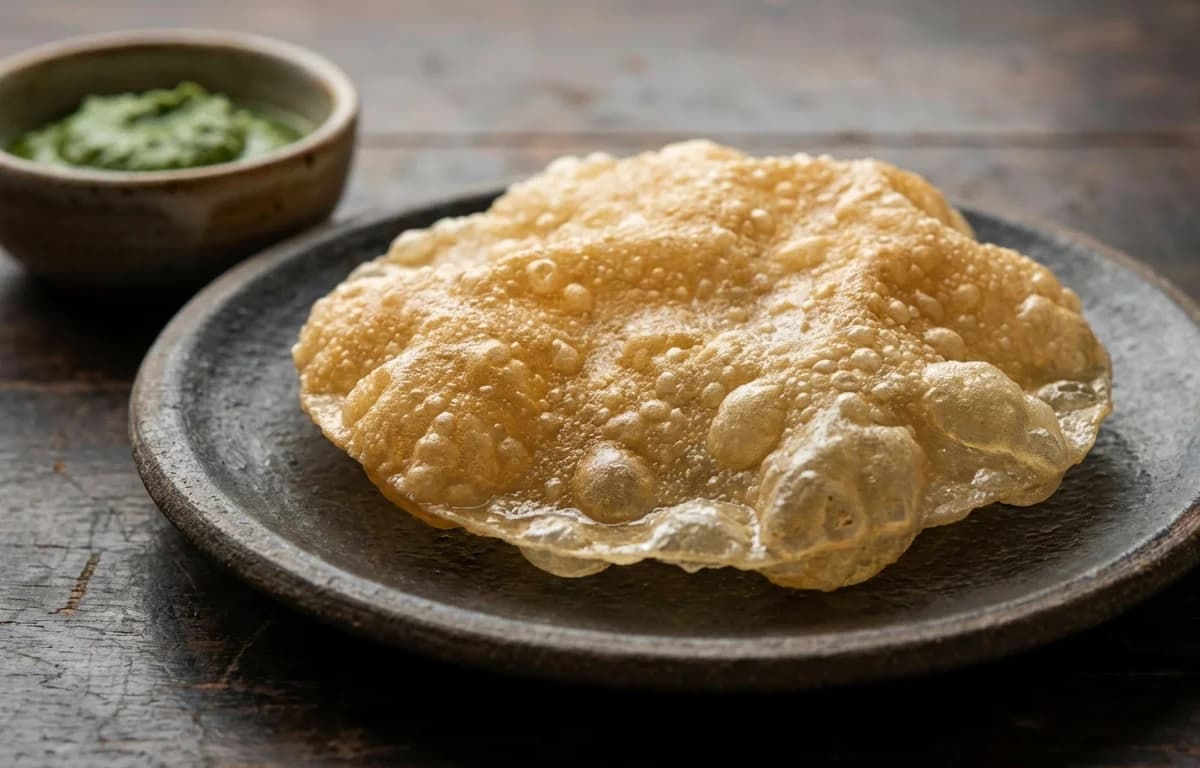
Crispy, golden, and irresistibly crunchy fried lentil wafers. A classic South Indian accompaniment that adds the perfect crunch to any meal, ready in just a few minutes.
Tangy tamarind rice with crispy boiled egg fry and appalam. A unique, protein-packed flavor adventure for your taste buds!
This south_indian dish is perfect for dinner. With 959.3900000000001 calories and 22.32g of protein per serving, it's a nutritious choice for your meal plan.
32gfat
7 pcs Dried Red Chilies (Broken into halves)
15 pcs Curry Leaves
1 tsp Turmeric Powder
0.5 tsp Hing (Asafoetida)
1 tbsp Jaggery (Grated or powdered)
2 tsp Salt (Adjust to taste)
2 tbsp Coriander Seeds (For spice powder)
1 tsp Black Peppercorns (For spice powder)
0.5 tsp Fenugreek Seeds (For spice powder)
1 tbsp White Sesame Seeds (For spice powder)
Instructions
1
Cook and Cool the Rice
Wash 1.5 cups of rice thoroughly. Cook with 3 cups of water until the grains are fluffy and separate, not mushy. A pressure cooker (2 whistles) or a pot works well.
Once cooked, immediately spread the rice on a wide plate or tray. This helps it cool down faster and prevents clumping.
Drizzle 1 tbsp of gingelly oil, 1/2 tsp of turmeric powder, and 1/2 tsp of salt over the hot rice. Gently fluff with a fork to coat the grains without breaking them. Let it cool completely for at least 30-45 minutes.
2
Prepare the Puliyodharai Spice Powder
In a small, dry pan over low heat, roast 2 tbsp coriander seeds, 1 tbsp chana dal, 1/2 tsp urad dal, 1/2 tsp fenugreek seeds, 1 tsp black peppercorns, and 4 dried red chilies.
Roast for 3-4 minutes, stirring continuously, until they become aromatic and the dals turn a light golden brown. Be careful not to burn them.
Add 1 tbsp of white sesame seeds and roast for another 30-60 seconds until they start to pop.
Remove from heat and let the mixture cool completely. Grind into a slightly coarse powder using a spice grinder or blender.
3
Make the Tamarind Paste (Pulikachal)
Soak 50g of tamarind in 1.5 cups of hot water for 20-30 minutes. Squeeze the tamarind thoroughly to extract a thick pulp. Strain the liquid, discarding any fibers and seeds.
Heat 4 tbsp of gingelly oil in a heavy-bottomed pan or kadai over medium heat. Add 1 tsp mustard seeds and let them splutter.
Pour in the tamarind extract. Add the remaining 1/2 tsp turmeric powder, 1/2 tsp hing, 1 tbsp jaggery, and 1.5 tsp salt.
Bring the mixture to a boil, then reduce the heat to a simmer. Cook for 12-15 minutes, stirring occasionally, until the paste thickens considerably and you see oil separating at the edges.
Add 2-3 tablespoons of the freshly ground spice powder to the paste. Mix well and cook for another 2-3 minutes until fragrant. Turn off the heat. This concentrated paste is called Pulikachal.
4
Prepare the Final Tempering
In a separate small pan, heat the remaining 2 tbsp of gingelly oil over medium heat.
Add 1 tbsp chana dal, 1 tsp urad dal, and 1/4 cup peanuts. Sauté for 2-3 minutes until the dals turn golden and the peanuts are crisp.
Add the remaining 3 broken dried red chilies and 15 curry leaves. Sauté for another 30 seconds until the curry leaves are crisp.
5
Combine and Serve
In a large mixing bowl with the cooled rice, add about 4-5 tablespoons of the prepared Pulikachal paste. You may not need all of it; add according to your taste preference.
Pour the entire tempering (with the oil) over the rice.
Gently mix everything together with a light hand or a spatula, ensuring the rice grains are evenly coated but not mashed.
Taste and add more salt or Pulikachal if needed. Let the Puliyodharai rest for at least 30-60 minutes to allow the flavors to meld beautifully.
Serve at room temperature with appalam (papad), vadam, or a simple potato fry.
154cal
7gprotein
4gcarbs
12gfat
Ingredients
4 pcs Large Eggs
2 tbsp Vegetable Oil (Or any neutral oil like sunflower or canola)
0.5 tsp Mustard Seeds
1 sprig Curry Leaves (About 10-12 leaves)
1 medium Onion (Finely chopped)
1 tsp Ginger Garlic Paste
0.25 tsp Turmeric Powder
1 tsp Red Chili Powder (Adjust to your spice preference)
1 tsp Coriander Powder
0.5 tsp Black Pepper Powder (Freshly ground is recommended)
0.75 tsp Salt (Or to taste)
2 tbsp Coriander Leaves (Freshly chopped, for garnish)
Instructions
1
Boil and Prepare the Eggs
Place the eggs in a saucepan and cover them with cold water by at least one inch.
Bring the water to a rolling boil over high heat. Once boiling, turn off the heat, cover the pan with a lid, and let the eggs stand for 10-12 minutes.
Drain the hot water and immediately run cold water over the eggs or place them in an ice bath to stop the cooking process.
Once cool enough to handle, carefully peel the eggs and slice them in half lengthwise. Set aside.
2
Prepare the Masala Base
Heat oil in a wide, non-stick pan or skillet over medium heat.
Add the mustard seeds. Wait for them to splutter, which should take about 30 seconds.
Add the curry leaves and sauté for a few seconds until they become fragrant and crisp.
Add the finely chopped onion and cook, stirring occasionally, until it turns soft and golden brown, about 5-6 minutes.
3
Sauté the Spices
Add the ginger-garlic paste to the pan and sauté for about 1 minute until the raw aroma disappears.