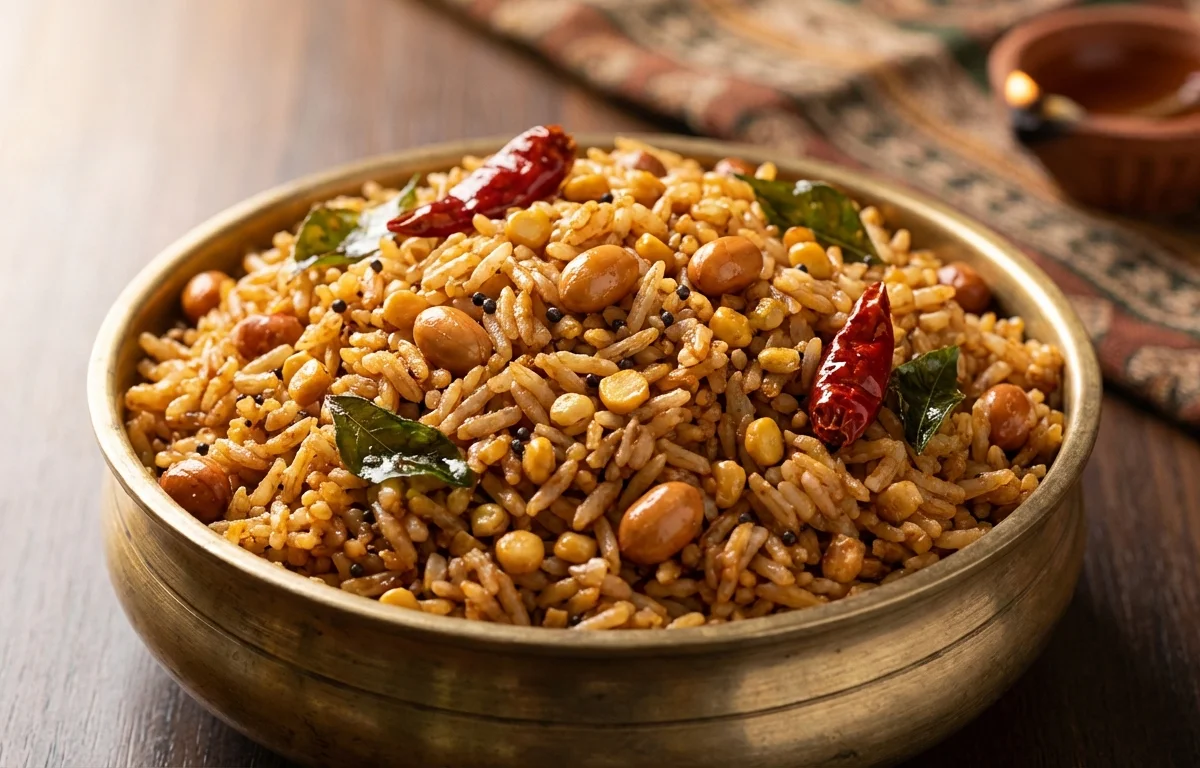
Puliyodharai
Tangy tamarind rice with a deep, toasty spice blend and crunchy peanuts, Puliyodharai is a beloved South Indian temple-style dish. It keeps well, travels beautifully, and tastes even better after the flavors settle.
For 4 servings
- prep · ~20 min
Soak the rice and prepare the tamarind.
1.Rinse the rice well until the water runs mostly clear.2.Soak the rice in fresh water for 20 minutes, then drain.3.Soak the tamarind in warm water for 15 to 20 minutes.4.Mash and strain the tamarind well to get a smooth extract.TIPA short soak helps the rice cook into separate grains instead of turning sticky. - boil · ~15 min
Cook the rice until just done.
Bring 2.5 cups water to a boil, add the drained rice, and cook until tender but not mushy. Spread the cooked rice on a wide plate or tray to cool so the grains stay separate.
TIPDo not overcook the rice. Puliyodharai tastes best when every grain stays whole and loose. - roast · ~4 min
Roast the spice ingredients.
1.Heat a small pan over low heat.2.Dry roast coriander seeds, sesame seeds, dried red chili, and fenugreek seeds until fragrant.3.Cool the mixture completely.4.Grind to a coarse powder and keep aside.TIPRoast the fenugreek lightly. If it darkens too much, the rice can taste bitter. - temper · ~5 min
Make the tempering.
1.Heat sesame oil in a wide pan over medium heat.2.Add mustard seeds and let them splutter.3.Add chana dal, urad dal, and peanuts and cook until lightly golden.4.Add dried red chili, curry leaves, asafoetida, and turmeric powder and stir for a few seconds. - simmer · ~10 min
Cook the tamarind mixture.
Pour the tamarind extract into the pan, then add salt and jaggery. Simmer on medium-low heat until the raw smell fades and the mixture thickens slightly.
TIPCook the tamarind well before mixing with rice, or the final dish will taste raw and sharp. - mix · ~2 min
Add the spice powder and finish the pulikachal.
Stir in the roasted spice powder and cook for 1 to 2 minutes until the mixture turns glossy and aromatic. This thick tamarind base should coat the back of a spoon.
- mix · ~3 min
Mix the rice with the tamarind base.
Add the cooled rice to a wide bowl. Spoon the tamarind mixture over it and gently fold until the rice is evenly coated without breaking the grains.
TIPAdd the tamarind base in batches if needed. This helps you control the tang and keeps the rice fluffy. - rest · ~20 min
Let the rice rest before serving.
Cover and let the Puliyodharai sit for 15 to 20 minutes so the rice absorbs the flavors fully.
- serve
Serve the Puliyodharai.
Serve at room temperature or slightly warm. It pairs well with papad or plain yogurt.
What to keep in mind.
6 tips from the recipe — small details that make a real difference to the final dish.
- 1Spread the cooked rice while still warm and drizzle a few drops of sesame oil to keep the grains separate.
- 2Roast the fenugreek only until lightly aromatic; over-roasting will make the puliyodharai noticeably bitter.
- 3Let the tamarind mixture reduce until glossy and spoon-coating before mixing, so the rice does not turn soggy.
- 4Add the pulikachal to the rice in batches and fold gently with a flat spatula to avoid breaking the grains.
- 5Resting for at least 15 minutes is important here; the rice absorbs the tamarind and spice evenly as it sits.
- 6This dish keeps well for travel; cool completely before packing so condensation does not soften the rice and peanuts.
Adapt it for your goals.
Low-peanut
Reduce or skip the peanuts if you want a lighter texture or need to avoid them; the dals still provide crunch in the tempering.
extra spicyExtra-spicy
Increase the dried red chilies in the spice powder and tempering for a hotter, more robust puliyodharai.
milletMillet
Replace rice with cooked foxtail millet or little millet for a nuttier version that still pairs beautifully with tamarind.
jain styleJain-style
Omit asafoetida if needed and keep the rest of the method the same for a simple Jain-friendly adaptation.
Why this is on our healthy list.
Plant-Based Protein Boost
Peanuts, chana dal, and urad dal add satisfying plant protein and make the rice more filling than plain seasoned rice.
Rich in Aromatic Spices
Coriander, fenugreek, curry leaves, and chilies bring antioxidant-rich spices and herbs that add depth without heavy sauces.
Balanced, Travel-Friendly Meal
The tamarind, spices, and sesame oil help the dish keep well, making it a practical make-ahead option for lunchboxes and travel.
Frequently asked questions
The rice was likely overcooked or mixed while too hot. Cook it just until done, spread it to cool, and fold the tamarind base in gently.