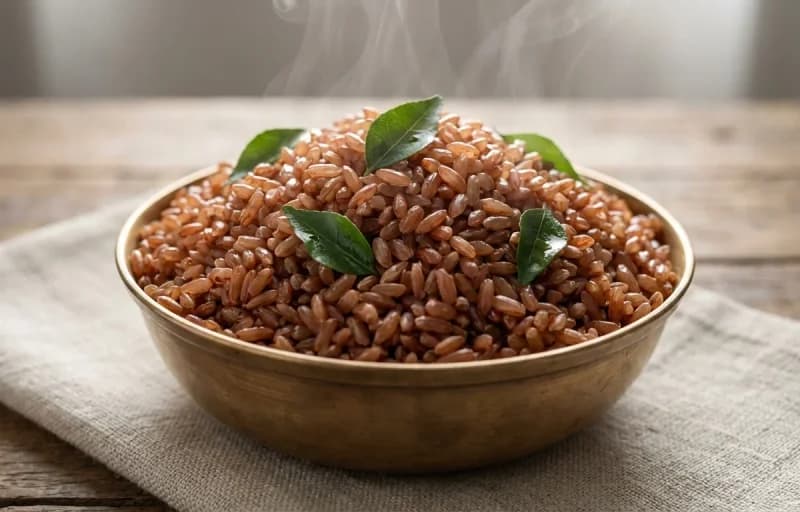
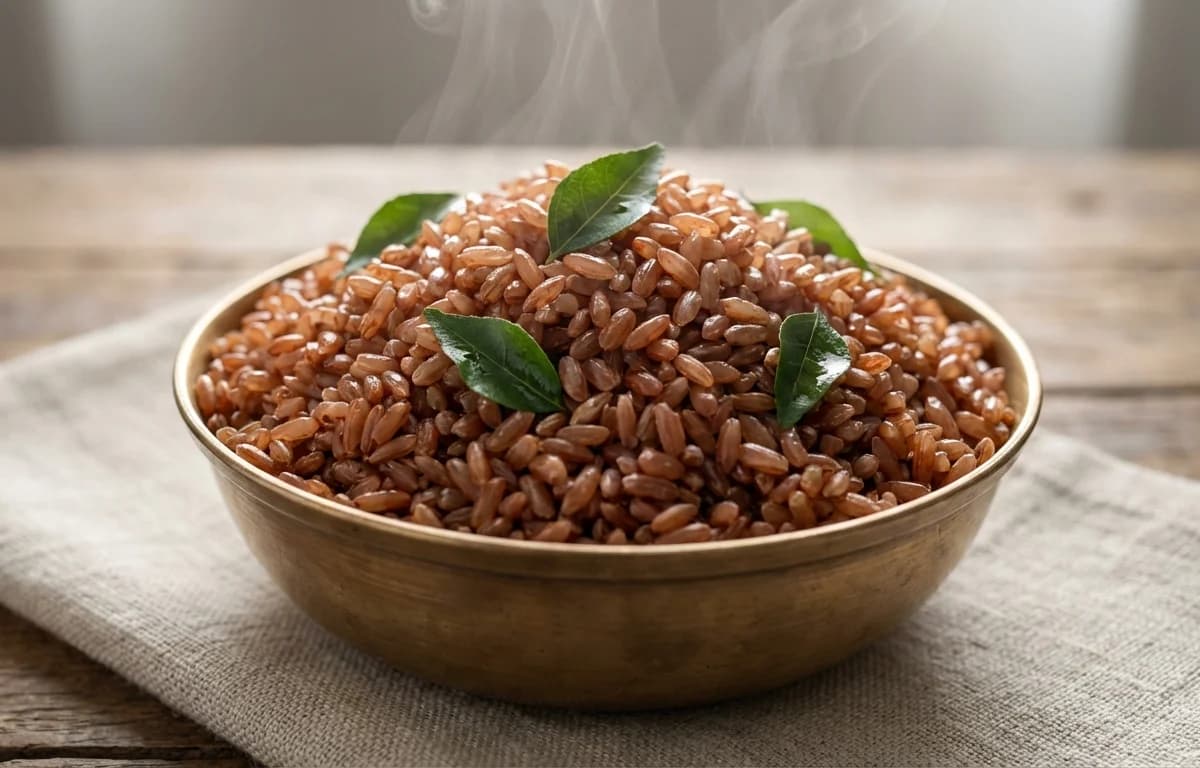
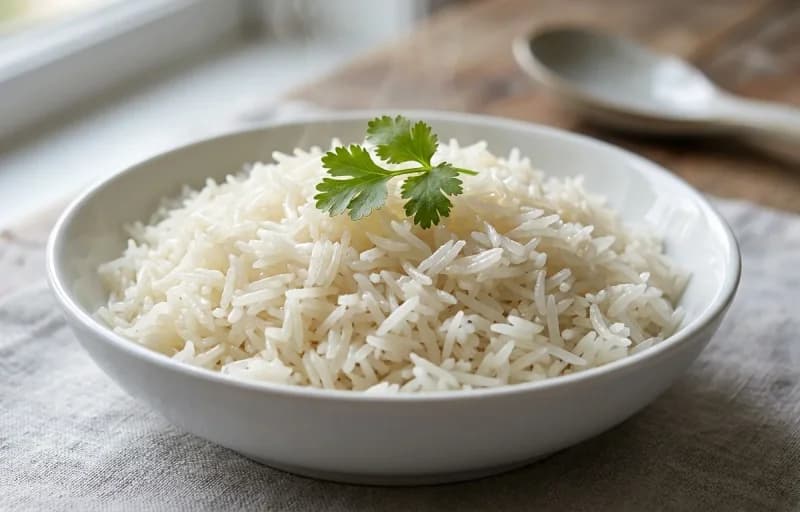
A wholesome and nutty South Indian staple, this perfectly cooked Matta rice (Kerala Red Rice) has a delightful chewy texture and earthy flavor. Rich in fiber and nutrients, it's a healthier alternative to white rice and pairs wonderfully with sambar, curries, and thoran.
Prep35 min
Cook25 min
Soak30 min
Servings4
Serving size: 1 serving
173cal
3gprotein
35gcarbs
Ingredients
1 cup Matta Rice (Also known as Kerala Red Rice or Rosematta rice)
2.5 cups Water (For pressure cooking)
0.5 tsp Salt (Adjust to taste)
1 tsp Coconut Oil (Optional, for flavor and to prevent sticking)
Instructions
1
Prepare the Rice (35 mins)
Place the Matta rice in a large bowl. Rinse it under cool running water 4-5 times, rubbing the grains gently, until the water runs mostly clear.
Add enough fresh water to the rinsed rice to cover it by at least 2 inches. Let it soak for a minimum of 30 minutes, or up to 1 hour.
After soaking, drain all the water completely using a fine-mesh sieve.
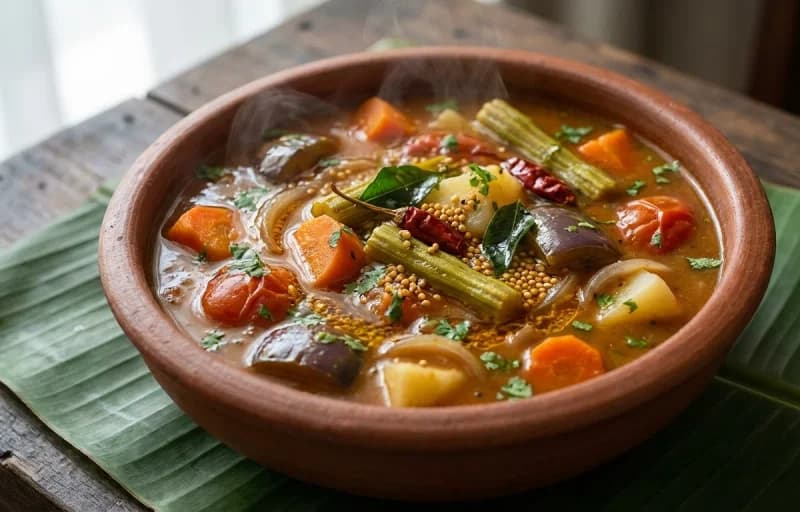
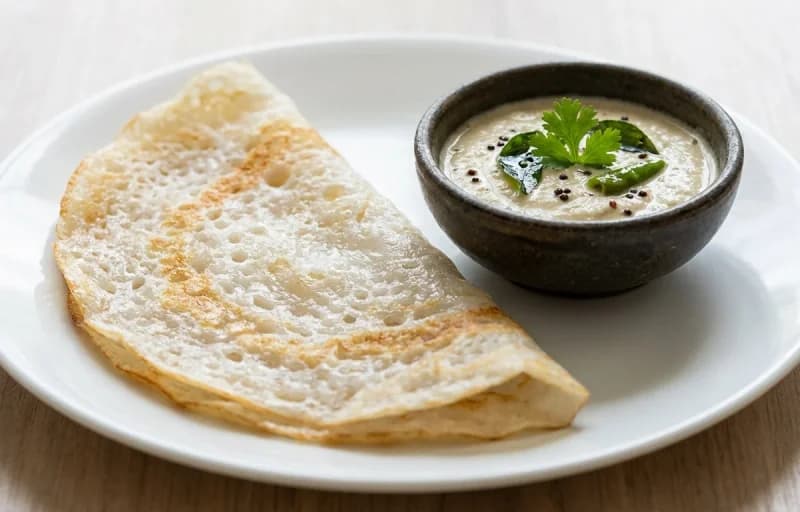
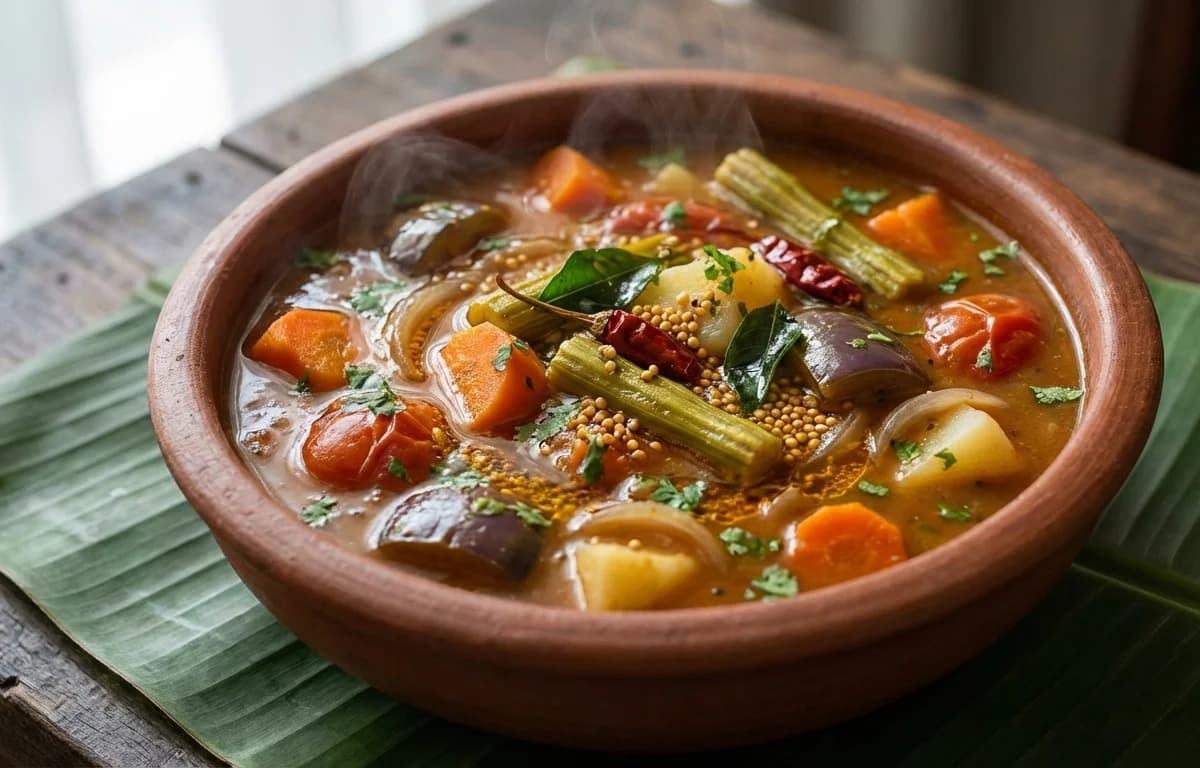
A hearty South Indian stew made with lentils, mixed vegetables, and a special blend of spices. This tangy and flavorful sambar is the perfect accompaniment for rice, idli, or dosa.
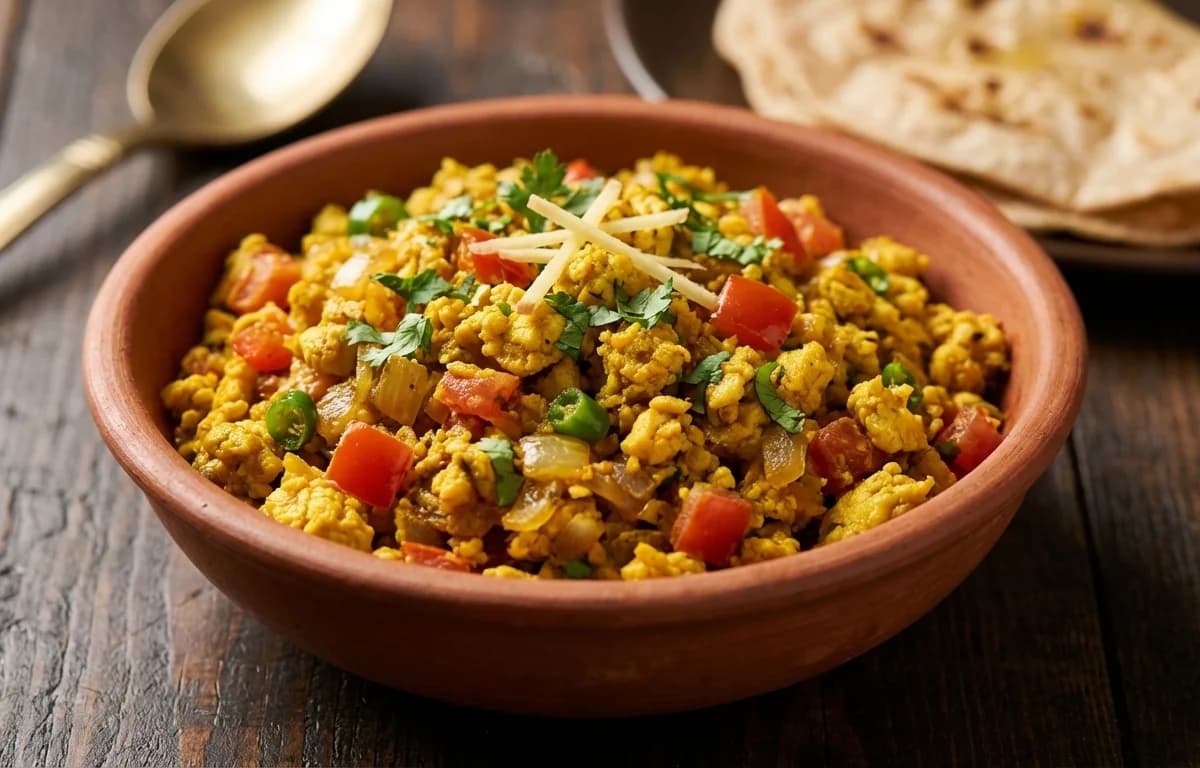
A quick and savory Indian-style scrambled egg dish, packed with flavor from onions, tomatoes, and aromatic spices. Perfect for a hearty breakfast or a light meal, ready in under 20 minutes and delicious with pav or roti.
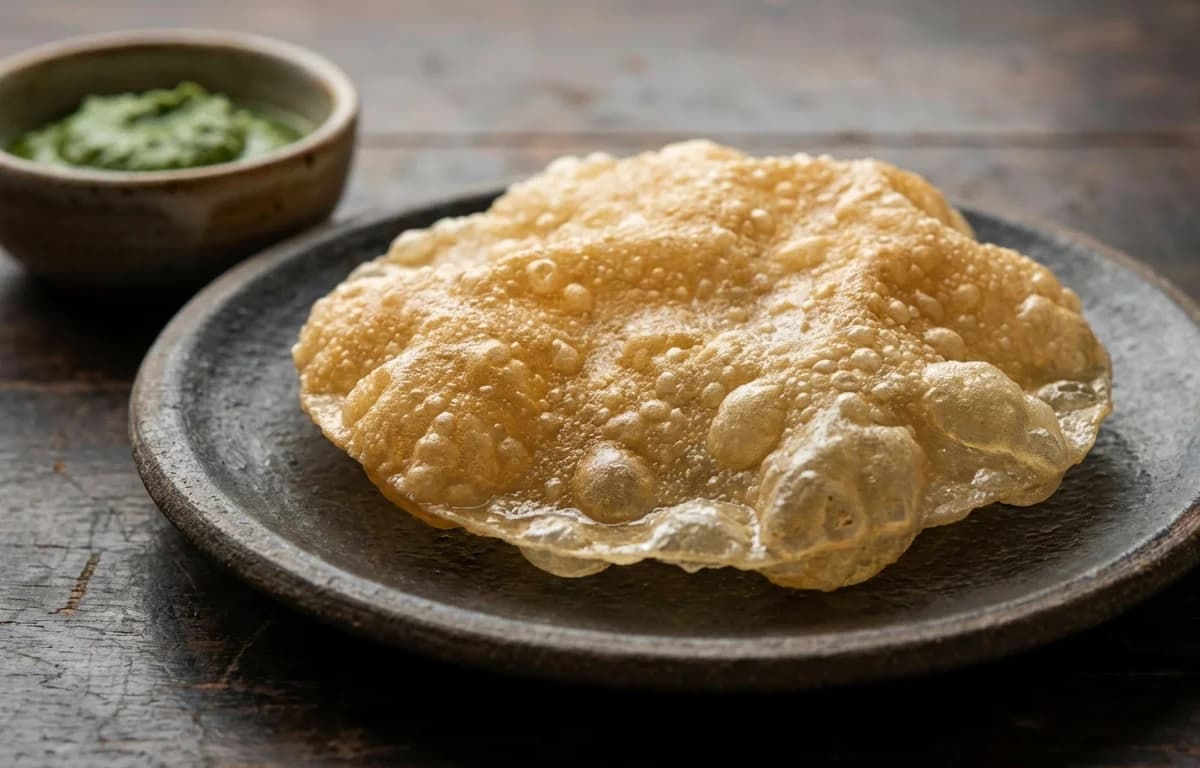
Crispy, golden, and irresistibly crunchy fried lentil wafers. A classic South Indian accompaniment that adds the perfect crunch to any meal, ready in just a few minutes.
About Red Rice, Vegetable Sambar, Egg Bhurji and Appalam
Fiber-rich red rice with tangy sambar & protein-packed egg bhurji. A crispy appalam makes it comfort food!
This udupi dish is perfect for dinner. With 944.14 calories and 36.39g of protein per serving, it's a nutritious choice for your meal plan.
2gfat
Transfer the soaked and drained rice into a 2 or 3-liter pressure cooker.
Add 2.5 cups of fresh water, salt, and the optional coconut oil. Give it a single, gentle stir.
Secure the lid of the pressure cooker and place the weight on the vent.
Cook on high heat until you hear the first whistle.
Immediately reduce the heat to the lowest setting and let it simmer for 10-12 minutes.
Turn off the heat and allow the pressure to release naturally. This will take about 10-15 minutes. Do not try to quick-release the pressure.
3
Fluff and Serve (2 mins)
Once the pressure has completely subsided, carefully open the lid.
Let the rice rest for a minute before gently fluffing the grains with a fork.
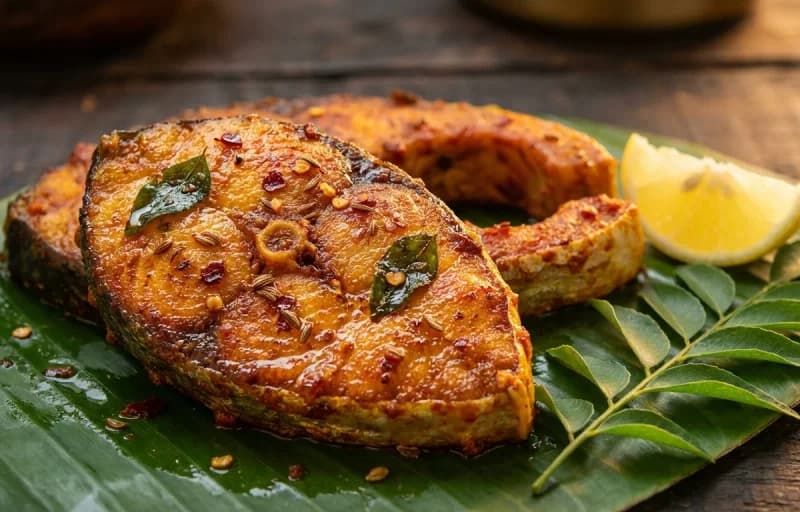
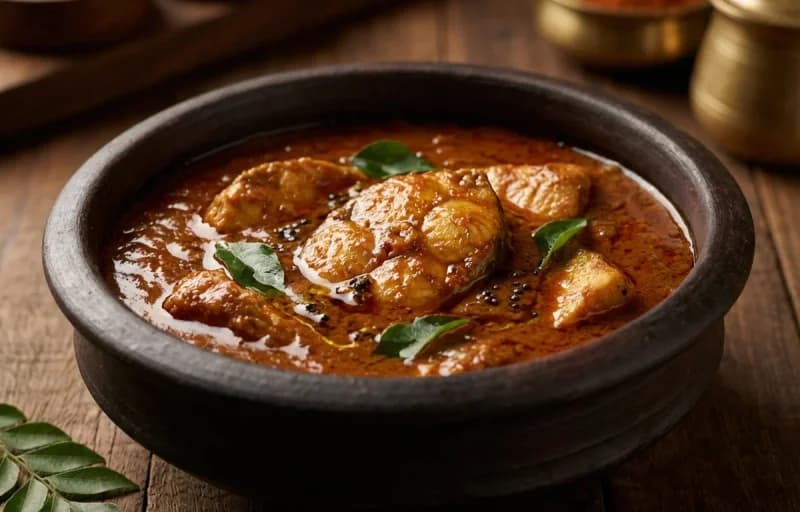
Serve hot with your favorite South Indian dishes like sambar, avial, or fish curry.
4
Serving size: 1 serving
331cal
14gprotein
52gcarbs
9gfat
Ingredients
1 cup Toor Dal (rinsed thoroughly)
0.5 tsp Turmeric Powder
5 cup Water (divided, adjust for desired consistency)
1 pc Drumstick (cut into 2-inch pieces)
1 medium Carrot (peeled and cubed)
0.5 cup Pumpkin (peeled and cubed)
0.5 cup Green Beans (trimmed and cut into 1-inch pieces)
0.75 cup Pearl Onions (peeled)
2 medium Tomato (chopped)
2 pcs Green Chili (slit lengthwise)
1.5 tbsp Tamarind Paste (dissolved in 1/2 cup warm water)
3 tbsp Sambar Powder (use a good quality brand)
1.5 tsp Salt (or to taste)
1 tsp Jaggery (powdered, optional but recommended)
2 tbsp Sesame Oil (also known as gingelly oil)
1 tsp Mustard Seeds
0.5 tsp Urad Dal
0.25 tsp Fenugreek Seeds
2 pcs Dried Red Chili (broken in half)
0.25 tsp Hing (asafoetida)
1 sprig Curry Leaves
2 tbsp Coriander Leaves (freshly chopped, for garnish)
Instructions
1
Pressure Cook the Dal
Place the rinsed toor dal in a pressure cooker. Add 2.5 cups of water and 1/2 teaspoon of turmeric powder.
Secure the lid and pressure cook on medium heat for 4-5 whistles, or approximately 15 minutes, until the dal is completely soft and mushy.
Allow the pressure to release naturally. Open the cooker and whisk the dal vigorously until it is smooth and creamy. Set aside.
2
Cook the Vegetables
In a large, heavy-bottomed pot, add 2 cups of water and bring to a boil.
Add the harder vegetables: drumsticks, carrots, and green beans. Cook for 5-6 minutes.
Add the softer vegetables: pearl onions, pumpkin, and chopped tomatoes. Cook for another 5-7 minutes until all vegetables are tender but still hold their shape.
3
Combine and Simmer
Pour the cooked, mashed dal into the pot with the vegetables. Stir to combine.
Add the tamarind water (paste dissolved in 1/2 cup warm water), sambar powder, salt, and jaggery. Mix well.
Add the slit green chilies. Bring the mixture to a gentle boil.
Reduce the heat to low and let the sambar simmer for 8-10 minutes, allowing the flavors to meld together. Adjust water if the consistency is too thick.
4
Prepare the Tempering (Tadka)
In a small pan (tadka pan), heat the sesame oil over medium heat.
Once hot, add the mustard seeds and wait for them to splutter completely.
Add the urad dal and fenugreek seeds. Sauté for 30 seconds until the urad dal turns light golden. Be careful not to burn the fenugreek seeds.
Add the broken dried red chilies, curry leaves, and hing. Sauté for another 15-20 seconds until the curry leaves are crisp and aromatic.
5
Finish and Serve
Immediately pour the hot tempering over the simmering sambar. You should hear a satisfying sizzle.
Stir gently to incorporate the tempering. Garnish with freshly chopped coriander leaves.
Turn off the heat and let the sambar rest for at least 10-15 minutes before serving. This helps the flavors deepen.
Serve hot with steamed rice, idli, dosa, or vada.
Gently start scrambling the eggs with a spatula, breaking them into soft curds. Continue cooking for 2-3 minutes until the eggs are cooked but still moist.
5
Garnish and serve
Turn off the heat. Sprinkle the garam masala and chopped coriander leaves over the bhurji.
Give it a final gentle mix. Serve immediately with hot rotis, pav (bread rolls), or toast.