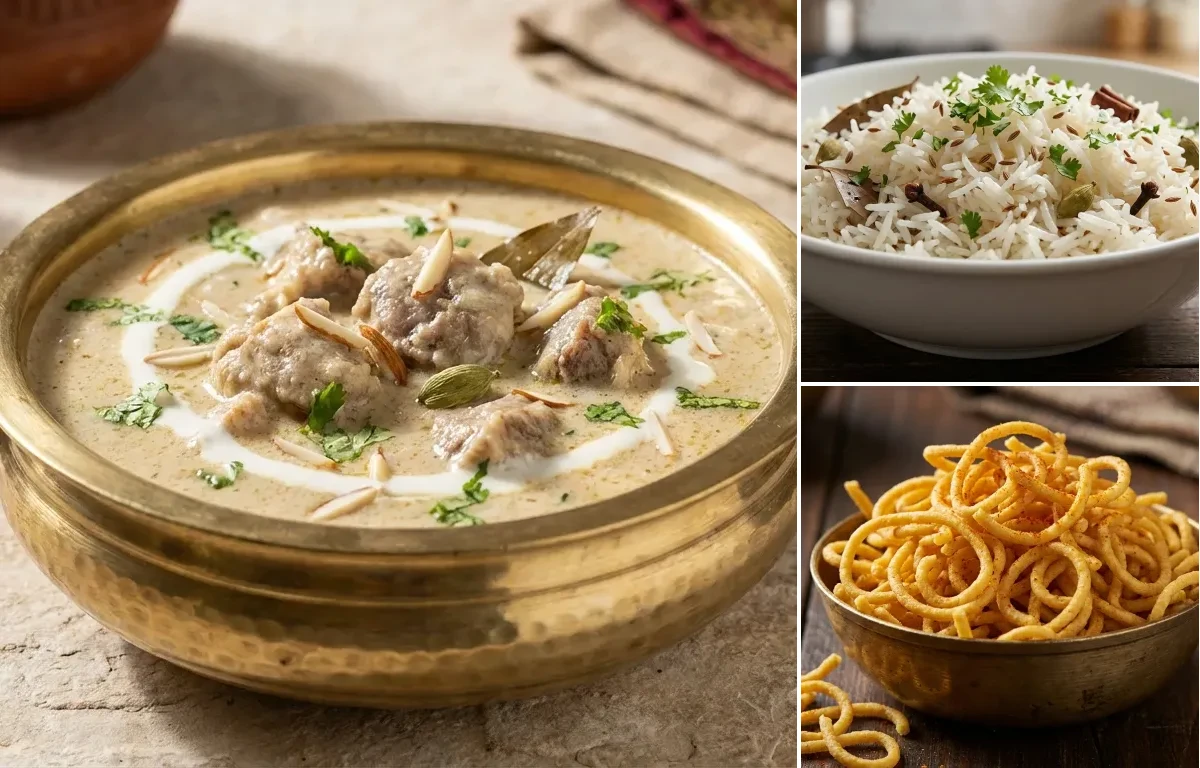
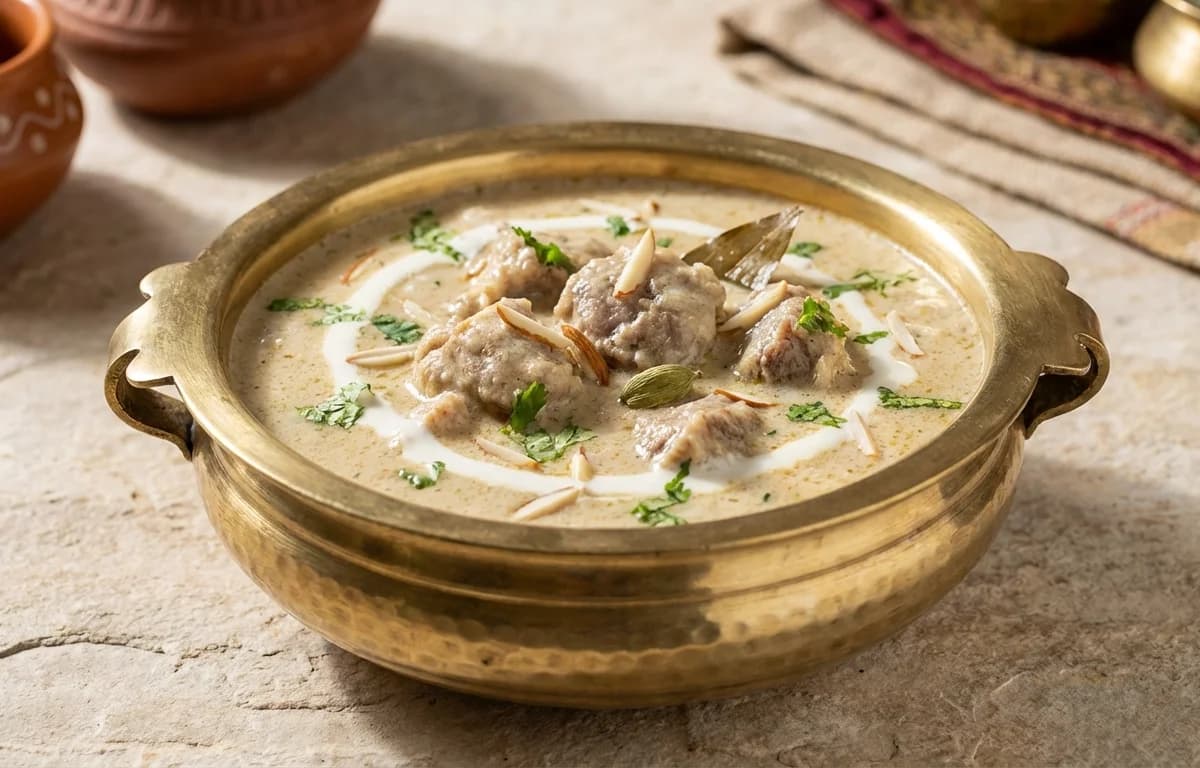
A luxurious Rajasthani mutton curry made with a rich, creamy white gravy of yogurt, cashews, and almonds. Delicately spiced and slow-cooked until the meat is fall-off-the-bone tender, this royal dish is a true celebration of Mughlai-inspired flavors.
Prep25 min
Cook75 min
Soak30 min
Servings4
Serving size: 1 serving
618cal
58gprotein
19gcarbs
Ingredients
750 g Mutton (bone-in, curry cut)
4 tbsp Ghee
300 g Onion (about 2 medium, ground to a smooth paste)
240 g Curd (full-fat, whisked well at room temperature)
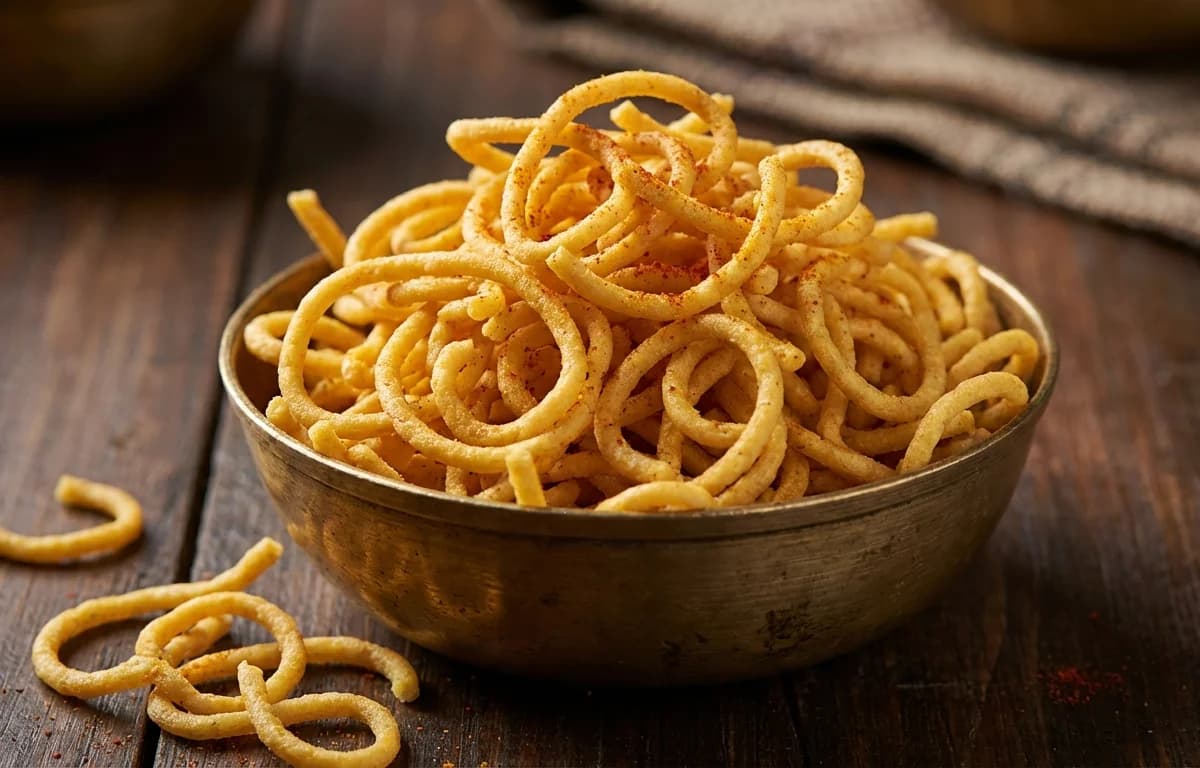
A classic Indian savory snack, these crispy, golden noodles are made from mashed potatoes and chickpea flour. Perfectly spiced and deep-fried to perfection, it's an addictive tea-time favorite.
Prep20 min
Cook25 min
Servings8
Serving size: 1 serving
About Safed Maas, Jeera Rice and Aloo Bhujia
Creamy, melt-in-mouth Safed Maas with aromatic Jeera Rice & crispy Aloo Bhujia – pure comfort food!
This rajasthani dish is perfect for lunch. With 776.5799999999999 calories and 63.49g of protein per serving, it's a nutritious choice for your meal plan.
Other Cuisines to Explore
Discover authentic meals from cuisines around the world.
Soak cashews and almonds in hot water for 30 minutes. After soaking, peel the skin off the almonds.
Grind the soaked cashews and peeled almonds with 2 tbsp of water into a very smooth, fine paste. Set aside.
In a large bowl, combine the mutton pieces, whisked room-temperature curd, ginger paste, garlic paste, and 1 tsp of salt. Mix thoroughly to ensure each piece is well-coated.
Cover the bowl and let the mutton marinate for at least 1 hour at room temperature, or up to 4 hours in the refrigerator.
2
Sauté Aromatics and Onions
Heat ghee in a heavy-bottomed pressure cooker over medium heat.
Add the whole spices: bay leaf, cinnamon stick, green cardamoms, black cardamom, and cloves. Sauté for 30-45 seconds until they become fragrant.
Add the onion paste. Cook for 8-10 minutes, stirring frequently, until the paste loses its raw smell and turns a pale cream color. Do not let it brown, as this will alter the final color of the gravy.
3
Sear and Cook the Mutton
Add the marinated mutton along with all the marinade to the cooker. Increase the heat to medium-high.
Sauté for 10-12 minutes, stirring continuously. Cook until the mutton is well-seared, the curd mixture thickens, and you see ghee separating at the edges of the pan.
Pour in 480 ml of hot water and the remaining 0.5 tsp of salt. Stir well to combine.
4
Pressure Cook Until Tender
Secure the lid of the pressure cooker. Bring to high pressure on medium-high heat.
Once pressure is reached, reduce the heat to medium-low and cook for 20-25 minutes (or about 5-6 whistles).
Turn off the heat and allow the pressure to release naturally. This is crucial for making the mutton exceptionally tender.
5
Finish the Gravy
Once the pressure has fully released, carefully open the cooker. Turn the heat back on to low.
Stir in the prepared cashew-almond paste. Simmer gently for 5-7 minutes, stirring constantly to prevent the paste from sticking to the bottom, until the gravy thickens to your desired consistency.
Add the white pepper powder, garam masala, and mace powder. Mix well and cook for another minute.
Turn off the heat. Stir in the fresh cream and optional kewra water. Mix gently until incorporated. Do not boil the curry after adding cream to prevent it from splitting.
6
Garnish and Serve
Transfer the Safed Maas to a serving bowl.
Garnish with freshly chopped coriander leaves.
Serve hot with traditional Rajasthani breads like bajra roti, or with naan, sheermal, or steamed basmati rice.
159cal
5gprotein
24gcarbs
5gfat
Ingredients
500 g Potatoes (About 3 medium starchy potatoes like Russet)
1.5 cup Besan (Also known as gram flour)
2 tbsp Rice Flour (Adds extra crispiness)
2 tbsp Vegetable Oil (For the dough)
0.5 tsp Turmeric Powder
1 tsp Red Chili Powder (Adjust to your spice preference)
0.25 tsp Hing (Asafoetida)
1 tsp Amchur Powder (Dried mango powder)
1 tsp Chaat Masala
0.5 tsp Garam Masala
1.25 tsp Salt (Adjust to taste)
Instructions
1
Prepare the Potatoes
Boil the potatoes in water until they are fork-tender, about 15-20 minutes.
Once cooked, drain the water and peel the potatoes while they are still warm.
Grate the warm potatoes using a fine grater or pass them through a potato ricer. This is crucial to ensure there are absolutely no lumps.
Spread the grated potato on a plate and allow it to cool completely to room temperature.
2
Make the Bhujia Dough
In a large mixing bowl, combine the cooled mashed potatoes, besan, rice flour, turmeric powder, red chili powder, hing, amchur powder, chaat masala, garam masala, and salt.
Add 2 tablespoons of oil to the mixture.
Knead everything together to form a soft, smooth, and pliable dough. Do not add any water; the moisture from the potatoes should be sufficient. The dough should not be sticky or stiff.
3
Set Up for Frying
Heat the oil for deep frying in a kadai or a deep, heavy-bottomed pan over medium heat. The oil should be around 175°C (350°F).
Grease the inside of a sev maker (sev press) and the disc with the smallest holes with a little oil to prevent sticking.
Divide the dough into two or three portions and shape one portion into a log. Place it inside the sev maker and secure the lid.
4
Fry the Aloo Bhujia
To test the oil, drop a tiny piece of dough into it. If it sizzles and rises to the surface quickly without browning too fast, the oil is ready.
Hold the sev maker over the hot oil and press the handle, moving in a circular motion to create a large, nest-like shape of bhujia. Do not overcrowd the pan.
Fry for about 1-2 minutes on one side, until the sizzling sound reduces and the bottom is firm.
Carefully flip the bhujia nest and fry the other side for another 1-2 minutes until it is light golden and crisp.
Using a slotted spoon, remove the bhujia from the oil and place it on a wire rack or a plate lined with paper towels to drain excess oil.
Repeat the process with the remaining dough, frying in batches.
5
Cool and Store
Allow the fried bhujia to cool completely to room temperature. It will become even crispier as it cools.
Once fully cooled, gently break the bhujia nests into smaller, bite-sized pieces.
Store the Aloo Bhujia in a clean, dry, airtight container. It will stay fresh and crispy for up to 3 weeks.