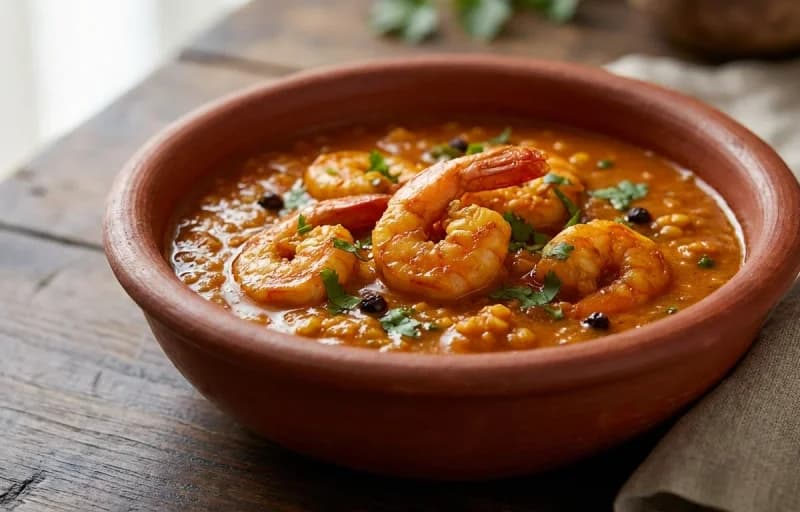
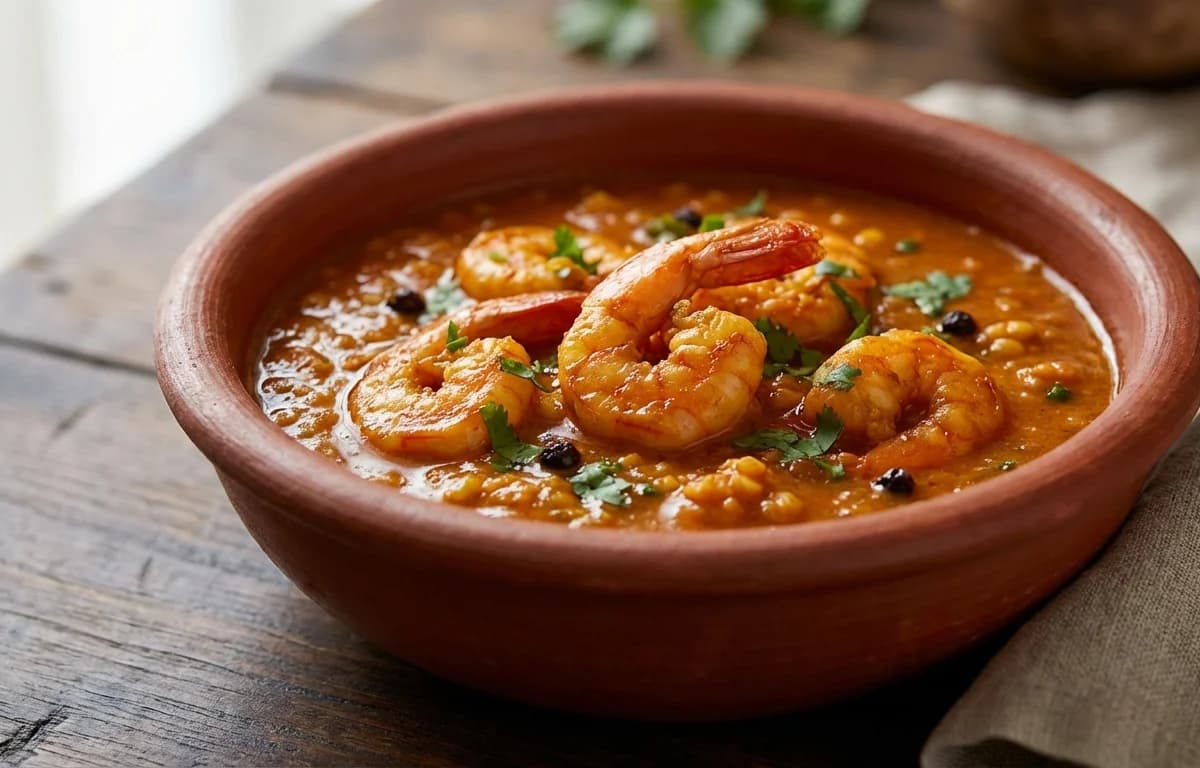
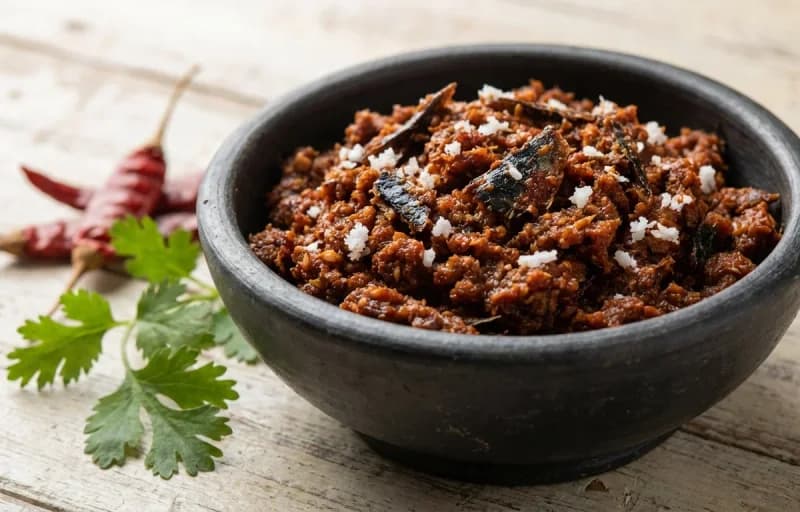
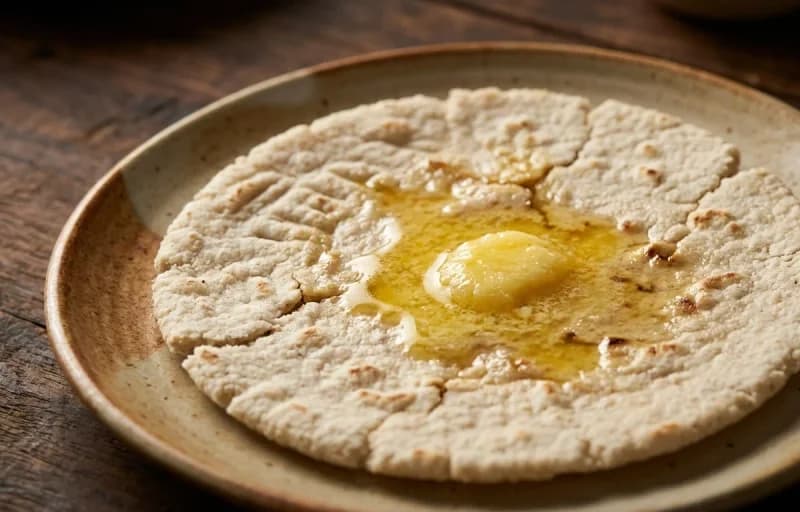
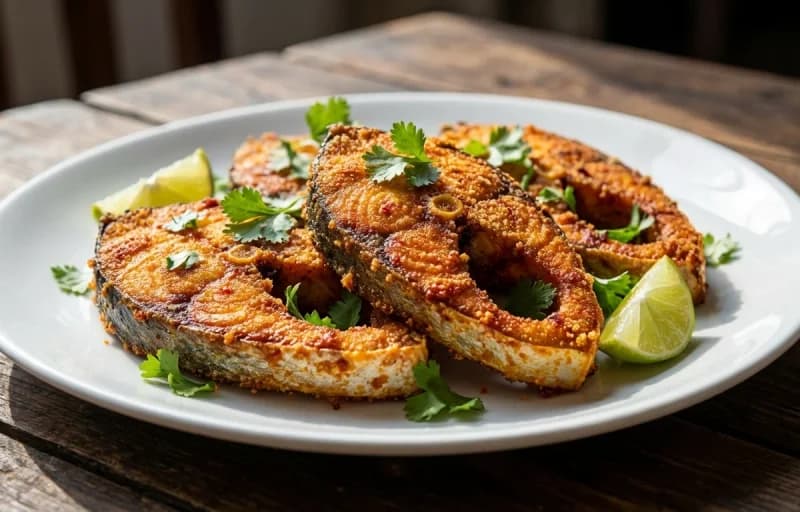
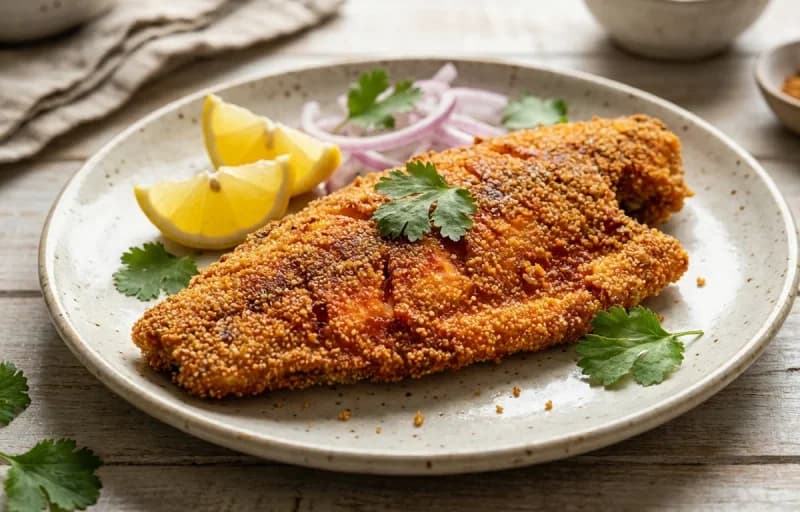
A classic Goan prawn curry featuring a rich, aromatic coconut masala. Tender prawns are simmered in a tangy and spicy gravy, making it the perfect partner for steamed rice.
Prep20 min
Cook25 min
Soak15 min
Servings4
Serving size: 1 serving
296cal
27gprotein
15gcarbs
Ingredients
500 g Prawns (Medium-sized, cleaned and deveined)
1 cup Grated Coconut (Fresh or frozen)
8 Dried Kashmiri Red Chilies (Adjust to control spice and color)
1.5 tbsp Coriander Seeds
1 tsp Cumin Seeds
0.5 tsp Black Peppercorns
0.5 tsp Turmeric Powder
6 cloves Garlic
1 inch piece Tamarind (Or use 1 tbsp tamarind paste)
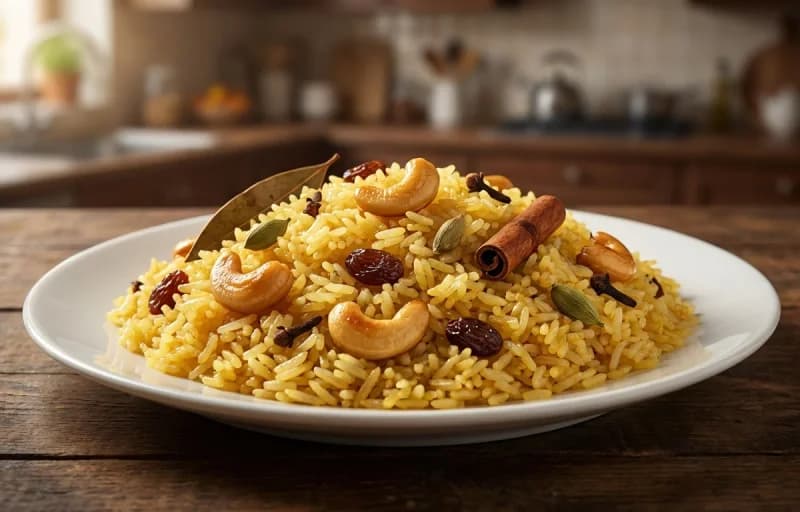
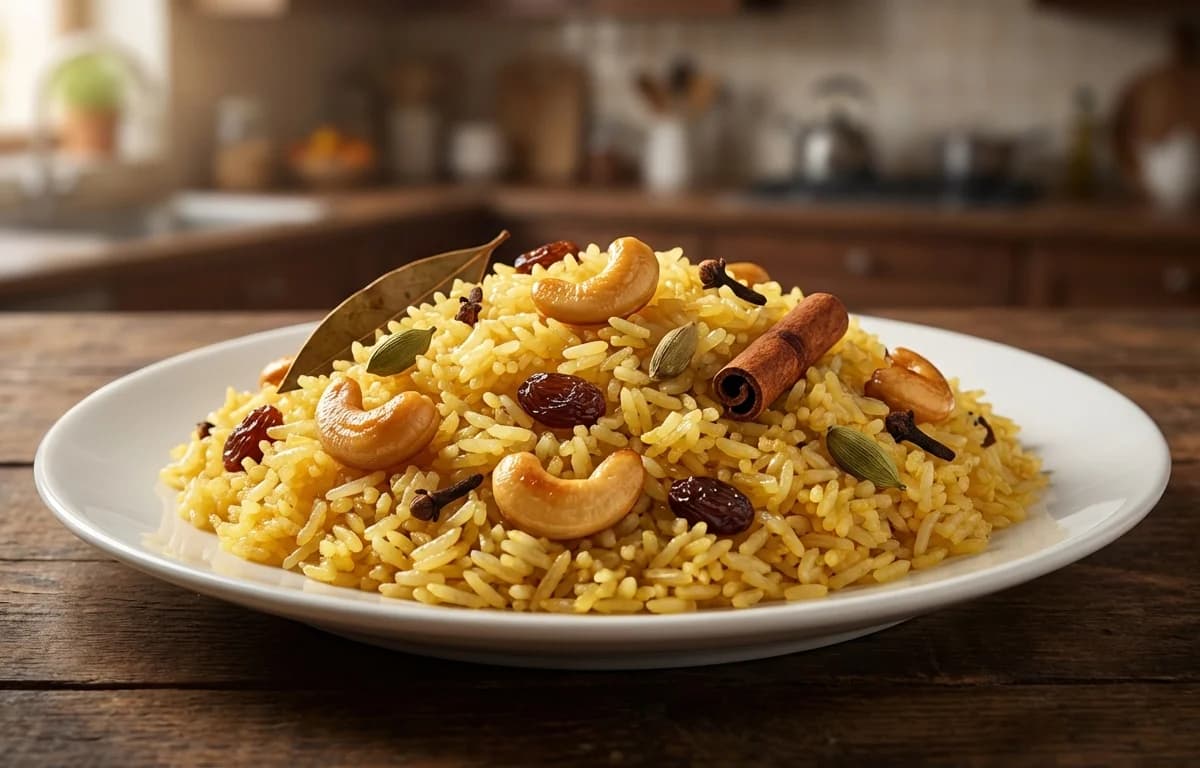
A fragrant and lightly sweet rice pilaf from Bengal, made with aromatic gobindobhog rice, ghee, cashews, and raisins. This festive dish, with its beautiful yellow hue, is a celebratory classic that pairs wonderfully with rich curries.
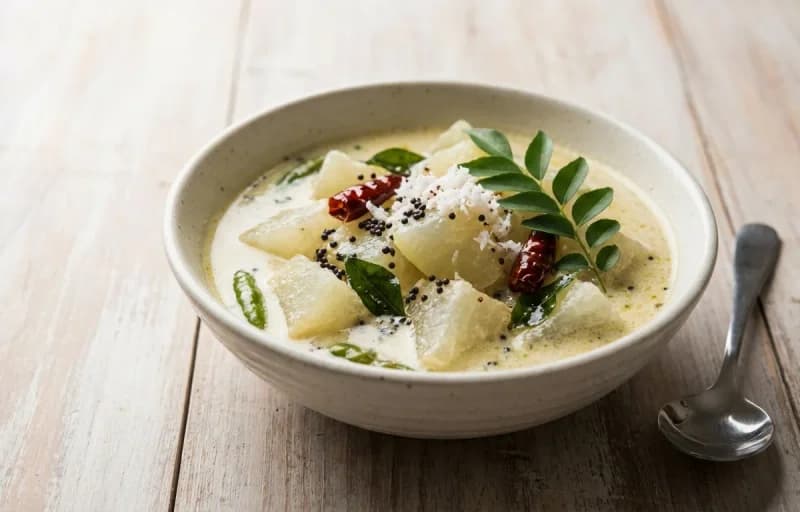
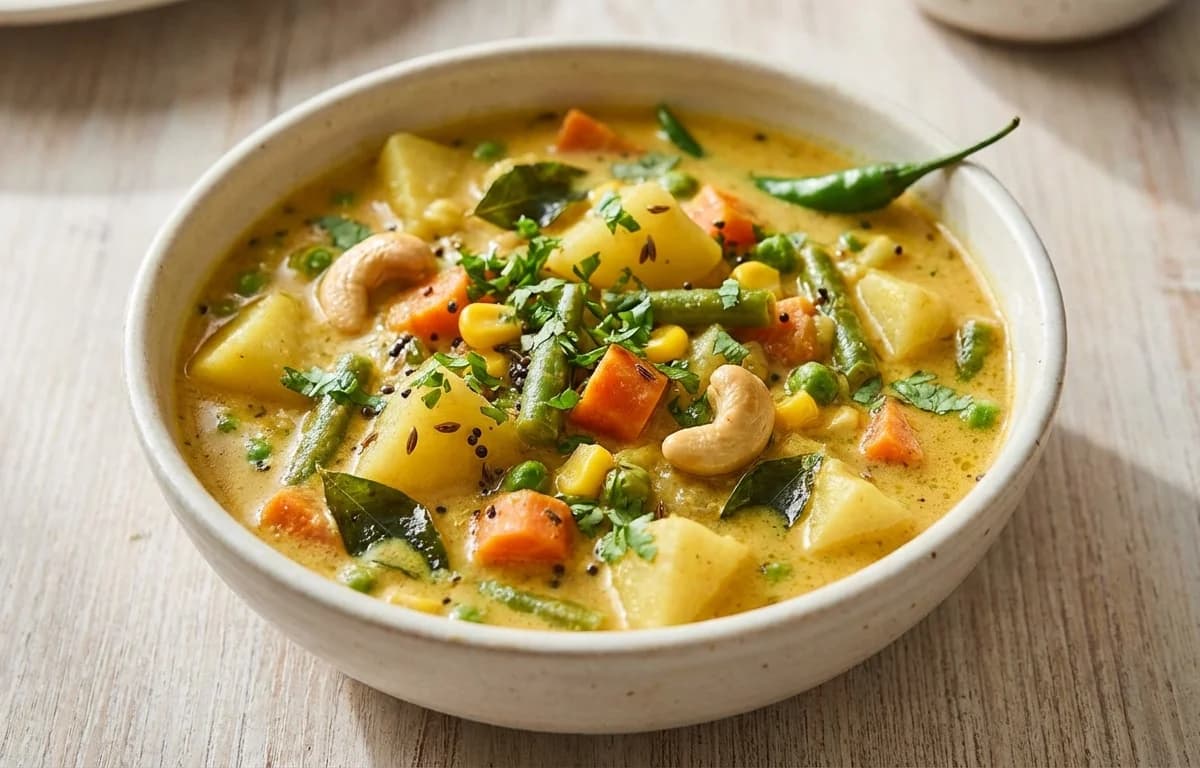
A creamy and mild Goan mixed vegetable curry made with coconut milk. This comforting stew features a medley of seasonal vegetables and is perfect with steamed rice or sannas.
About Sungtache Koddel, Bengali Mishti Pulao and Valval
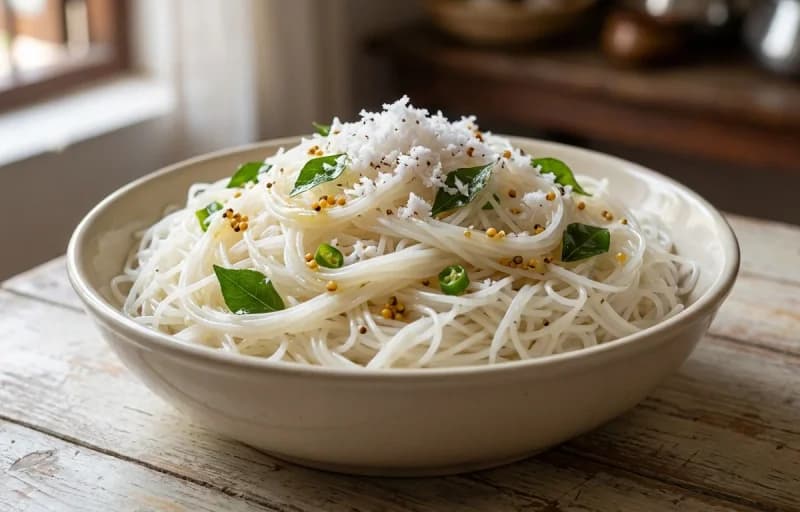
Aromatic Konkani Prawn Curry with flavorful Sheet Bhaat and Valval – a soul-satisfying coastal treat!
This konkani dish is perfect for lunch. With 1133.96 calories and 39.760000000000005g of protein per serving, it's a nutritious choice for your meal plan.
15gfat
Onion
(Finely chopped)
2 tbsp Coconut Oil
3 pieces Kokum (Optional, for extra tanginess)
1.25 tsp Salt (To taste)
1.5 cup Water (For soaking, grinding, and curry)
Instructions
1
Prepare Prawns and Masala Base
In a small bowl, soak the dried Kashmiri red chilies and tamarind piece in 1/2 cup of warm water for 15 minutes. This will soften them for grinding.
While they soak, ensure the prawns are cleaned, deveined, and patted dry. You can marinate them with a pinch of salt and turmeric powder if desired.
2
Grind the Coconut Masala Paste
Transfer the soaked chilies and tamarind, along with their soaking water, to a high-speed blender or grinder jar.
Add the grated coconut, coriander seeds, cumin seeds, black peppercorns, turmeric powder, and garlic cloves.
Grind to a very smooth, fine paste. Add a few tablespoons of extra water if needed to facilitate grinding. The final paste should be thick and luscious.
3
Cook the Curry Base
Heat the coconut oil in a heavy-bottomed pan or kadai over medium heat.
Add the finely chopped onion and sauté for 6-8 minutes, until it becomes soft, translucent, and lightly golden.
Add the ground masala paste to the pan. Stir-fry for 5-7 minutes, stirring continuously, until the paste is fragrant, darkens slightly, and you see oil separating from the edges.
4
Simmer the Curry and Cook Prawns
Pour in 1 cup of water (or use the water from rinsing the grinder jar to get all the masala) and add salt to taste. If using, add the kokum pieces now.
Stir well to combine everything and bring the curry to a gentle boil.
Reduce the heat to low, cover the pan, and let it simmer for 5-8 minutes to allow the flavors to meld together.
Gently slide the prawns into the simmering gravy. Cook for just 3-5 minutes, or until the prawns turn pink and curl. Do not overcook them.
5
Rest and Serve
Turn off the heat and let the curry rest, covered, for at least 10 minutes. This step is crucial for the flavors to deepen.
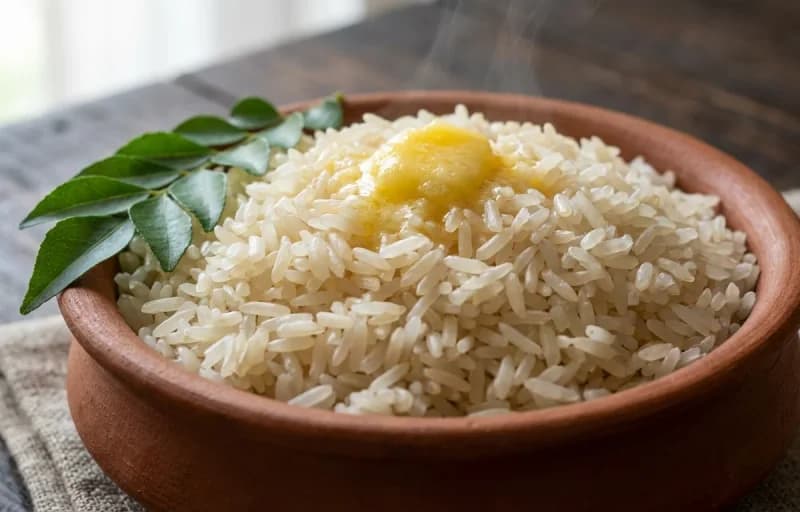
Serve hot with steamed Goan rice (ukda xitt) or fresh pao (bread).
Servings4
Serving size: 1 serving
501cal
7gprotein
80gcarbs
17gfat
Ingredients
1.5 cup Gobindobhog Rice (Basmati rice can be used as a substitute)
4 tbsp Ghee
0.25 cup Cashew Nuts (Halved or whole)
0.25 cup Raisins
3 tbsp Sugar (Adjust to taste)
1 tsp Ginger Paste
0.25 tsp Turmeric Powder (For color)
1 tsp Salt
2 pcs Bay Leaf
1 inch Cinnamon Stick
4 pcs Green Cardamom (Lightly crushed to release aroma)
4 pcs Cloves
1 strand Mace (Also known as Javitri)
3 cup Hot Water (Using hot water helps keep rice grains separate)
Instructions
1
Prepare the Rice
Gently wash the gobindobhog rice under cold running water until the water runs clear. Be careful not to break the grains.
Soak the washed rice in fresh water for 20-30 minutes.
After soaking, drain the rice completely using a fine-mesh sieve. Let it sit in the sieve for 10 minutes to remove all excess water.
2
Fry Nuts and Raisins
Heat 2 tbsp of ghee in a heavy-bottomed pan or kadai over medium heat.
Add the cashew nuts and fry for 1-2 minutes until they turn a light golden brown.
Add the raisins and fry for another 30 seconds until they plump up. Immediately remove the cashews and raisins with a slotted spoon and set aside.
3
Sauté Spices and Rice
In the same pan, add the remaining 2 tbsp of ghee.
Once the ghee is hot, add the bay leaves, cinnamon stick, crushed green cardamoms, cloves, and mace. Sauté for 30-40 seconds until the spices release their aroma.
Add the drained rice to the pan. Gently sauté for 2-3 minutes, ensuring each grain is coated with ghee. Avoid vigorous stirring.
0.25 cup Warm Water (For soaking and grinding cashews)
2 tbsp Coconut Oil
1 tsp Mustard Seeds
1 tsp Cumin Seeds
2 pieces Green Chillies (Slit lengthwise)
10 leaves Curry Leaves
150 g Potato (Approx. 1 medium, peeled and cubed)
100 g Carrot (Approx. 1 medium, peeled and cubed)
1 cup Thin Coconut Milk (Second extract or diluted canned coconut milk)
0.5 cup Water (For cooking vegetables)
100 g French Beans (Trimmed and chopped into 1-inch pieces)
0.5 cup Sweet Corn Kernels (Fresh or frozen)
0.5 cup Green Peas (Frozen)
1 tsp Salt (Adjust to taste)
1 tsp Jaggery (Grated, or use sugar)
1 cup Thick Coconut Milk (First extract or full-fat canned coconut milk)
2 tbsp Coriander Leaves (Freshly chopped, for garnish)
Instructions
1
Prepare the cashew paste. Soak the cashew nuts in 1/4 cup of warm water for 15 minutes. After soaking, transfer the cashews along with the water to a blender and grind to a very smooth, creamy paste. Set aside.
2
Make the tempering. Heat coconut oil in a medium-sized pot or kadai over medium heat. Add the mustard seeds and allow them to splutter completely, which takes about 30 seconds. Add the cumin seeds and let them sizzle for another 20 seconds. Finally, add the slit green chillies and curry leaves, and sauté for 30 seconds until fragrant.
3
Cook the hard vegetables. Add the cubed potatoes and carrots to the pot. Sauté for 2 minutes. Pour in the thin coconut milk and 1/2 cup of water. Bring the mixture to a boil, then reduce the heat to a simmer, cover the pot, and cook for 8-10 minutes until the potatoes are about halfway tender.
4
Add the remaining vegetables. Add the chopped french beans, sweet corn, and green peas to the pot. Stir well, cover again, and continue to cook for another 5-7 minutes until all the vegetables are tender but still retain a slight bite.
5
Thicken and season the curry. Stir in the prepared cashew paste, salt, and grated jaggery. Mix everything gently and let it simmer for 2-3 minutes, allowing the gravy to thicken slightly.
6
Finish with thick coconut milk. Reduce the heat to the lowest setting. Pour in the thick coconut milk and stir gently to combine. Heat the curry through for 2-3 minutes. It's crucial not to let it come to a rolling boil, as this can cause the coconut milk to curdle.
Stir in the ginger paste, turmeric powder, sugar, and salt. Mix gently for another minute.
4
Cook the Pulao
Pour in 3 cups of hot water and give it a gentle stir.
Bring the water to a vigorous boil over high heat.
Once boiling, reduce the heat to the absolute lowest setting. Cover the pan with a tight-fitting lid and let it cook undisturbed for 15 minutes.
Do not open the lid during this 'dum' cooking process, as the trapped steam is essential for cooking the rice perfectly.
5
Rest and Garnish
After 15 minutes, turn off the heat but keep the lid on. Let the pulao rest for at least 10 minutes. This step is crucial for the grains to firm up and become fluffy.
Open the lid, sprinkle the fried cashews and raisins over the top.
Gently fluff the rice with a fork to separate the grains. Serve hot with your favorite curry.
7
Garnish and serve. Turn off the heat, garnish with freshly chopped coriander leaves. Serve the Valval hot with steamed rice, sannas (Goan steamed rice cakes), or chapatis.