
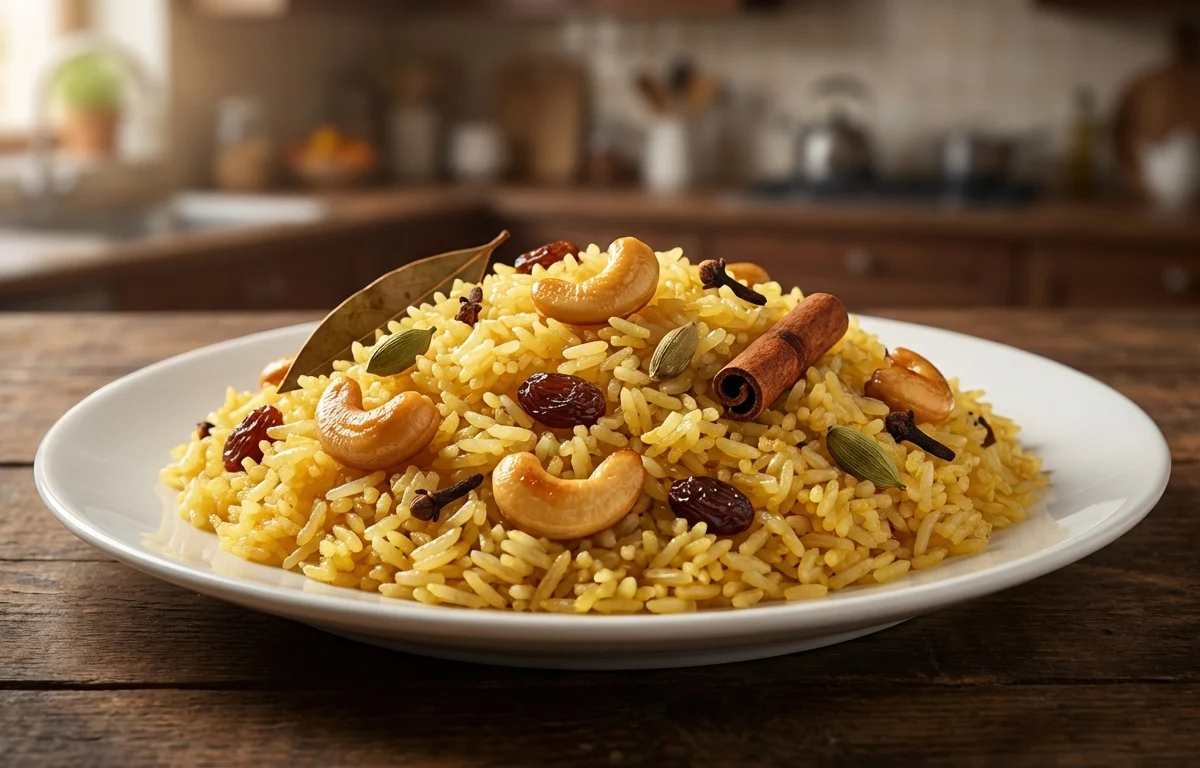
Bengali Mishti Pulao
Fragrant Gobindobhog rice cooked with ghee, whole spices, nuts, and a touch of sweetness makes this festive Bengali pulao rich, aromatic, and beautifully balanced. It pairs especially well with kosha mangsho or paneer dishes.
For 4 servings
- prep · ~20 min
Wash and soak the rice.
Rinse the Gobindobhog rice gently until the water runs mostly clear. Soak for 20 minutes, then drain well and spread lightly so the grains do not break.
TIPHandle this rice gently because the grains are small and delicate. - saute · ~2 min
Fry the nuts and raisins.
1.Heat 1 tablespoon ghee in a heavy pan over medium heat.2.Add cashews and fry until lightly golden, about 1 minute.3.Add raisins and cook until they puff, about 20 seconds.4.Remove both to a plate and keep aside. - saute · ~4 min
Cook the whole spices and rice.
1.Add the remaining ghee to the same pan.2.Add bay leaf, green cardamom, cloves, and cinnamon and cook until fragrant, about 30 seconds.3.Add the drained rice and stir gently for 2 to 3 minutes so the grains are coated in ghee.4.Add turmeric powder and mix gently to give the rice a light golden color.TIPKeep the heat medium-low so the spices bloom without burning and the rice stays intact. - boil · ~4 min
Add water and seasonings.
Pour in the hot water, then add sugar and salt. Stir once very gently, scraping any grains from the sides of the pan, and bring the liquid to a boil.
- simmer · ~15 min
Cover and cook the pulao.
Lower the heat, cover the pan tightly, and cook for 12 to 15 minutes until the rice is tender and the liquid is absorbed.
TIPDo not stir while the rice cooks or the grains can turn sticky. - rest · ~10 min
Rest the pulao.
Turn off the heat and let the pulao rest, covered, for 10 minutes so the grains finish steaming and firm up.
- garnish
Fold in the fried nuts and raisins.
Open the pan, fluff the rice gently with a fork, and fold in the fried cashews and raisins without breaking the grains.
- serve
Serve the mishti pulao warm.
What to keep in mind.
7 tips from the recipe — small details that make a real difference to the final dish.
- 1Drain the soaked Gobindobhog rice very well before frying, or extra moisture can make the pulao clump.
- 2Toast the rice in ghee until it smells nutty; this helps the delicate short grains stay separate after cooking.
- 3Use a heavy-bottomed pan with a tight lid so the sweetened rice cooks evenly without catching at the bottom.
- 4Once the hot water goes in, stir only once; repeated stirring can break Gobindobhog grains and make them sticky.
- 5If the rice is cooked but seems too moist, leave the lid ajar for 2 minutes before the resting stage.
- 6Fry raisins just until they puff, then remove immediately so they stay juicy instead of turning chewy.
- 7This pulao reheats best with a spoonful of hot water covered on low heat, which revives the aroma without drying it out.
Adapt it for your goals.
Low-sweet
Reduce the sugar slightly for a more savory festive pulao that pairs especially well with rich kosha mangsho.
richer festiveRicher-festive
Add a few more cashews and raisins fried in ghee for a more celebratory texture and sweeter finish.
milder spiceMilder-spice
Use fewer cloves if you want the cardamom and ghee aroma to stay softer and less assertive.
veganVegan
Replace ghee with a neutral oil or vegan butter; the pulao will still be aromatic, though less buttery in character.
Why this is on our healthy list.
Energy-Giving Rice Base
Gobindobhog rice provides easily digestible carbohydrates, making this pulao a comforting dish for festive meals.
Nuts Add Good Fats
Cashews contribute healthy fats and some plant-based minerals, adding both richness and nourishment.
Spice-Infused Aroma
Cardamom, cinnamon, cloves, and bay leaf add fragrance and depth without needing heavy sauces or excess ingredients.
Frequently asked questions
Yes, but the texture and aroma will be different. Gobindobhog gives the classic Bengali character, while basmati will make it lighter and less traditional.



-curry.webp)
.webp)