
vegetariansoy-free
gujarati
Rava Dhokla
15 min
277 cal
8gProtein
36gCarbs
11gFat
1Recipes
Loading...
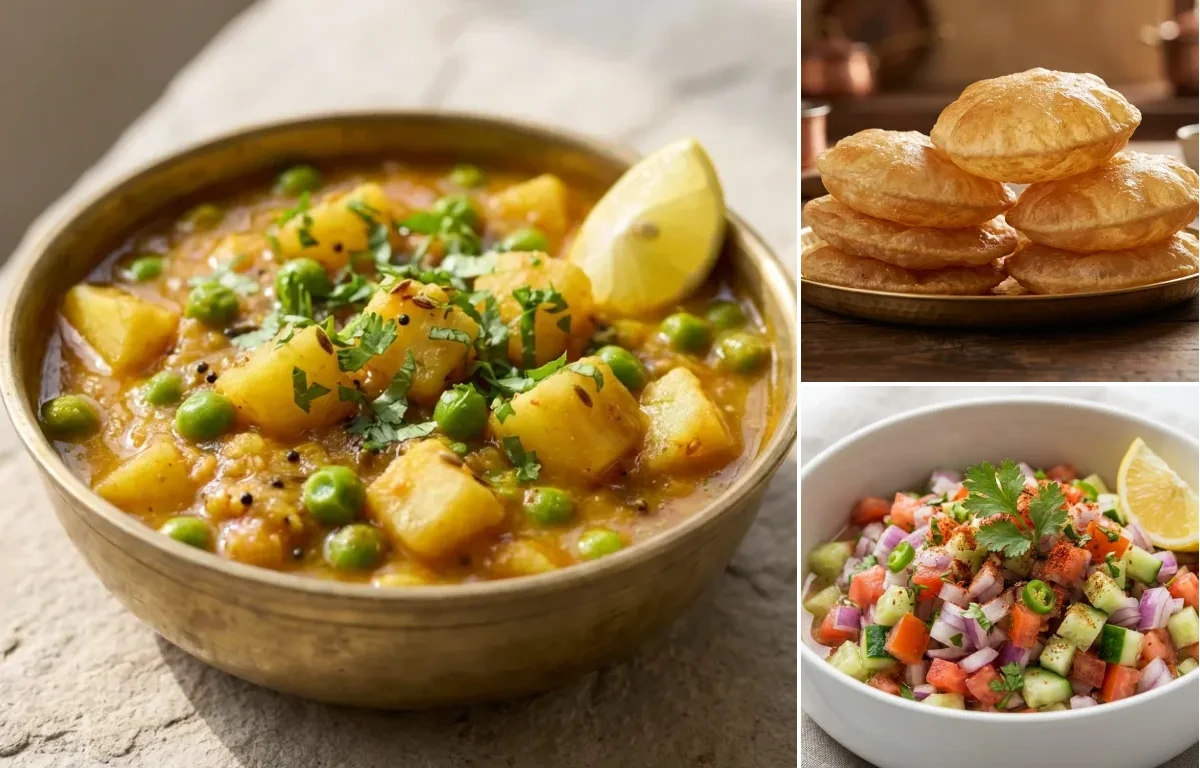
Perfectly spiced Vatana Batata Shaak with fluffy Puri. Comfort food that's delicious!
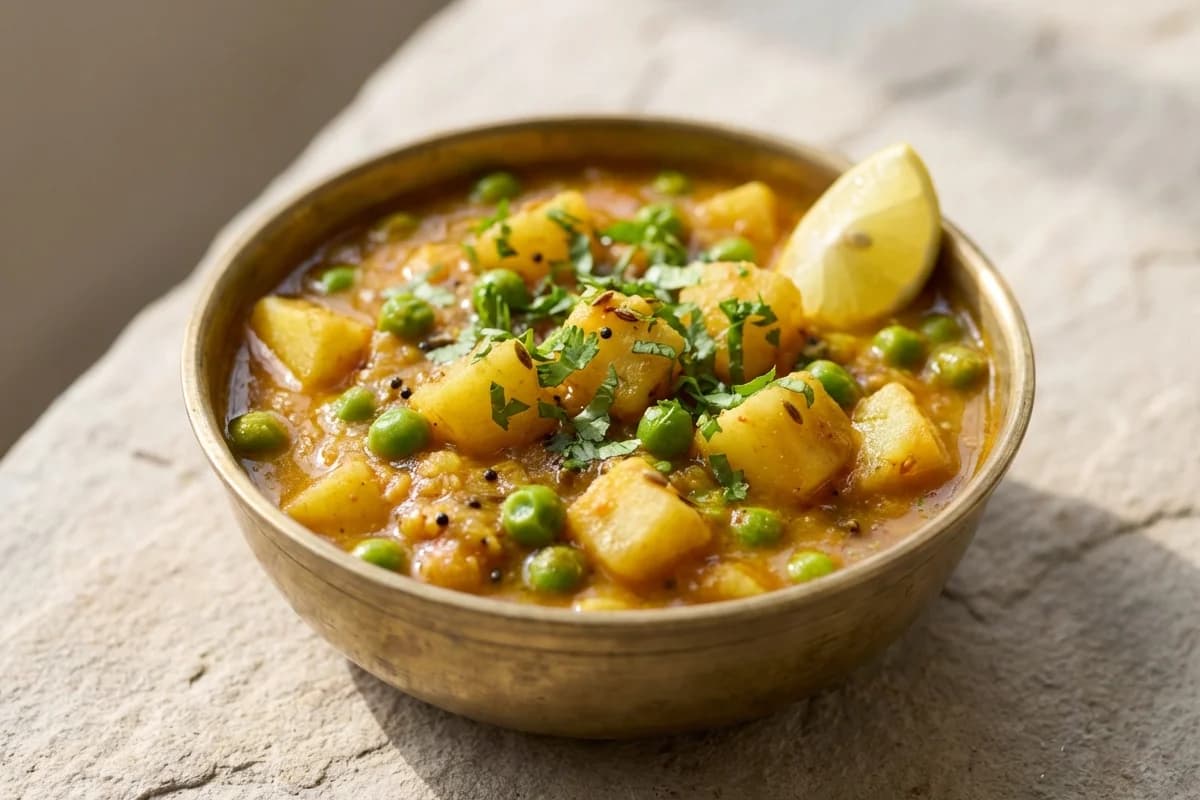
A comforting Gujarati homestyle curry made with tender potatoes and sweet green peas. This everyday sabzi, known as 'shaak', features a mild, tangy, and slightly sweet tomato-based gravy. It's a quick and easy dish that pairs perfectly with fresh rotis or parathas for a wholesome meal.
Serving size: 1 serving

Golden, puffy, and irresistibly crisp, these deep-fried Indian breads are a festive favorite. Made from a simple whole wheat dough, they pair perfectly with savory curries like chole or a sweet shrikhand.
Serving size: 1 serving
Perfectly spiced Vatana Batata Shaak with fluffy Puri. Comfort food that's delicious!
This gujarati dish is perfect for lunch. With 635.97 calories and 14.030000000000001g of protein per serving, it's a nutritious choice for your meal plan.
Discover authentic meals from cuisines around the world.
Find meals that fit your dietary preferences.
Find meals optimized for your goal.
Preparation: Peel and dice the potatoes into uniform 1/2-inch cubes. Finely chop the onion and puree the tomatoes. If using fresh peas, shell them. Keep all ingredients ready.
Tempering (Vaghar): Heat oil in a medium-sized pot or pressure cooker over medium heat. Once hot, add the mustard seeds and allow them to splutter, which should take about 30 seconds. Add the cumin seeds and hing, and sauté for another 30 seconds until fragrant.
Sauté Aromatics: Add the finely chopped onion and sauté for 3-4 minutes until it becomes soft and translucent. Stir in the ginger-green chili paste and cook for another minute until the raw aroma disappears.
Cook the Masala: Pour in the tomato puree. Add the turmeric powder, red chili powder, and coriander-cumin powder. Mix well and cook the masala, stirring occasionally, for 5-7 minutes until it thickens and you see oil separating from the sides.
Cook the Vegetables: Add the diced potatoes, green peas, salt, and sugar to the pot. Stir gently to coat the vegetables evenly with the masala. Pour in 1 cup of water, stir, and bring the mixture to a boil.
Simmer: Cover the pot with a lid and reduce the heat to low-medium. Let the shaak simmer for 15-18 minutes, or until the potatoes are tender and can be easily pierced with a fork. Stir once or twice in between to prevent sticking. (For pressure cooker: Close the lid and cook for 2 whistles on medium heat).
Finishing Touches: Once the potatoes are cooked through, turn off the heat. Stir in the garam masala and fresh lemon juice. Garnish with freshly chopped coriander leaves. Let the shaak rest for 5 minutes to allow the flavors to meld before serving.
Prepare the Dough
Knead and Rest the Dough
Shape and Roll the Puris
Fry the Puris
Drain and Serve

Luxurious, protein-packed Lobster Masala with soft rotli - a perfectly spiced, aromatic treat!

Aromatic Vaghareli Machhi with soul-satisfying khichdi & tangy kadhi. A homestyle delight!

Crispy, protein-packed Baida Roti with tangy mint chutney - a quick, satisfying dinner!

Melt-in-mouth Nalli Nihari, rich and aromatic, with tandoori roti. Pure soul-satisfying comfort!

Protein-packed Surti Keema Ghotala with soft pav - a perfectly spiced, homestyle treat!