
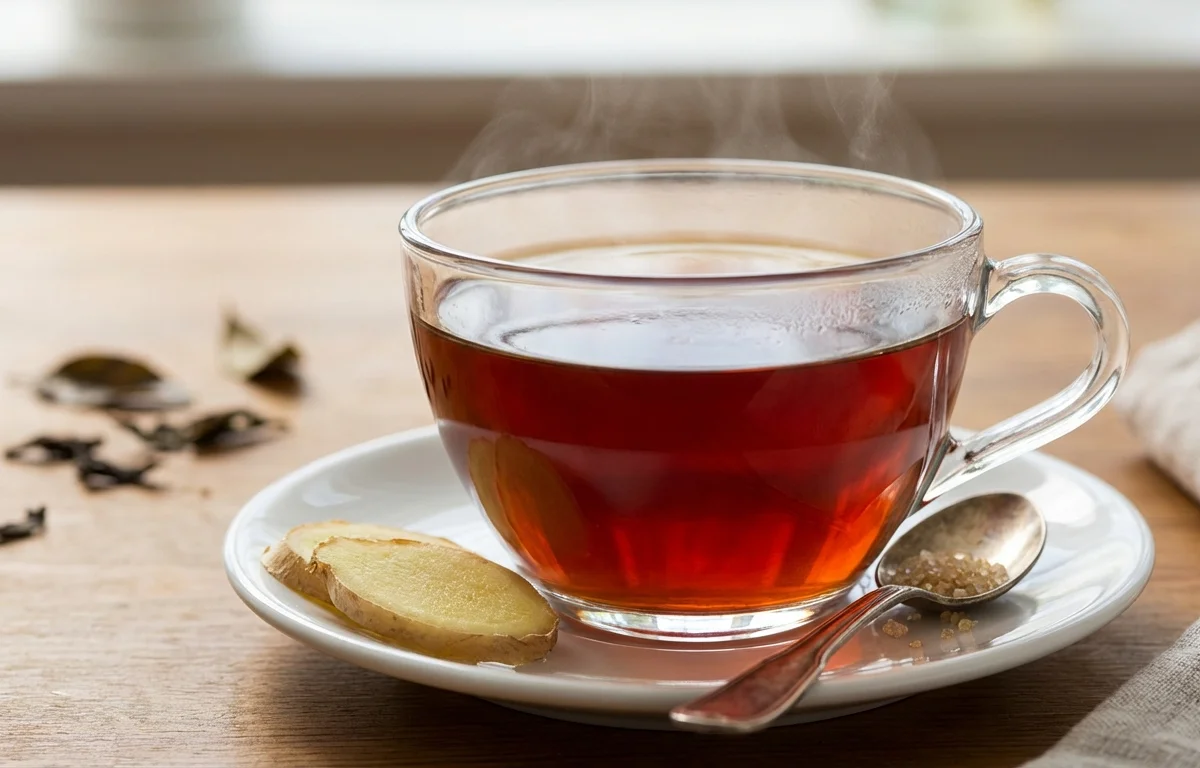
Assamese Black Tea
A strong, clear cup of Assam-style black tea made by simmering tea leaves in water without milk. It has a brisk, malty flavor and is often enjoyed hot with a little sugar or just as it is.
For 4 servings
- boil · ~5 min
Boil the water.
Pour the water into a saucepan and bring it to a full boil over medium-high heat.
- simmer · ~3 min
Add the tea leaves and simmer.
Add the Assam tea leaves and sugar, then lower the heat and let the tea simmer gently until the color turns deep amber and the flavor is strong.
- serve · ~1 min
Strain and serve hot.
Strain the tea into 4 cups and serve right away while hot.
What to keep in mind.
6 tips from the recipe — small details that make a real difference to the final dish.
- 1Keep the simmer gentle after adding the leaves; a rolling boil can make Assam tea taste harsh.
- 2Watch for a deep amber color as your doneness cue; that is usually enough for a brisk, full cup.
- 3Dissolve the sugar while the tea simmers so it blends cleanly instead of tasting separate in the cup.
- 4Strain immediately once the flavor is right, or the leaves will keep extracting and turn the tea bitter.
- 5Warm the cups with a little hot water first so the tea stays hotter and more aromatic when served.
- 6If making ahead, store strained tea in the fridge and reheat gently rather than boiling it again.
Adapt it for your goals.
Low-sugar
Reduce or skip the sugar to let the bold, malty Assam flavor stand out more clearly.
kadakKadak
Simmer the leaves a little longer for a stronger, more robust cup if you prefer assertive tea.
lemonLemon
Add a small squeeze of lemon after straining for a brighter, sharper finish without changing the basic tea method.
Why this is on our healthy list.
Naturally Light Drink
Made with water and tea leaves, this is a simple beverage without milk or cream, so it stays light on the palate.
Tea Polyphenols
Assam black tea contains natural plant compounds from the tea leaves, which are part of why black tea is valued in everyday diets.
Lower Sugar Flexibility
Because the sweetness is added separately, it is easy to reduce or omit sugar to suit your preferences.
Frequently asked questions
It usually turns bitter if the leaves boil too hard or steep too long. Keep it at a gentle simmer and strain as soon as the color turns deep amber.


