
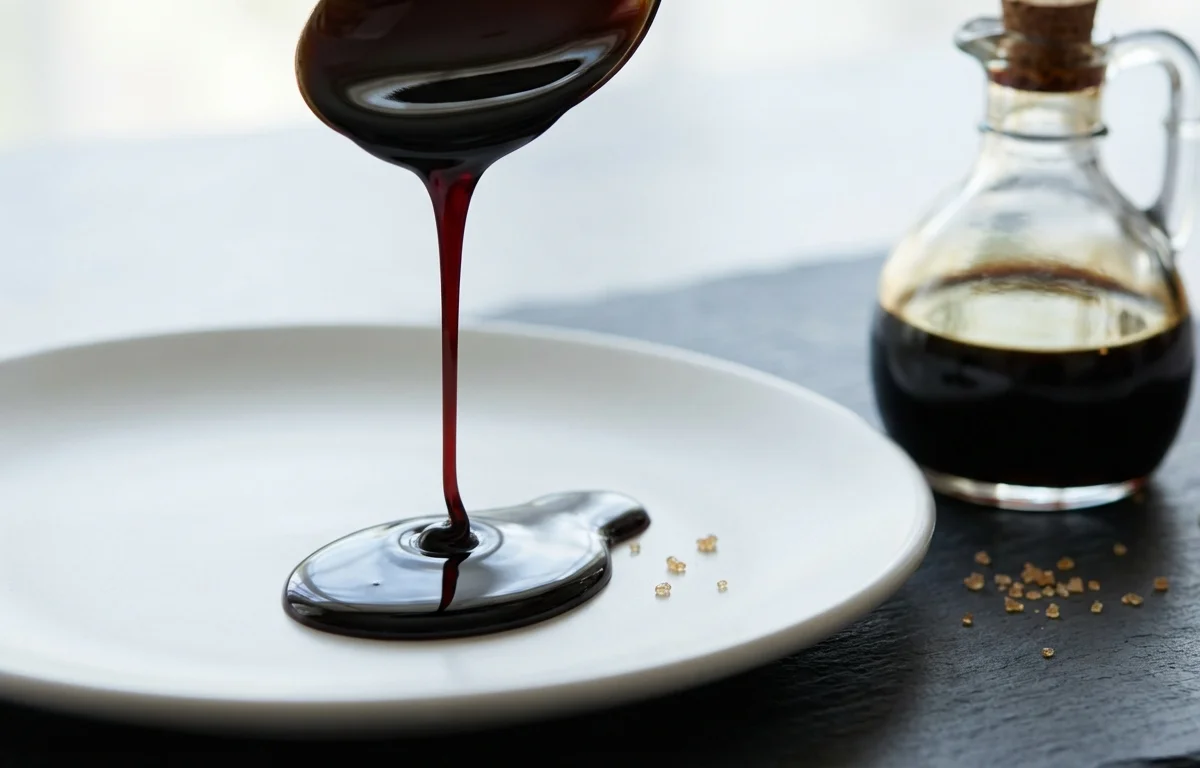
Balsamic Glaze
A thick, syrupy reduction of balsamic vinegar that transforms into a sweet, tangy drizzle. Perfect over grilled vegetables, salads, Caprese, or even strawberries. Just one ingredient and a little patience yields a glossy, restaurant-quality finishing sauce.
For 4 servings
- prep
Measure the balsamic vinegar.
Pour the balsamic vinegar into a small saucepan. Stir in the honey, if using, for a slightly sweeter, thicker glaze.
- simmer · ~15 min
Gently simmer the vinegar.
Place the saucepan over medium heat to bring the vinegar to a gentle bubble, then immediately reduce the heat to low. Maintain a very gentle simmer; bubbling too vigorously will lead to bitterness. Cook, swirling the pan occasionally, until the vinegar coats the back of a spoon and has reduced by about two-thirds, roughly 12 to 15 minutes.
TIPDo not stir vigorously—just swirl the pan. Over-stirring can accelerate evaporation too quickly and burn the sugars. - rest · ~10 min
Cool the glaze completely.
Remove the pan from the heat and let the glaze cool to room temperature in the saucepan. It will thicken significantly as it cools.
TIPIf the glaze becomes too thick after cooling, warm it gently and whisk in a few drops of water to loosen. - serve
Transfer to an airtight jar and store or use immediately.
Pour the cooled balsamic glaze into a clean glass jar with a tight-fitting lid. Drizzle over Caprese salad, grilled vegetables, bruschetta, or even fresh strawberries.
What to keep in mind.
6 tips from the recipe — small details that make a real difference to the final dish.
- 1Use a heavy-bottomed saucepan to distribute heat evenly and prevent scorching.
- 2Do not walk away during simmering — the glaze can burn in seconds once it thickens.
- 3The glaze is done when it coats the back of a spoon and leaves a clear trail when you run a finger through it.
- 4Let the glaze cool completely in the pan — it will thicken dramatically as it cools.
- 5If the glaze becomes too thick after cooling, reheat gently and whisk in a few drops of water.
- 6Store in a glass jar at room temperature for up to two weeks; refrigeration may make it too thick.
Adapt it for your goals.
Herb-infused
Add a sprig of fresh rosemary or a couple of thyme sprigs to the vinegar while it simmers, then remove before cooling. This lends an aromatic, savory twist ideal for drizzling over roasted meats or vegetables.
spicedSpiced
Toss in a cinnamon stick, a star anise, and a few black peppercorns during simmering. Strain before cooling for a warm, wintery glaze perfect over roasted squash or panna cotta.
sweet hotSweet-hot
Add a small dried chili (such as arbol or cayenne) to the vinegar while it simmers. The heat mellows into a subtle warmth, making the glaze a great match for grilled steak or halloumi.
Why this is on our healthy list.
Low in Calories
Balsamic glaze is a concentrated flavor source with very few calories per drizzle, making it a smart way to add depth to dishes without heavy fats or sugars.
Contains Antioxidants
Balsamic vinegar is made from grapes, which contain polyphenols — natural antioxidants that help protect cells from oxidative stress.
Supports Blood Sugar Balance
The acetic acid in balsamic vinegar may help slow the absorption of carbohydrates, promoting more stable blood sugar levels after meals.
Frequently asked questions
Yes, but avoid the very cheapest 'balsamic condiment' blends. A mid-range supermarket balsamic works well; you can adjust sweetness with the optional honey if needed.


