
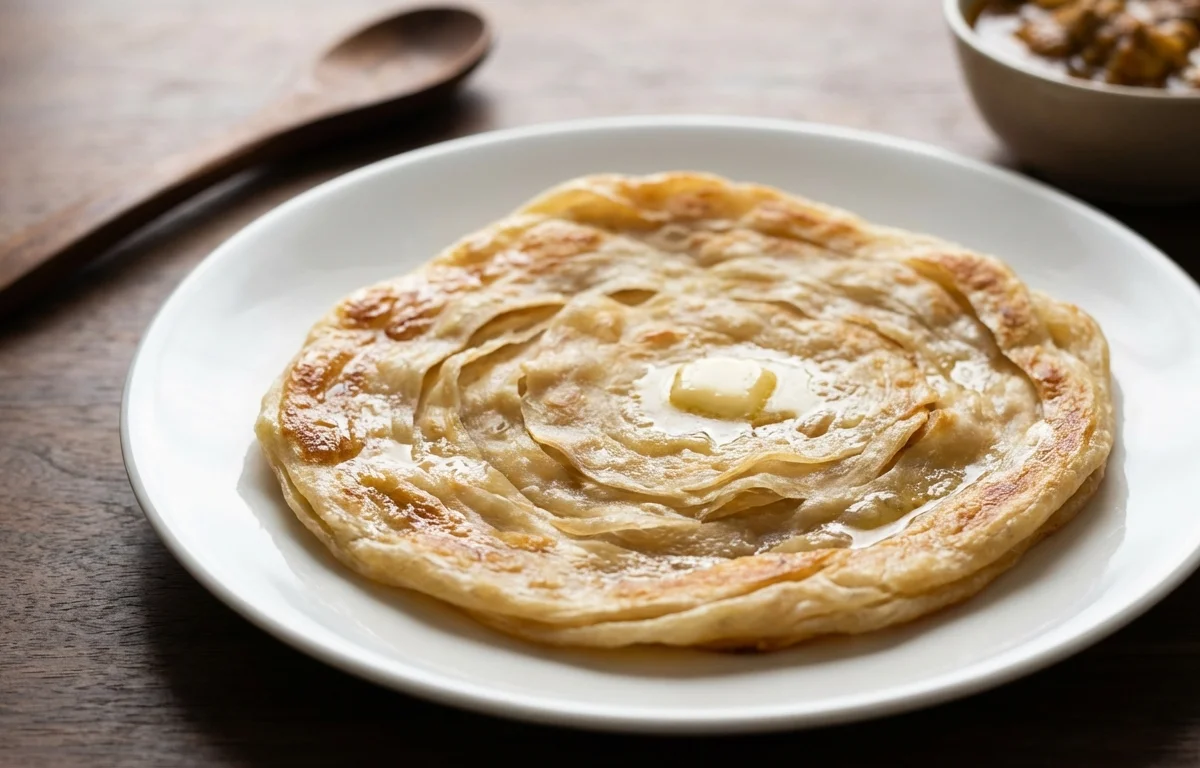
Bengali Porota
This flaky Bengali-style layered flatbread is made with maida, a little ghee, and a soft dough that cooks up golden on the tawa. It is lightly crisp outside, tender inside, and perfect with aloor dom, kosha mangsho, or a cup of tea.
For 4 servings
- knead · ~8 min
Knead the dough.
1.Add all-purpose flour, salt, and sugar to a wide bowl and mix well.2.Rub in 1 tbsp ghee until the flour feels lightly sandy.3.Add water little by little and knead into a soft, smooth dough.4.Knead for 5 minutes until supple and not sticky.TIPA soft dough gives tender layers. If it feels tight, add 1-2 tsp more water. - rest · ~20 min
Cover and rest the dough.
Cover the dough and let it rest for 20 minutes. This helps the gluten relax so the porota rolls out easily.
- prep · ~7 min
Divide and shape the dough.
1.Divide the dough into 4 equal balls.2.Roll one ball into a thin round on a lightly floured surface.3.Spread a little ghee over the surface and dust lightly with flour.4.Fold it into pleats or roll it into a tight coil, then flatten gently.TIPKeep the pleats snug but not too tight so the layers stay distinct after rolling. - rest · ~10 min
Rest the shaped coils.
Set the shaped dough coils aside for 10 minutes, covered with a cloth, so they relax before the final rolling.
- prep · ~5 min
Roll the porota.
Roll each rested coil into a round porota about 6 to 7 inches wide. Keep the pressure even so the layers do not tear.
- fry · ~8 min
Cook the porota on a hot tawa.
1.Heat a tawa over medium heat and place one rolled porota on it.2.Cook until small bubbles appear and the underside has light spots, about 40 seconds.3.Flip, drizzle a little ghee around the edges and on top, and cook the second side until golden.4.Flip once or twice more, pressing gently, until both sides are golden with flaky layers.TIPUse medium heat. Very high heat browns the outside before the inner layers cook. - assemble · ~1 min
Loosen the layers.
When each porota comes off the tawa, clap it gently between your palms or crush it lightly from the sides to separate the layers.
- serve
Serve the Bengali porota hot.
What to keep in mind.
7 tips from the recipe — small details that make a real difference to the final dish.
- 1Keep the dough softer than roti dough; a tight dough makes the porota chewy instead of flaky.
- 2After making the pleats or coil, always rest it covered so the final rolling does not spring back.
- 3Dust the layered sheet lightly with flour; too much flour between folds can make the layers dry.
- 4Roll from the center outward with gentle pressure so the coil opens into layers without tearing.
- 5Cook on medium heat only; the inside layers need time to steam and separate before the surface deepens in color.
- 6Clap or lightly crush the hot porota right after cooking to release the flaky layers while the ghee is still warm.
- 7If making ahead, half-cook the porota without much color, cool, then reheat on the tawa with a little ghee before serving.
Adapt it for your goals.
Low-ghee
Use less ghee while frying and brush lightly instead of drizzling; good if you want a lighter everyday porota with less richness.
attaAtta
Replace part of the maida with whole wheat flour for a nuttier taste and slightly heartier texture, though the layers will be less delicate.
laccha styleLaccha-style
Make tighter, thinner pleats before coiling to get more pronounced, ribbon-like layers and extra flakiness.
stuffedStuffed
Use the same dough to wrap a lightly spiced filling like aloo or paneer for a more filling tea-time or breakfast version.
Why this is on our healthy list.
Quick Energy from Carbs
The flour-based dough provides readily available energy, making this porota a satisfying companion to curries or a hearty breakfast.
Satiety from Ghee
The ghee adds richness and staying power, helping the flatbread feel more filling and enjoyable in smaller portions.
Simple Ingredient List
Made from basic pantry staples without additives, this homemade porota lets you control the cooking fat and freshness.
Frequently asked questions
Usually the dough is too tight, the sheet was not rolled thin enough before folding, or the shaped coils were not rested before final rolling.


