
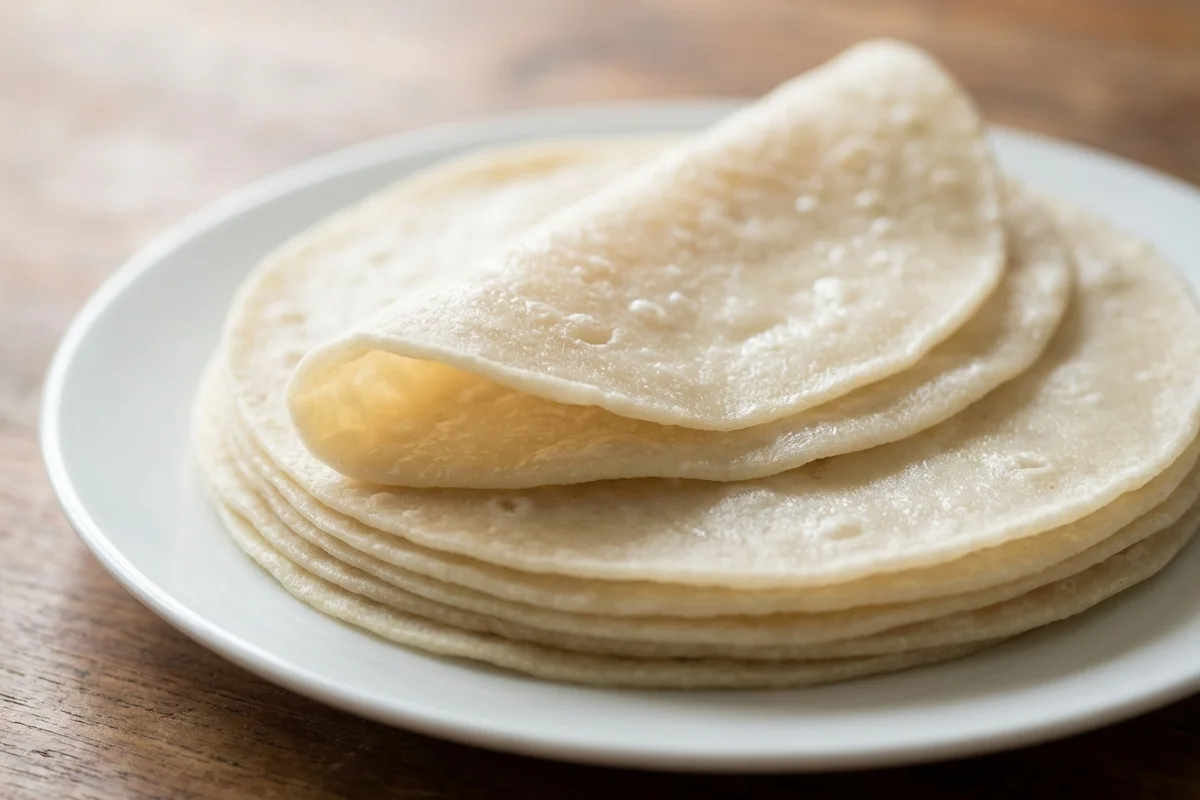
Chaler Ruti
A soft Bengali rice flour flatbread made with hot water and a quick hand-kneaded dough. Light, gentle, and comforting, it is usually served warm with simple vegetable dishes, fish curry, or jaggery.
For 8 servings
- boil · ~4 min
Boil the water.
Heat the water in a saucepan until it comes to a steady boil. Stir in the salt.
- mix · ~3 min
Mix the rice flour with the hot water.
1.Place the rice flour in a wide mixing bowl.2.Pour in the hot salted water gradually while stirring with a spoon.3.Mix until the flour comes together into a rough, soft mass with no dry patches.TIPUse very hot water so the rice flour hydrates properly and the rotis stay pliable. - rest · ~5 min
Rest the dough briefly.
Cover the dough and let it sit until cool enough to handle but still warm.
- knead · ~5 min
Knead the dough until smooth.
Grease your palms with a little ghee and knead the warm dough for 3 to 4 minutes until smooth and soft. Divide it into 8 equal balls and keep them covered.
TIPIf the dough cracks while kneading, wet your hands lightly and knead again. - prep · ~7 min
Roll the rotis.
1.Dust the work surface and one dough ball lightly with rice flour.2.Pat and roll it gently into a thin round about 5 to 6 inches wide.3.Repeat with the remaining dough balls, keeping the shaped rotis covered with a cloth.TIPRoll gently from the center outward to prevent the edges from splitting. - fry · ~8 min
Cook the rotis on a hot tawa.
1.Heat a tawa over medium heat and grease it very lightly with ghee.2.Place one ruti on the hot tawa and cook until the surface changes color and small spots appear, about 30 to 40 seconds.3.Flip and cook the second side for 30 to 40 seconds, pressing lightly with a cloth or spatula to help it puff.4.Flip once more if needed and cook until soft with a few light golden spots.TIPDo not overcook or the rice rotis will turn dry and brittle. - serve · ~1 min
Serve the chaler ruti warm.
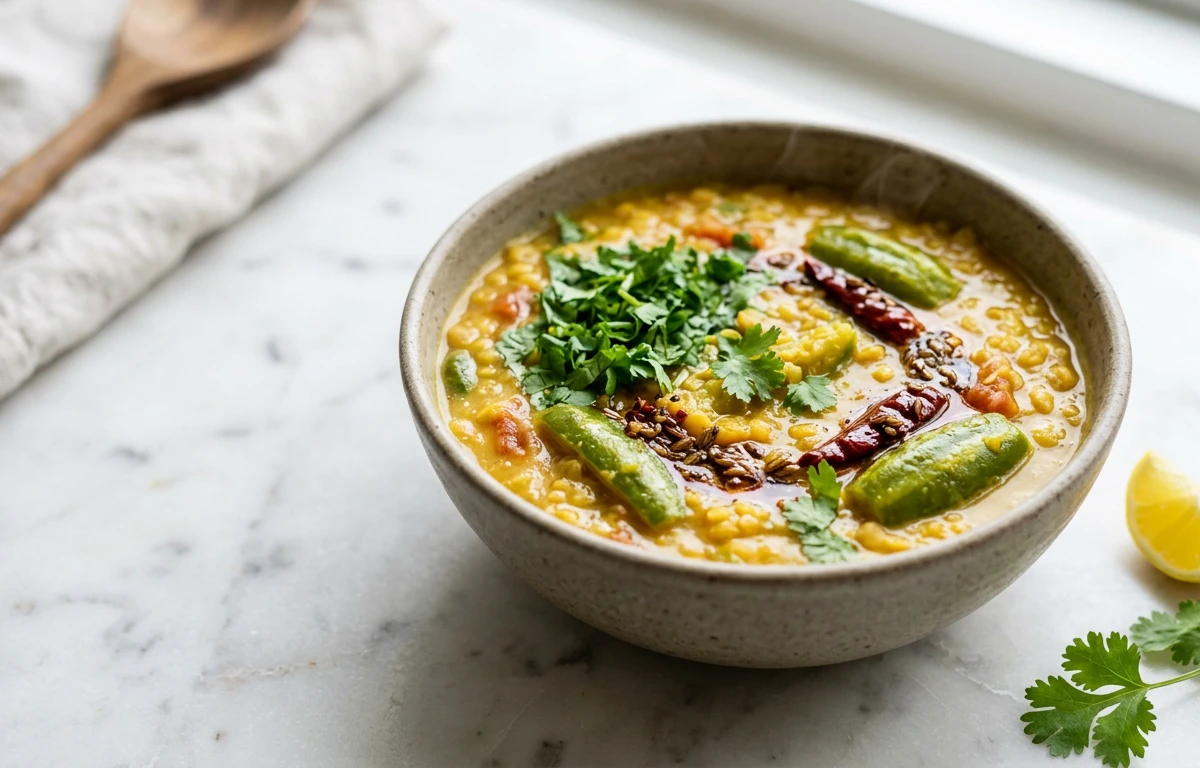
Stack the cooked rotis in a cloth-lined container to keep them soft. Serve warm with vegetable curry, fish curry, or jaggery.
What to keep in mind.
7 tips from the recipe — small details that make a real difference to the final dish.
- 1Pour the boiling water in gradually and stir fast so the rice flour hydrates evenly without forming lumps.
- 2Knead while the dough is still warm, not fully cool; warm rice dough smooths out more easily and cracks less.
- 3Keep the dough balls and rolled rutis covered with a cloth at all times so the surface does not dry out.
- 4Use only a light dusting of rice flour while rolling, or the finished ruti can turn dry on the tawa.
- 5Cook on medium heat rather than high; too much heat sets the outside before the inside stays soft.
- 6As soon as each ruti is done, stack it in a cloth-lined container to trap steam and keep it pliable.
- 7If a rolled ruti keeps splitting at the edges, pinch it back together and reroll gently with slightly damp hands.
Adapt it for your goals.
Vegan
Swap the ghee for a neutral oil or coconut oil for a fully dairy-free version that still stays soft.
jaggery sweetJaggery-sweet
Serve warm with grated jaggery or a light smear of date palm jaggery for a traditional sweet Bengali pairing.
stuffedStuffed
Fill with lightly spiced mashed potato or coconut-jaggery mixture for a more substantial ruti with extra flavor.
low fatLow-fat
Skip the final ghee brushing and use only the thinnest film on the tawa if you want a lighter everyday version.
Why this is on our healthy list.
Naturally Gluten-Free
Made entirely from rice flour, this flatbread is a suitable grain option for people avoiding wheat and gluten.
Light and Easy to Pair
Its simple ingredient list and mild flavor make it a gentle accompaniment to curries, vegetables, or a small sweet side.
Low in Added Fat
The recipe uses only a little ghee for greasing and cooking, so the bread stays soft without being heavy.
Frequently asked questions
The dough is usually too dry or too cool. Knead it again with lightly wet hands while still warm, then keep it covered before rolling.




-curry.webp)
.webp)