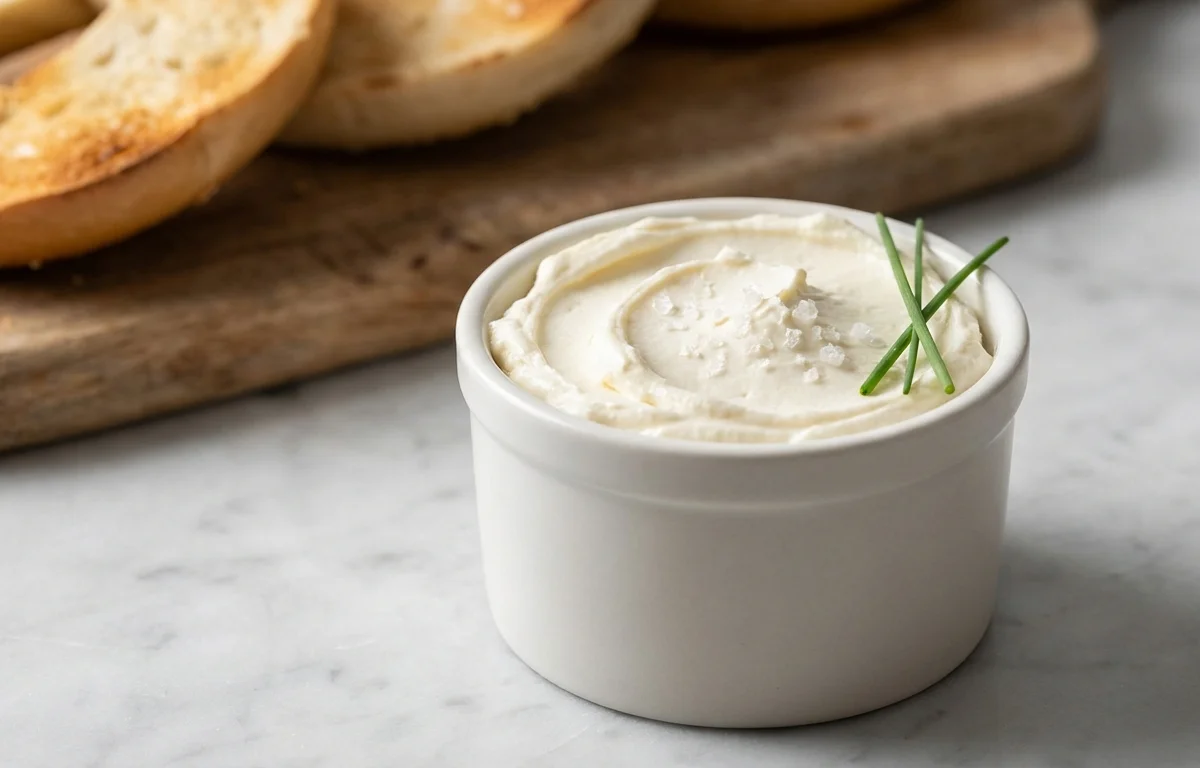
Cream Cheese
Silky, tangy, and luxuriously smooth homemade cream cheese made from just a handful of simple ingredients. Spread it on bagels, swirl it into cheesecakes, or use it as a base for savory dips. This fresh batch beats anything from a foil wrapper.
For 8 servings
- boil · ~8 min
Heat the milk and cream.
Pour the whole milk and heavy cream into a heavy-bottomed saucepan. Place over medium heat and warm gently, stirring occasionally, until the mixture reaches a gentle simmer with small bubbles forming around the edges. Do not let it come to a rolling boil.
TIPUse medium heat — high heat scorches the milk and ruins the flavor. - mix · ~5 min
Add the lemon juice and curdle.
Remove the pan from the heat. Pour in the fresh lemon juice and stir gently for a few seconds. Let the mixture sit undisturbed for 5 minutes — it will separate into white curds and thin whey.
TIPIf the milk doesn't curdle fully after 5 minutes, stir in an extra teaspoon of lemon juice. - mix · ~5 min
Strain the curds.
Line a colander with a double layer of cheesecloth and set it over a large bowl. Carefully pour the curdled milk through the cheesecloth to separate the curds from the whey. Let it drain for 5 minutes, or up to 15 minutes for a thicker cheese.
TIPDon't squeeze or press the curds yet — just let gravity do the work for the creamiest result. - mix · ~2 min
Blend until smooth.
Transfer the drained curds to a food processor. Add the salt and process on high speed until the cheese is completely smooth and silky, scraping down the sides once or twice. If it feels too thick, blend in a teaspoon of the reserved whey.
TIPBlend a little longer than you think — proper whipping makes the texture glossy and spreadable. - rest
Chill before using.
Spoon the cream cheese into a clean container, cover, and refrigerate for at least 1 hour. It firms up as it cools and the tangy flavor mellows out.
TIPThe cheese keeps well in the fridge for up to one week.
What to keep in mind.
6 tips from the recipe — small details that make a real difference to the final dish.
- 1Use a heavy-bottomed saucepan to prevent milk from scorching during heating.
- 2Let the curds drain undisturbed for up to 15 minutes for a thicker, more spreadable cream cheese.
- 3Reserve the whey — a teaspoon blended in can fix a too-thick texture without diluting flavor.
- 4For the smoothest result, process the curds in the food processor for a full two minutes, scraping the bowl halfway.
- 5Chill the cream cheese for at least 1 hour before serving; it firms up and the tang mellows into a balanced creaminess.
- 6Store in an airtight container in the fridge for up to one week — do not freeze, as the texture becomes grainy.
Adapt it for your goals.
Herbed
Add 1 tablespoon of finely chopped fresh chives, dill, or parsley to the processor during the last 10 seconds of blending. This creates a savory spread perfect for bagels or crackers.
lower fatLower-fat
Replace the heavy cream with an equal amount of whole milk (so total 4½ cups milk). The result is less rich and slightly firmer, ideal for those watching their fat intake.
garlic & herbGarlic & herb
Blend in 1 small minced garlic clove and ½ teaspoon dried oregano along with the salt. This variation mimics popular store-bought flavored cream cheeses for savory cooking.
veganVegan
Substitute the dairy with 4 cups raw cashews (soaked overnight) and ½ cup unsweetened plant milk, then use ¼ cup lemon juice. Blend everything until silky — no curdling step needed.
Why this is on our healthy list.
Rich in Calcium
Whole milk and heavy cream naturally provide calcium, which supports strong bones and teeth.
Good Source of Protein
The milk curds retain a moderate amount of protein, contributing to muscle repair and satiety.
No Artificial Preservatives
Homemade cream cheese contains only milk, cream, lemon juice, and salt — free from stabilizers and gums found in many commercial tubs.
Probiotic Potential
If you choose to let the curds sit with a splash of live culture buttermilk before draining, this recipe can become a fermented food with beneficial bacteria.
Frequently asked questions
The milk might not have been hot enough (aim for a gentle simmer, about 190°F) or the lemon juice was too old. Add an extra teaspoon of fresh lemon juice and stir gently.