Gehu Roti
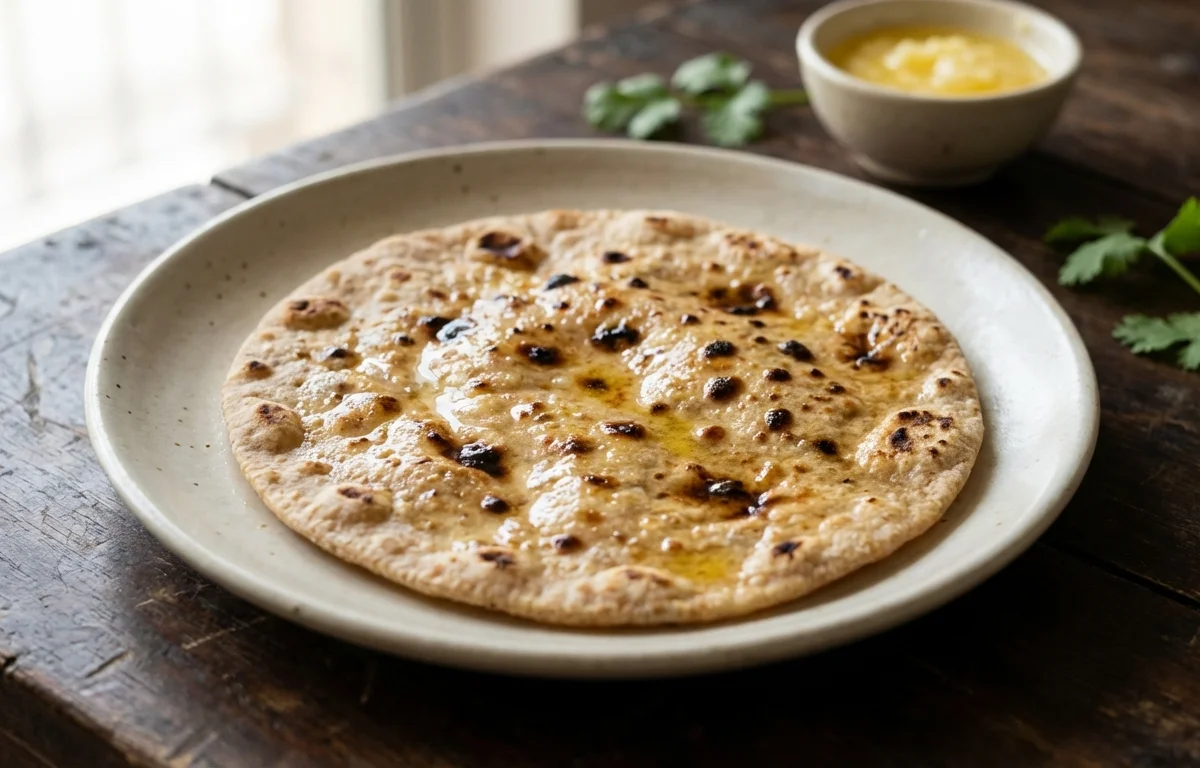
Soft, wholesome whole wheat flatbreads cooked on a hot tawa until lightly puffed with golden-brown spots. A daily staple across North Indian homes, these rotis are made from just atta, water, and a pinch of salt — simple, nourishing, and perfect with any dal or sabzi.
For 4 servings
- mix · ~7 min
Make the dough.
In a large bowl, combine 2 cups atta and salt. Slowly add lukewarm water little by little, mixing with your fingers. Knead into a soft, smooth dough for about 5 to 7 minutes. The dough should be pliable and not sticky.
- rest · ~10 min
Rest the dough.
Cover the dough with a damp cloth and let it rest for 10 minutes. This relaxes the gluten and makes rolling easier.
TIPResting is key — skipping it makes the rotis tough and hard to roll evenly. - prep · ~3 min
Divide and shape the dough into balls.
1.Knead the rested dough once more for 30 seconds.2.Divide into 8 equal portions and roll each into a smooth ball.3.Flatten each ball slightly between your palms and dust lightly with dry atta. - prep · ~8 min
Roll out the rotis.
1.Dip a dough ball in dry atta and place on the rolling board.2.Roll into a thin, even circle about 5 to 6 inches in diameter.3.Keep dusting lightly with atta to prevent sticking.4.Roll all 8 rotis and stack them with a light dusting of flour between each.TIPRoll evenly from the center outward. If the edges are thick while the center is thin, they won't puff properly. - fry · ~1 min
Cook the roti on the first side.
1.Heat the tawa over medium-high heat until very hot.2.Place one rolled roti on the tawa and cook for 15 to 20 seconds until small bubbles appear.3.Flip it over using tongs. The underside should have light golden-brown spots.TIPThe tawa must be hot enough — test by sprinkling a pinch of flour; it should sizzle instantly. - fry · ~1 min
Cook the second side and puff the roti.
1.Cook the second side for 25 to 30 seconds until golden-brown spots appear.2.Press gently with a folded kitchen towel or spatula around the edges to encourage puffing.3.Flip once more and cook the first side again for 5 to 10 seconds pressing lightly.TIPDon't press too hard in the center — it can tear the roti. Gentle pressure around the edges works best for puffing. - garnish
Brush with ghee and keep warm.
Remove the roti from the tawa. Brush lightly with ghee on one side. Place in a roti basket or wrap in a clean kitchen towel to keep soft and warm. Repeat with the remaining dough balls.
- serve
Serve hot with dal or sabzi.
Stack the rotis and serve immediately with your choice of dal, dry sabzi, or curry.
What to keep in mind.
8 tips from the recipe — small details that make a real difference to the final dish.
- 1Use room-temperature or lukewarm water to help the gluten develop for a softer dough.
- 2Knead the dough for a full 5–7 minutes until it feels smooth and supple to the touch.
- 3Always rest the dough for at least 10 minutes — this relaxes the gluten so rotis roll out easily.
- 4Roll from the center outward in even strokes to maintain a uniform thickness for even puffing.
- 5Test tawa heat by sprinkling a pinch of flour — if it sizzles immediately, it’s ready.
- 6Press gently around the edges with a folded cloth while cooking to encourage the roti to puff up.
- 7Brush with ghee while hot and wrap in a clean cloth to keep them soft and pliable.
- 8Leftover rotis can be stored in an airtight container at room temp for a day, or refrigerated for 2–3 days.
Adapt it for your goals.
Methi (fenugreek) roti
Add 1/2 cup of fresh chopped fenugreek leaves to the dough for an earthy, slightly bitter flavor boost that pairs beautifully with yogurt and pickle.
laccha paratha styleLaccha paratha style
After rolling, brush with ghee, fold like a fan, coil into a spiral, then roll out again — this creates flaky, layered rotis instead of plain ones.
low oilLow-oil
Skip brushing with ghee entirely and cook the rotis dry on the tawa for a lower-fat version that still tastes great with curries.
gluten freeGluten-free
Replace atta with a mix of sorghum flour and a gluten-free binder (like xanthan gum) for those avoiding gluten, though texture will differ.
stuffed rotiStuffed roti
Fill each dough ball with spiced mashed potatoes or grated radish before rolling — cook the same way for a hearty meal-in-one.
Why this is on our healthy list.
Rich in Dietary Fiber
Whole wheat atta provides natural fiber that aids digestion and helps maintain steady blood sugar levels.
Good Source of B Vitamins
Whole wheat is naturally rich in B vitamins like niacin and thiamine, which support energy metabolism.
Low in Sodium
With only a pinch of salt, this roti is very low in sodium — ideal for heart-friendly eating.
Contains Healthy Fats from Ghee
A light brush of ghee adds butyrate, a short-chain fatty acid that supports gut health when used in moderation.
Frequently asked questions
If dry, add water a teaspoon at a time and re-knead. If sticky, dust with a little extra atta and knead until smooth.


.webp)