Laccha Paratha
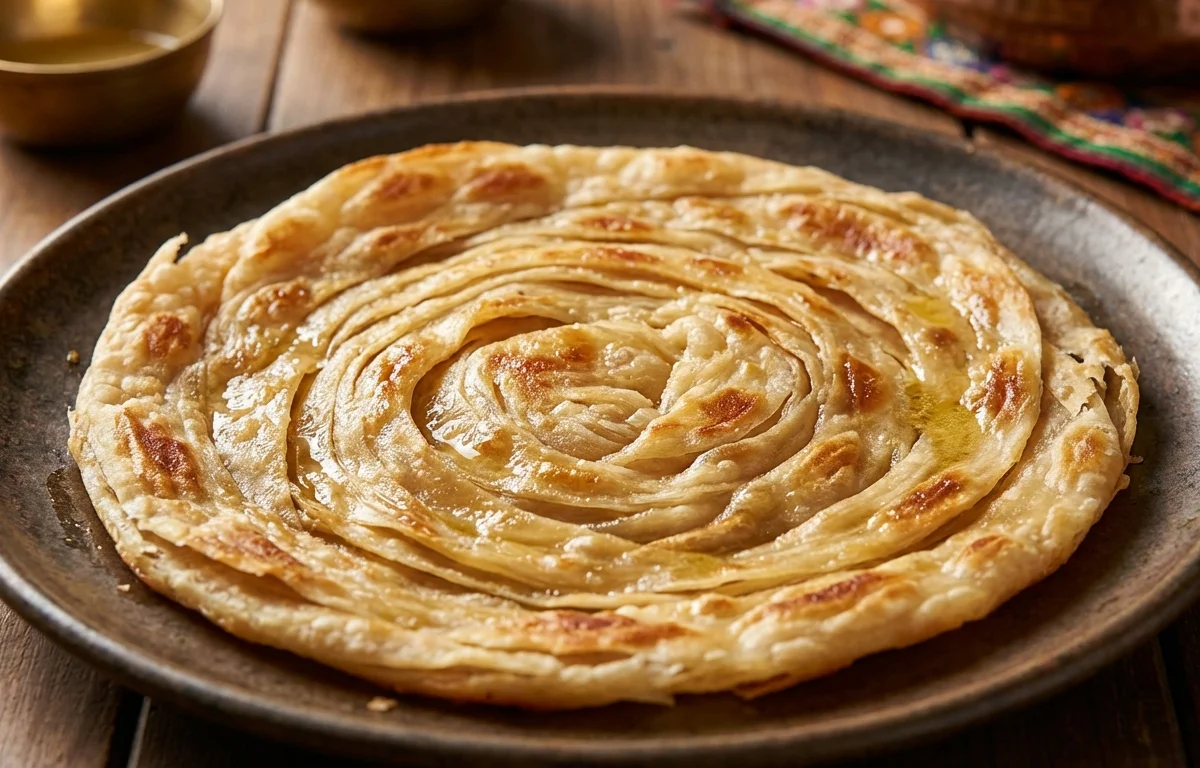
Layered North Indian flatbread with crisp edges and soft inner folds, made by rolling, pleating, and coiling a simple dough. It cooks up flaky and golden, making it perfect with rich curries or kebabs.
For 8 servings
- knead · ~8 min
Knead the dough.
1.Mix whole wheat flour, all-purpose flour, and salt in a wide bowl.2.Add oil and rub it into the flour with your fingers.3.Add lukewarm water little by little and knead into a soft, smooth dough.4.Knead for 5 to 6 minutes until supple and even.TIPKeep the dough slightly softer than regular roti dough so the layers stay tender. - rest · ~20 min
Cover and rest the dough.
Cover the dough and let it rest for 20 minutes so the gluten relaxes and rolling becomes easier.
- prep · ~7 min
Divide the dough and roll the discs.
1.Divide the dough into 8 equal portions.2.Roll one portion into a smooth ball.3.Dust lightly with flour and roll into a thin round disc. - assemble · ~7 min
Shape the layers.
1.Spread a little ghee over the rolled disc.2.Sprinkle a light dusting of all-purpose flour on top.3.Cut the disc from center to edge or fold it into narrow pleats like a fan.4.Roll the strip into a loose coil and tuck the end underneath.TIPDo not coil tightly; a loose spiral helps the paratha puff into visible flaky layers. - rest · ~5 min
Rest the shaped coils.
Set the coils aside for 5 minutes, covered, so they relax before the final rolling.
- prep · ~6 min
Roll the parathas.
Dust each coil lightly with flour and roll gently into a 5 to 6 inch round, keeping the layers intact without pressing too hard.
- fry · ~16 min
Cook the laccha parathas.
1.Heat a tawa or flat pan over medium heat.2.Place one rolled paratha on the hot pan and cook until light bubbles appear.3.Flip, spread a little ghee, and cook until golden spots form.4.Flip again, add a little more ghee, and press gently until both sides are crisp and cooked through.TIPCook on medium heat so the layers crisp slowly without burning before the center is done. - serve · ~1 min
Crush lightly and serve hot.
Hold each hot paratha between your palms and clap gently to open up the layers. Serve right away.
What to keep in mind.
8 tips from the recipe — small details that make a real difference to the final dish.
- 1Keep the dough slightly softer than roti dough so the finished parathas stay flaky instead of dry.
- 2Use lukewarm water while kneading; it helps the dough come together smoothly and roll without cracking.
- 3Spread ghee all the way to the edges before pleating so every fold gets separation and crisps properly.
- 4Dust only lightly during final rolling; too much flour between layers can make the paratha taste dry.
- 5Roll the coiled dough gently from the center outward so you do not press out the laminated layers.
- 6Cook on medium heat, not high, so the inside cooks through before the outer spots get too dark.
- 7After cooking, clap the hot paratha between your palms to loosen and reveal the signature laccha layers.
- 8If making ahead, half-cook each paratha without deep browning, cool, then reheat with ghee just before serving.
Adapt it for your goals.
All-wheat
Skip the all-purpose flour and use only whole wheat for a more rustic paratha with a nuttier taste and slightly denser texture.
veganVegan
Replace ghee with neutral oil for layering and cooking if you want a dairy-free version that still turns out layered and crisp.
ajwainAjwain
Add a pinch of ajwain to the dough for a more aromatic paratha that pairs especially well with rich dals and gravies.
low gheeLow-ghee
Use less ghee inside the folds and brush lightly while cooking for a lighter everyday paratha with fewer rich notes.
Why this is on our healthy list.
Whole Grain Goodness
The whole wheat flour adds bran and germ, making this paratha more wholesome and more satisfying than one made only with refined flour.
Steady Energy Side
The flour-based dough provides lasting carbohydrate energy, which makes laccha paratha a hearty accompaniment to curries and dals.
More Filling Texture
The blend of whole wheat and layered dough gives a substantial bite that can feel more filling as part of a complete meal.
Frequently asked questions
This usually happens if the disc was rolled too thick, the coil was too tight, or the final rolling pressed the layers flat. Use enough ghee, keep the coil loose, and roll gently.



.webp)