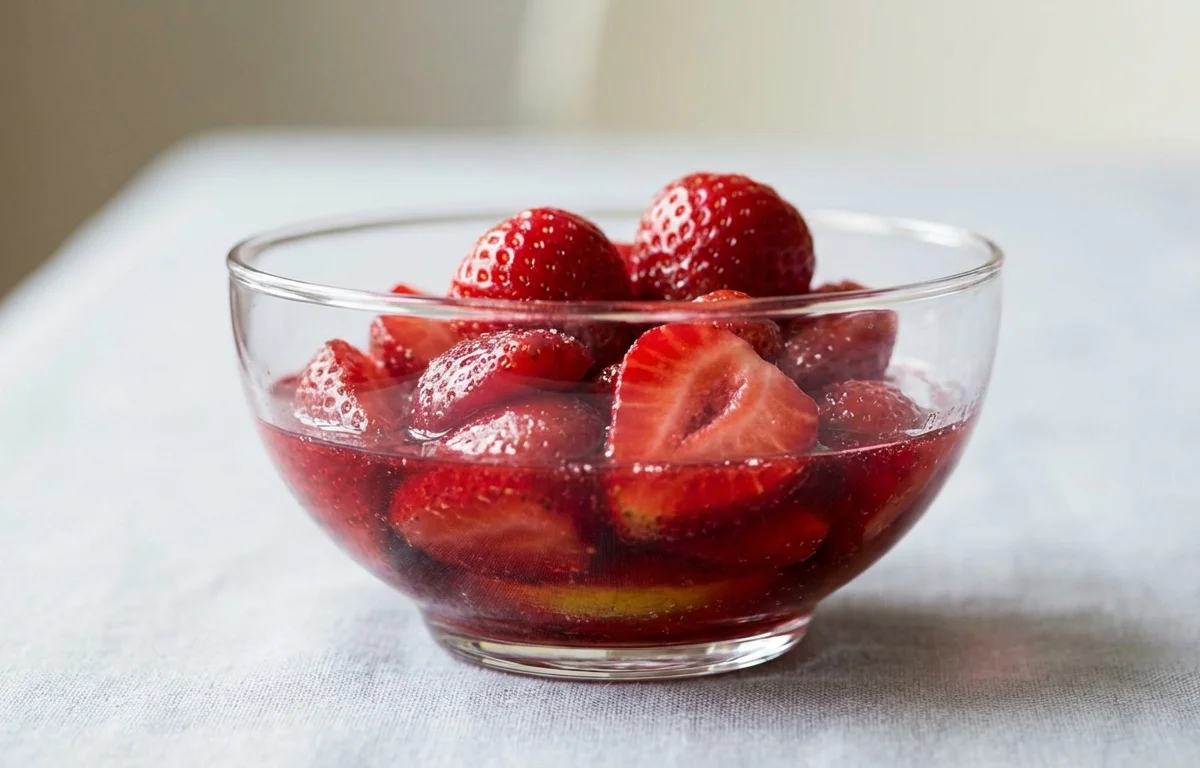
Macerated Strawberries
Juicy, ruby-red strawberries that soak up just enough sugar to release their natural juices into a glossy, sweet-tart syrup. A quick 15-minute rest turns fresh berries into a luscious no-cook topping that instantly elevates everything from vanilla ice cream and angel food cake to yogurt and pancakes.
For 4 servings
- prep · ~7 min
Hull and slice the strawberries.
1.Rinse strawberries under cold water and pat completely dry with paper towels.2.Use a paring knife to remove the green leafy hull from each strawberry.3.Slice berries lengthwise into quarters, or halves for smaller berries.TIPDry berries help the sugar cling better — excess water dilutes the syrup. - mix · ~1 min
Toss strawberries with sugar, lemon juice, and salt.
1.Place sliced strawberries in a medium mixing bowl.2.Sprinkle sugar, lemon juice, and a tiny pinch of salt over the berries.3.Gently toss with a spoon until every berry is evenly coated.TIPThe salt isn't for seasoning — it sharpens the sweetness and brightens the berry flavor. - rest · ~15 min
Let the strawberries macerate at room temperature.
Cover the bowl loosely and let the strawberries sit on the counter for 15 to 30 minutes, stirring once halfway through. The sugar will pull moisture from the fruit, and the berries will relax into a pool of deep-red syrup.
TIPDon't refrigerate during maceration — the cold slows the juice release. Chill only after the syrup forms. - serve
Taste, adjust, and spoon over your favorite dessert.
Give the strawberries a final gentle stir. Taste the syrup and add a few more drops of lemon juice if it needs brightness. Serve immediately or refrigerate until ready to use.
TIPServe within 2 hours for the freshest texture. After that, berries soften further but still taste great.
What to keep in mind.
7 tips from the recipe — small details that make a real difference to the final dish.
- 1Pat strawberries completely dry before slicing so the sugar clings to the fruit, not to water.
- 2Slice berries uniformly (¼-inch thick) to ensure even juice release in the same time.
- 3A tiny pinch of salt is essential—it doesn't make the berries salty but enhances sweetness and depth.
- 4Macerate at room temperature, not in the fridge; cold slows down osmosis and syrup formation.
- 5Taste the syrup after 15 minutes and add a few extra drops of lemon juice if it tastes flat.
- 6For the best texture, serve within 2 hours; after that, berries soften but are still delicious.
- 7Leftover syrup is fantastic stirred into sparkling water, lemonade, or drizzled over pound cake.
Adapt it for your goals.
Low-sugar
Reduce granulated sugar to 1 tablespoon and substitute 1 tablespoon of honey or maple syrup for a more nuanced sweetness with fewer refined carbs.
balsamic black pepperBalsamic-black-pepper
Add 1 teaspoon of aged balsamic vinegar and a few cracks of black pepper along with the lemon juice for a savory-sweet Mediterranean twist that pairs beautifully with vanilla gelato.
herbedHerbed
Toss in 4-6 fresh basil leaves (thinly sliced) or a small sprig of mint after macerating; the herbal notes lift the berry flavor and make a sophisticated topping for shortcake.
berry mixBerry-mix
Replace half the strawberries with sliced fresh peaches or raspberries; mix gently to preserve the fruit's texture and enjoy a layered stone-fruit and berry compote.
alcoholicAlcoholic
Add 1 tablespoon of Grand Marnier, Kirsch, or a light rum along with the sugar for a boozy twist ideal over ice cream or in a strawberry daiquiri.
Why this is on our healthy list.
Rich in Vitamin C
Strawberries are an excellent source of vitamin C, which supports immune function and skin health, and this recipe uses a full pound of fresh berries.
High in Antioxidants
The deep-red color of strawberries comes from anthocyanins, antioxidant compounds that help fight oxidative stress and inflammation.
Low in Added Sugar
With only 2 tablespoons of sugar for 500 g of fruit, this recipe is moderate in added sugar compared to syrups or canned toppings; you can further reduce the sugar for a lighter option.
Natural Electrolytes
Strawberries provide potassium and magnesium, which support muscle function and hydration — these electrolytes are retained in the released syrup.
Frequently asked questions
Frozen strawberries will release too much water and become mushy; use fresh, ripe berries for the best texture and concentrated syrup.