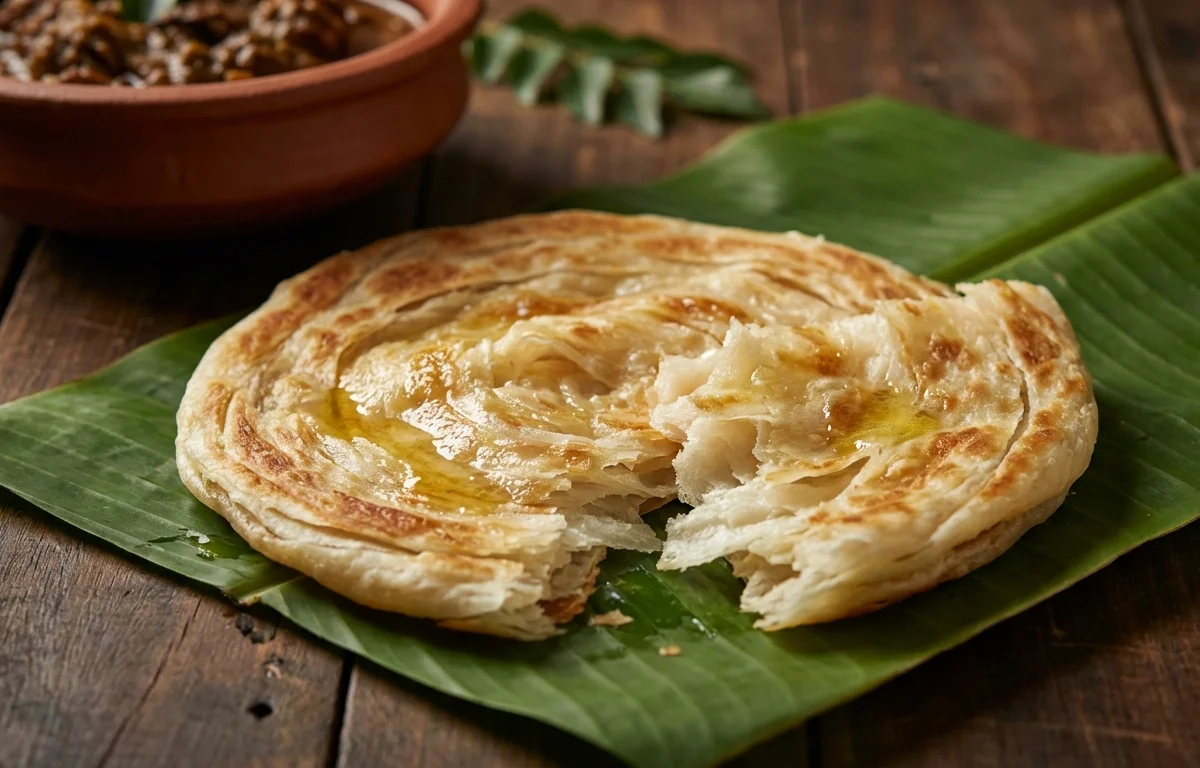
Mangalorean Parotta
Experience the magic of flaky, layered flatbread from the coastal city of Mangalore. This parotta, with its countless crispy layers and soft, chewy texture, is the perfect companion for rich curries like chicken ghee roast or vegetable korma.
For 4 servings
Prepare the Dough (15 minutes): In a large mixing bowl, whisk together the maida, sugar, and salt. Create a well in the center. Add 2 tablespoons of vegetable oil. Gradually pour in the lukewarm water while mixing to form a very soft, sticky dough. Transfer the dough to a clean, oiled work surface and knead vigorously for 10-12 minutes until it becomes smooth, pliable, and highly elastic.
First Rest (2 hours): Lightly coat the entire surface of the kneaded dough with 1 teaspoon of oil. Place it back in the bowl, cover with a damp cloth or a lid, and let it rest at room temperature for a minimum of 2 hours. For best results, rest it for up to 4 hours. This step is crucial for relaxing the gluten.
Divide and Second Rest (35 minutes): After the first rest, gently punch down the dough and divide it into 8 equal-sized balls. Generously coat each ball with oil, place them on a tray, cover, and let them rest for another 30 minutes.
Create the Layers (15 minutes): On a well-oiled countertop, take one dough ball and flatten it with your fingers. Using your hands or a rolling pin, stretch the dough as thin as possible into a large, translucent circle or rectangle. Don't worry about small tears. Brush the entire surface of the stretched dough with oil. Starting from one edge, lift and fold the dough to create fine pleats, like making a paper fan, until you have a long, pleated strip.
Coil and Final Rest (20 minutes): Gently hold one end of the pleated strip and stretch it to lengthen it further. Begin to coil the strip tightly into a spiral, similar to a pinwheel. Tuck the loose end underneath the coil. Repeat for all dough balls. Cover the prepared coils and let them rest for a final 15-20 minutes.
Roll the Parottas (5 minutes): Heat a tawa or cast-iron skillet over medium heat. Take one rested coil and, using your palm or a rolling pin, gently flatten it into a disc about 5-6 inches in diameter. Do not press too hard, as this will merge the layers.
Cook the Parottas (20 minutes): Place the rolled parotta on the hot tawa. Cook for about 60-90 seconds until small bubbles appear, then flip. Drizzle a teaspoon of oil around the edges and on top. Cook for another 1-2 minutes, pressing gently with a spatula, until both sides are golden brown with crispy spots. Repeat for all remaining parottas.
Fluff and Serve (5 minutes): Immediately after taking the parotta off the tawa, place it on a clean surface. While it's still hot, use both hands to gently clap or crush it from the sides towards the center. This action is key to separating and fluffing up the layers. Serve immediately.
What to keep in mind.
6 tips from the recipe — small details that make a real difference to the final dish.
- 1The dough must be extremely soft and well-rested. Do not skip or shorten the resting times; they are essential for a pliable dough that can be stretched thin without breaking.
- 2Always use a well-oiled surface for stretching and rolling, not dry flour. Flour will make the parottas tough and dense.
- 3Stretch the dough as thin as you can, until you can almost see through it. The thinner the sheet, the more delicate and numerous the layers will be.
- 4The final 'clapping' of the hot parotta is a non-negotiable step. It's what separates the cooked layers and creates the signature flaky texture.
- 5For extra softness, you can add one beaten egg to the dough along with the water in Step 1.
- 6You can prepare the dough coils (up to the end of Step 5) in advance. Store them in an airtight container in the refrigerator for up to 2 days. Bring to room temperature before rolling and cooking.
Adapt it for your goals.
Whole Wheat Parotta
For a healthier version, substitute half of the maida with atta (whole wheat flour). The texture will be denser and less flaky but still delicious.
Herbed ParottaHerbed Parotta
Finely chop herbs like mint or cilantro and sprinkle them over the oiled, stretched dough before pleating to create an aromatic, herbed parotta.
Ghee ParottaGhee Parotta
Use melted ghee instead of oil for layering and cooking to impart a rich, nutty flavor and aroma.
Why this is on our healthy list.
Provides Quick Energy
The refined carbohydrates in the all-purpose flour are easily digested, providing a quick source of energy for the body.
Source of Comfort and Satisfaction
Enjoying a delicious, traditional food like parotta can provide immense satisfaction and comfort, contributing positively to mental well-being.
Frequently asked questions
The most common reasons are insufficient kneading or not resting the dough long enough. The dough needs to be kneaded until very elastic and rested for at least 2 hours to relax the gluten, making it stretchable. Also, ensure you use enough oil during layering and clap the parotta while it's hot to separate the layers.