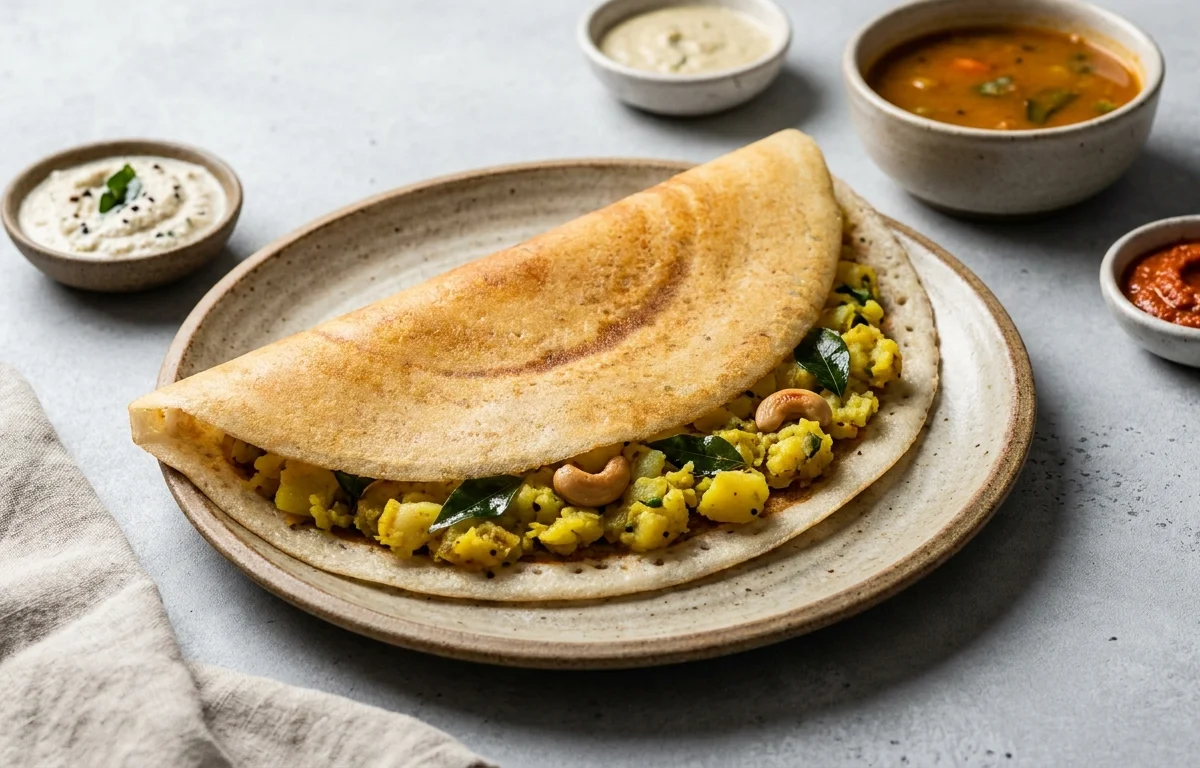
Masala Dosa
Crispy, golden crepes made from a fermented rice and lentil batter, filled with a savory spiced potato mixture. A beloved South Indian classic, perfect for a hearty breakfast or light dinner, best served with sambar and coconut chutney.
For 4 servings
Soak Rice and Lentils
1.In a large bowl, combine the idli rice, urad dal, 1 tablespoon of chana dal, and fenugreek seeds.2.Rinse them under running water 4-5 times until the water runs clear.3.Add enough fresh water to cover the mixture by at least 3 inches. Let it soak for a minimum of 6 hours or overnight.4.In a separate small bowl, rinse the poha and soak it in 1/2 cup of water about 30 minutes before you plan to grind.Grind and Ferment the Batter
1.Drain the water completely from the soaked rice and lentil mixture.2.Transfer the mixture to a high-speed blender or wet grinder. Add the soaked poha along with its water.3.Add about 1 cup of fresh, cold water and start grinding. Gradually add more water (up to another cup) as needed to achieve a smooth, yet slightly grainy batter. The consistency should be like a thick pancake batter.4.Pour the batter into a large, non-reactive container (like steel or glass), filling it only halfway to allow room for fermentation.5.Cover with a lid (do not seal it tightly) and place in a warm, dark place for 8 to 12 hours. In colder climates, this may take up to 24 hours. A good spot is inside a turned-off oven with the light on.6.The batter is fermented when it has risen, looks frothy, and has a pleasant sour aroma. Once fermented, gently stir in 1 teaspoon of salt.Prepare the Potato Masala Filling
1.Boil the potatoes in salted water until tender, about 15-20 minutes. Peel the skins and roughly mash them with a fork. Set aside.2.Heat 2 tablespoons of oil in a pan or kadai over medium heat. Add the mustard seeds and let them splutter.3.Add 1 tablespoon of chana dal and 1 teaspoon of urad dal. Sauté for about a minute until they turn light golden.4.Add the asafoetida and curry leaves, and sauté for 30 seconds.5.Add the sliced onions, green chilies, and grated ginger. Cook for 5-7 minutes until the onions are soft and translucent.6.Stir in the turmeric powder and 1/2 teaspoon of salt. Mix well.7.Add the mashed potatoes and 1/4 cup of water. Mix everything thoroughly, breaking down any large potato lumps. Cook for 2-3 minutes until the mixture is heated through.8.Turn off the heat. Stir in the lemon juice and chopped coriander leaves. Your masala filling is ready.Cook the Masala Dosa
1.Heat a non-stick or cast-iron tawa over medium-high heat. To check if it's ready, sprinkle a few drops of water; they should sizzle and evaporate instantly.2.Lightly grease the tawa with oil. Then, take a damp cloth or half an onion on a fork and wipe the tawa to cool it down slightly. This prevents the batter from sticking and helps it spread evenly.3.Stir the batter well. Pour a ladleful (about 1/3 cup) onto the center of the tawa.4.Immediately, using the back of the ladle, spread the batter in a circular motion from the center outwards to form a thin, even crepe.5.Drizzle about 1/2 teaspoon of oil or ghee around the edges and on top of the dosa.6.Cook for 1-2 minutes on medium heat until the bottom surface turns golden brown and crispy, and the edges begin to lift off the tawa.7.Place 2-3 tablespoons of the potato masala filling onto one half of the dosa.8.Fold the other half over the filling. Press down gently with a spatula.9.Slide the masala dosa onto a plate. Repeat the process for the remaining batter, wiping the tawa between each dosa.Serve Hot
1.Serve the Masala Dosa immediately while it's hot and crispy, accompanied by sambar and coconut chutney.
What to keep in mind.
6 tips from the recipe — small details that make a real difference to the final dish.
- 1For the crispiest dosas, use a well-seasoned cast-iron tawa.
- 2The batter consistency is key. It should be smooth and pourable, not too thick or watery. Adjust with a little water or rice flour if needed.
- 3Always stir the batter from the bottom before making each dosa, as the heavier particles tend to settle.
- 4Controlling the tawa temperature is crucial. It should be hot when you pour the batter but not smoking hot. Wiping with a damp cloth helps regulate it.
- 5Use non-iodized salt (like sea salt or rock salt) for fermentation, as iodine can inhibit the growth of wild yeast.
- 6If your batter over-ferments and becomes too sour, you can add a little rice flour or semolina to balance the taste.
Adapt it for your goals.
Mysore Masala Dosa
Spread a layer of spicy red chutney (made with red chilies, garlic, and chana dal) on the inside of the dosa before adding the potato filling.
Paneer Masala DosaPaneer Masala Dosa
Replace the potato filling with a savory mixture of crumbled paneer, onions, tomatoes, and spices.
Cheese Masala DosaCheese Masala Dosa
Add a generous amount of grated mozzarella or cheddar cheese over the potato filling before folding the dosa.
Onion Rava Masala DosaOnion Rava Masala Dosa
For a quick, no-fermentation version, use a batter made from semolina (rava), rice flour, and all-purpose flour, and add finely chopped onions to the batter before cooking.
Why this is on our healthy list.
Promotes Gut Health
The fermentation process involved in making the dosa batter increases the bioavailability of nutrients and populates it with probiotics, which promote healthy gut bacteria and aid digestion.
Good Source of Protein
The use of urad dal (black gram) makes the dosa a good source of plant-based protein, which is essential for muscle repair, cell generation, and overall body function.
Provides Complex Carbohydrates
Made from rice and lentils, Masala Dosa is rich in complex carbohydrates that provide sustained energy, making it an excellent and filling meal for breakfast or lunch.
Naturally Gluten-Free
This traditional recipe uses only rice and lentils for the batter, making it naturally gluten-free and a safe and delicious option for individuals with celiac disease or gluten sensitivity.
Frequently asked questions
A typical homemade Masala Dosa contains approximately 380-450 calories, depending on its size, the amount of oil or ghee used, and the quantity of the potato filling.