
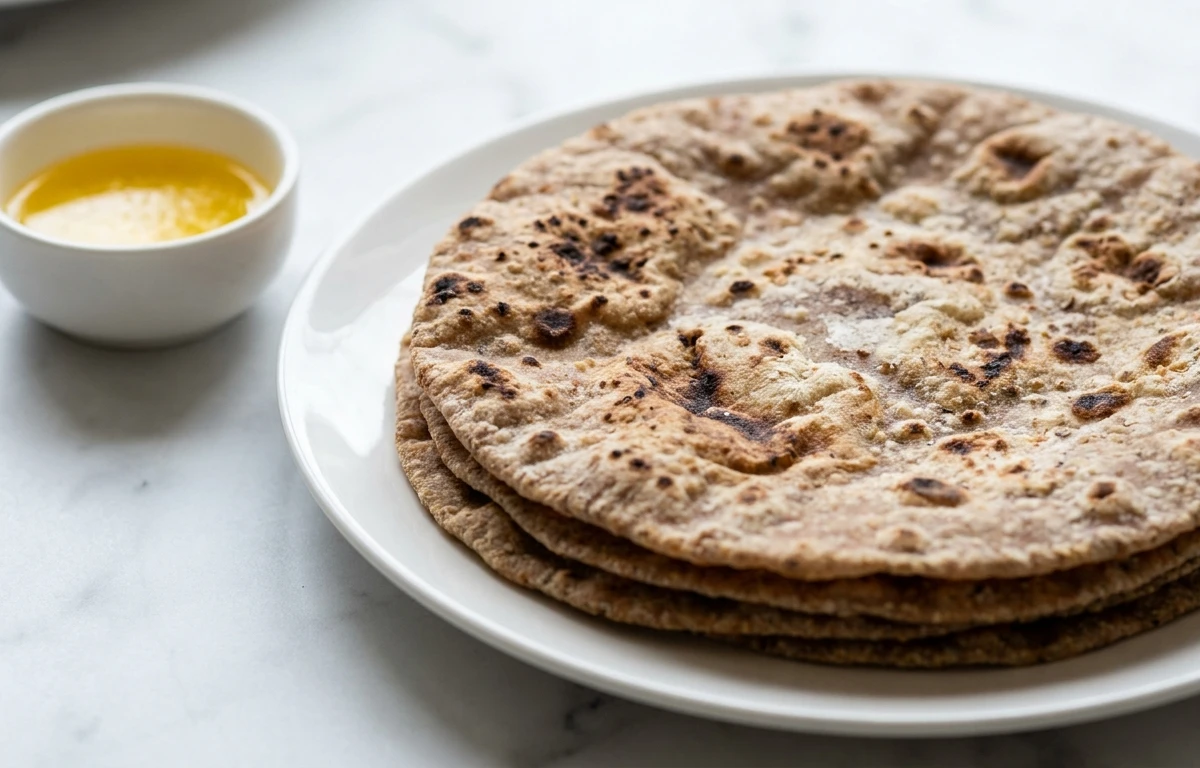
Multigrain Roti
Soft everyday rotis made with a mix of whole wheat, millet, and gram flour. They cook up tender, wholesome, and lightly nutty, making them a good match for dals, sabzis, and simple curries.
For 8 servings
- mix
Mix the flours and salt.
Add whole wheat flour, jowar flour, bajra flour, besan, and salt to a wide bowl. Mix well so the grains are evenly combined.
- knead · ~6 min
Knead the dough.
1.Add oil to the flour mixture and rub it in with your fingers.2.Pour in warm water little by little and bring everything together.3.Knead for 5 to 6 minutes until you get a soft, smooth dough.TIPKeep the dough slightly soft; millet flours absorb water and a stiff dough makes dry rotis. - rest · ~15 min
Cover and rest the dough.
Cover the dough with a plate or damp cloth and let it rest for 15 minutes. This helps the flours hydrate and makes rolling easier.
- prep
Divide the dough and shape balls.
Knead the dough once more briefly, then divide it into 8 equal portions. Roll each portion into a smooth ball.
- assemble
Roll the rotis.
1.Dust one dough ball lightly with whole wheat flour.2.Roll it into a thin round about 5 to 6 inches wide.3.Dust lightly as needed to prevent sticking, but avoid adding too much flour.TIPIf the edges crack, press them together and roll gently with even pressure. - fry · ~2 min
Cook the roti on a hot tawa.
1.Place one rolled roti on a hot tawa and cook until small bubbles appear.2.Flip and cook the second side until light brown spots form.3.Flip once more and press gently with a cloth or spatula until the roti puffs in places and cooks through.TIPUse medium-high heat. A low heat dries the roti before it gets soft. - garnish
Brush with ghee.
Transfer the hot roti to a plate or casserole and brush lightly with ghee. Repeat rolling and cooking the remaining dough balls.
- serve
Serve hot.
Serve the multigrain rotis hot with sabzi, dal, or curry.
What to keep in mind.
7 tips from the recipe — small details that make a real difference to the final dish.
- 1Use warm water and add it gradually; millet flours drink up moisture and can turn the dough dry fast.
- 2Keep the dough slightly softer than plain chapati dough so the jowar and bajra rotis stay tender after cooking.
- 3Resting the dough for the full 15 minutes is important here, because the mixed flours need time to hydrate evenly.
- 4Dust lightly while rolling; too much dry flour on the surface makes the roti tough and leaves burnt flour on the tawa.
- 5If the roti cracks at the edges, pinch the cracks closed and roll with gentle, even pressure instead of forcing it thinner.
- 6Cook on a properly hot tawa with medium-high heat so the roti gets spots and soft puffed patches instead of drying out.
- 7Stack cooked rotis in a covered casserole or cloth-lined container right away to trap steam and keep them soft.
Adapt it for your goals.
Vegan
Skip the ghee and brush the hot rotis with a few drops of oil or serve plain for a fully plant-based version.
high fiberHigh-fiber
Increase jowar or bajra slightly and roll a bit smaller; this gives a heartier roti with more rustic texture.
spicedSpiced
Add ajwain, cumin, or a pinch of red chili powder to the dough for rotis that pair especially well with plain dal.
jainJain
This recipe is already Jain-friendly as written; just pair it with Jain sabzi or dal made without onion and garlic.
Why this is on our healthy list.
Whole Grain Goodness
Whole wheat, jowar, and bajra bring whole-grain nourishment and make these rotis more wholesome than using refined flour.
Plant-Based Protein Support
Whole wheat and besan contribute plant protein, which helps make the meal more satisfying when served with dal or sabzi.
Naturally Diverse Grains
Using multiple flours adds a wider range of grains and legumes to the meal, bringing varied nutrients and texture.
Frequently asked questions
The dough is usually too stiff or under-rested. Add a little more warm water, knead until smooth, and rest it so the millet flours hydrate properly.


