Paratha
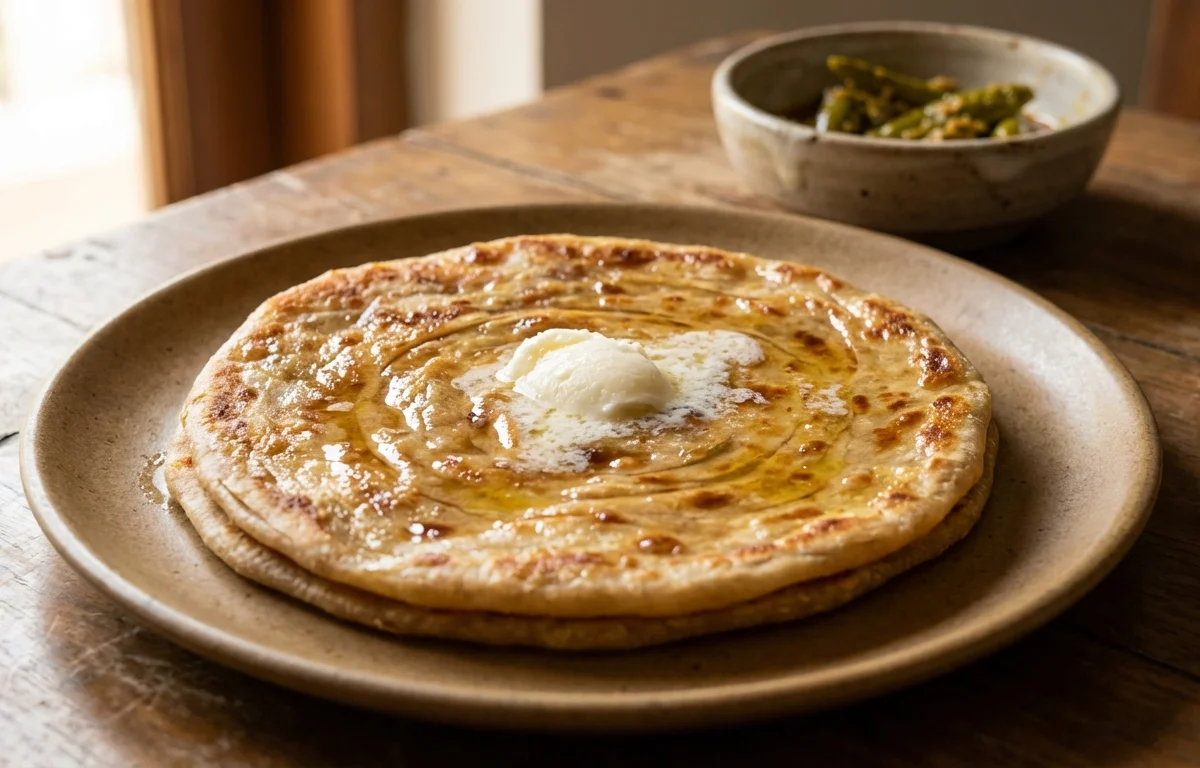
Layered Indian flatbread made with whole wheat flour, a little oil, and simple pantry staples. Crisp golden spots on the outside and soft flaky layers inside make it perfect with pickle, yogurt, or curry.
For 4 servings
- knead · ~20 min
Knead the dough.
1.Add whole wheat flour and salt to a wide bowl and mix well.2.Pour in 1 tbsp oil and rub it into the flour.3.Add water little by little and knead into a soft, smooth dough.4.Cover the dough and set it aside for 15 minutes.TIPA slightly soft dough makes parathas easier to roll and keeps them tender. - prep · ~5 min
Divide and shape the dough.
1.Knead the rested dough briefly until smooth.2.Divide it into 4 equal balls.3.Flatten one ball lightly and dust it with flour.4.Roll it into a thin circle. - assemble · ~5 min
Make the layers.
1.Brush the rolled circle with a little oil.2.Fold it in half and brush again with a little oil.3.Fold once more to make a triangle.4.Dust lightly with flour and roll into a medium triangle.TIPUse only a thin film of oil between folds so the layers separate without making the dough slippery. - fry · ~4 min
Cook the paratha on a hot tawa.
1.Heat a tawa or skillet over medium-high heat.2.Place one rolled paratha on the hot surface and cook until small bubbles appear.3.Flip it, spread a little oil around the edges and top, and cook until golden spots form.4.Flip again and press gently until both sides are golden and cooked through.TIPKeep the heat medium-high; low heat dries the paratha and high heat burns it before the layers cook. - other · ~12 min
Repeat with the remaining dough balls.
Roll, layer, and cook the remaining dough balls the same way, using the rest of the oil as needed.
- serve
Serve the parathas hot.
What to keep in mind.
7 tips from the recipe — small details that make a real difference to the final dish.
- 1Resting the dough for the full 15 minutes relaxes the gluten, so the triangles roll out without springing back.
- 2Keep the dough slightly soft; a stiff dough makes parathas dense and harder to puff into flaky layers.
- 3Use only a very thin smear of oil between folds, or the layers can slide and tear while rolling.
- 4Roll from the center toward the corners to keep the triangle shape even and prevent the layers from bunching up.
- 5Cook on a properly hot tawa: you want bubbles first, then golden spots after oil is added, not pale dry patches.
- 6After cooking, lightly crush the paratha between your palms or with a clean towel to separate the layers while still hot.
- 7Stack cooked parathas in a covered cloth-lined container to keep them soft while you finish the rest.
Adapt it for your goals.
Ghee
Use ghee instead of oil for layering and cooking for a richer aroma and a more classic North Indian flavor.
low oilLow-oil
Reduce the oil used on the tawa and dry-roast most of the way first; good if you want a lighter everyday paratha.
ajwainAjwain
Add a pinch of ajwain to the dough for a subtle savory note that pairs especially well with yogurt and pickle.
veganVegan
This recipe is already vegan if you stick with oil rather than ghee, making it easy for plant-based meals.
Why this is on our healthy list.
Whole Grain Goodness
Made with whole wheat flour, this paratha retains the bran and germ, offering more fiber and a steadier, more satisfying bite than refined flatbreads.
Simple Pantry Ingredients
With just whole wheat flour, water, salt, and oil, this dish avoids heavy additives and is easy to pair with protein- and vegetable-rich sides.
Sustaining Carbohydrates
The wheat-based dough provides lasting energy, which is one reason paratha works well as a hearty breakfast or meal accompaniment.
Frequently asked questions
The dough was likely too stiff, the tawa too cool, or the paratha was overcooked. Keep the dough soft, use medium-high heat, and cook only until golden spots appear.



.webp)