Perugu
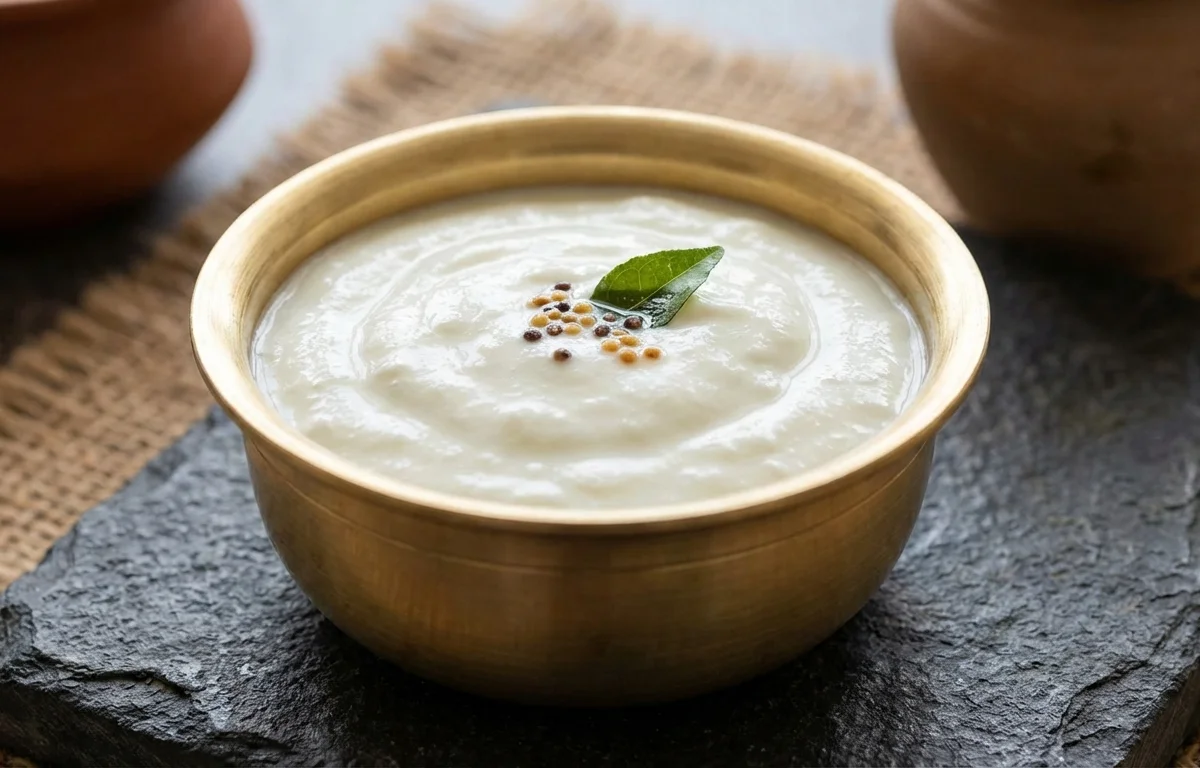
Perugu is simple homemade yogurt, gently set until smooth, mild, and pleasantly tangy. It is a daily staple in many Telugu homes and works beautifully as a cooling side with rice, curries, and spicy meals.
For 4 servings
- boil · ~10 min
Boil the milk.
Pour the milk into a heavy pot and bring it to a gentle boil over medium heat, stirring now and then so it does not catch at the bottom.
TIPBoiling the milk well helps the yogurt set thicker and smoother. - rest · ~30 min
Cool the milk until warm.
Take the pot off the heat and let the milk cool until it feels warm, not hot, when touched. It should be warm enough to help the culture grow, but not so hot that it kills it.
TIPIf the milk is too hot, the yogurt can turn grainy or fail to set. - mix · ~2 min
Mix in the starter yogurt.
1.Place the yogurt in a clean bowl or setting container.2.Add a few spoonfuls of warm milk and mix until smooth.3.Pour in the remaining warm milk and stir gently to combine. - rest · ~480 min
Set the perugu in a warm place.
Cover the container and keep it undisturbed in a warm spot until the milk sets into yogurt with a mild tang. This usually takes 6 to 8 hours, depending on the weather.
TIPIn cooler weather, wrap the container in a kitchen towel to help it set. - serve
Chill or serve the perugu.
Once set, refrigerate for a firmer texture or serve right away. Use it as a cooling side with rice and spicy dishes.
What to keep in mind.
7 tips from the recipe — small details that make a real difference to the final dish.
- 1Use a clean, dry setting bowl so stray moisture or residue does not interfere with fermentation.
- 2After boiling, cool the milk until just warm; if you can hold a clean finger in it for a few seconds, it is ready for the starter.
- 3Whisk the starter with a little warm milk first to avoid tiny lumps and get an even, smooth set.
- 4Do not move or shake the container while it is setting, or the perugu can turn loose instead of neatly set.
- 5In cold weather, place the covered bowl inside an unheated oven with the light on or wrap it in a thick towel.
- 6Refrigerate as soon as it sets to stop further souring and keep the flavor mild.
- 7Save 1 to 2 spoonfuls of the fresh batch as the next day's starter for a more reliable homemade culture.
Adapt it for your goals.
Thick-set
Boil the milk a little longer to reduce it slightly before culturing for a richer, firmer perugu.
mild tangMild-tang
Use slightly less starter and set it for the shorter end of the time range if you prefer a gentler, sweeter yogurt.
sour peruguSour-perugu
Let it ferment a bit longer for a more pronounced tang, ideal for majjiga pulusu or curd rice.
buffalo milkBuffalo-milk
Make it with buffalo milk for a naturally thicker, creamier set that many South Indian homes prefer.
veganVegan
Use unsweetened plant milk and a compatible vegan yogurt starter if you want a dairy-free cultured version.
Why this is on our healthy list.
Naturally Fermented Food
Because it is set with active culture, perugu is a traditional fermented dairy food that adds beneficial live cultures to the meal.
Protein From Milk
Made entirely from milk, this dish provides dairy protein that can make a simple rice meal more satisfying.
Cooling Meal Companion
Its mild, soothing nature makes it a comforting side to pair with spicy curries and hot rice.
Frequently asked questions
Usually the milk was either too hot and damaged the culture, too cool for fermentation, or the bowl was kept in a spot that was not warm enough.