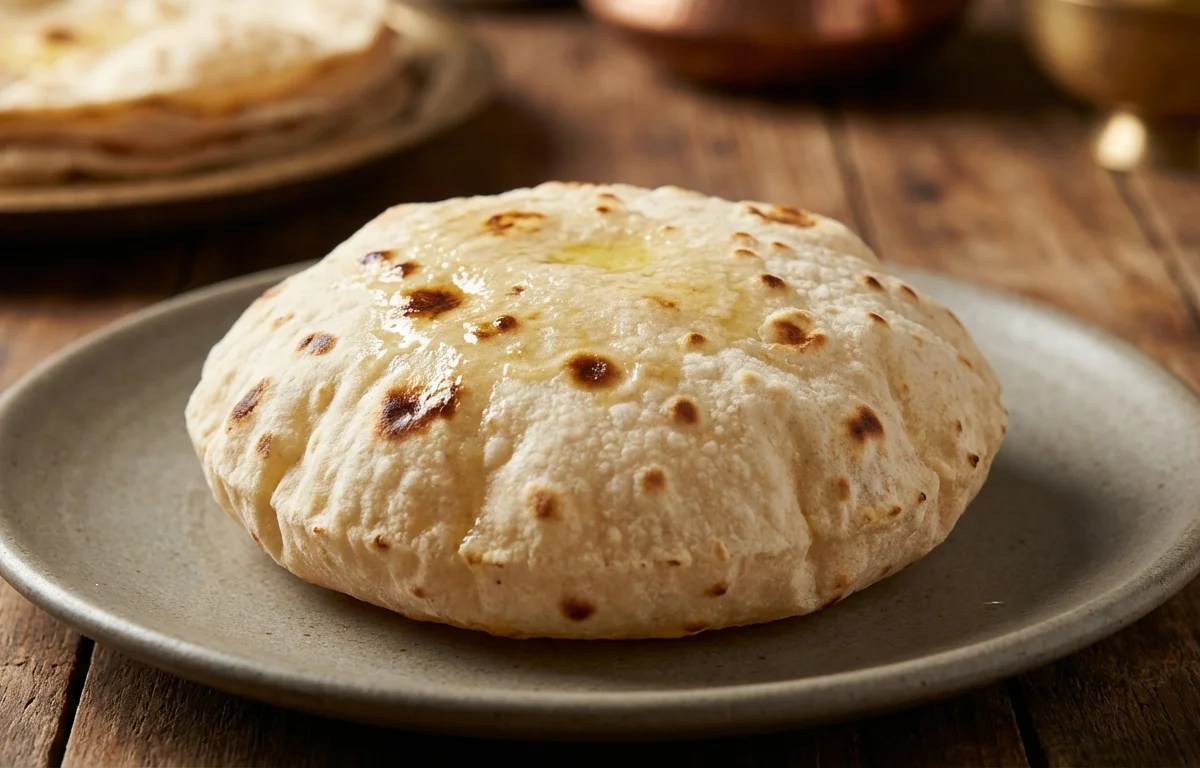
Pulka Roti
Soft, puffed whole wheat flatbreads cooked directly on an open flame. This everyday Indian staple is light, thin, and free of oil — perfect for scooping up dal, sabzi, or curry. Proudly puffed and ready in under 30 minutes.
For 4 servings
- mix · ~1 min
Combine flour and salt.
In a large mixing bowl, combine 2 cups whole wheat flour and a pinch of salt. Mix well to distribute evenly.
- knead · ~10 min
Knead into a smooth dough.
Gradually add lukewarm water, a little at a time, and knead for 8 to 10 minutes until you get a soft, pliable dough. The dough should be smooth but not sticky. Cover with a damp kitchen towel and rest for 10 minutes.
TIPDon't add all the water at once. A soft and well-kneaded dough is the secret to puffed phulkas. - rest · ~10 min
Rest the dough.
Cover the prepared dough with a damp cloth and let it rest at room temperature for 10 minutes. This relaxes the gluten and makes rolling easier.
- prep · ~3 min
Divide and shape the dough balls.
Knead the rested dough once more for a minute. Divide into 8 equal portions and roll each portion between your palms into a smooth, crack-free ball. Flatten slightly.
- prep · ~5 min
Roll the rotis.
Dip a dough ball into the dusting flour lightly. Using a rolling pin, roll it out into a thin, even circle about 5 to 6 inches in diameter. Keep the thickness uniform to ensure even puffing. Repeat with all balls, keeping them covered.
TIPAvoid using too much dry flour while rolling; it can burn on the tawa and make the roti dry. - roast · ~1 min
Cook on the tawa on one side.
Heat the tawa on medium-high heat. Place one rolled roti on the hot tawa. Cook for 30 to 45 seconds until you see small bubbles appear on the surface and the bottom has light brown spots. Flip immediately.
TIPThe tawa needs to be hot enough. To test, sprinkle a pinch of flour—if it turns brown in 2 seconds, it's ready. - roast · ~1 min
Cook the second side.
Cook the other side for 45 to 60 seconds until you see deeper golden-brown spots. Lightly press the edges with a clean cloth or spatula to help the roti puff.
- roast
Puff the roti on direct flame.
Remove the tawa from the heat. Using tongs, place the half-cooked roti directly on the open flame with the more cooked (first) side facing down. It will balloon up in just a few seconds. Flip immediately using tongs and let the other side flash-cook for 2 to 3 seconds. Do not let it burn.
TIPKeep the flame on medium-high. If it's too low, the roti won't puff; too high and it will burn before puffing. - serve
Apply ghee and serve hot.
Remove the puffed pulka from the flame. Optionally brush lightly with a touch of ghee to keep it soft. Serve immediately while still hot and puffed.
TIPStack the cooked rotis in a cloth-lined casserole to keep them warm and soft until serving.
What to keep in mind.
7 tips from the recipe — small details that make a real difference to the final dish.
- 1Use fine-ground Indian atta flour for the softest texture; standard whole wheat flour yields denser rotis.
- 2Knead the dough for a full 8–10 minutes; a well-developed gluten structure is essential for puffing.
- 3Let the dough rest covered for at least 10 minutes—this relaxes gluten and makes rolling effortless.
- 4Roll each roti to an even 5–6 inch circle with uniform thickness to ensure it puffs evenly.
- 5Test tawa heat by sprinkling a pinch of flour—if it browns in 2 seconds, the tawa is ready.
- 6Press the edges gently with a cloth while the second side cooks to encourage the roti to balloon.
- 7Store leftover rotis in a cloth-lined casserole to trap steam and keep them soft for hours.
Adapt it for your goals.
Stuffed
Place a spoonful of spiced mashed potatoes or grated paneer in the center before rolling, then cook as usual for a stuffed paratha-like variation.
gluten freeGluten-free
Substitute whole wheat flour with a blend of rice flour and sorghum (jowar) flour; add a teaspoon of xanthan gum to aid pliability.
herb infusedHerb- infused
Knead in finely chopped fresh coriander or mint leaves for a fragrant herb pulka that pairs beautifully with yogurt-based sides.
high fiberHigh-fiber
Replace 1/4 cup of atta with flaxseed meal or wheat bran for extra fiber; add an extra tablespoon of water to keep dough soft.
Why this is on our healthy list.
No Oil or Ghee Added
This base recipe uses no oil or fat in the dough or cooking process, making it a naturally low-calorie bread option ideal for everyday meals.
High in Complex Carbohydrates
Whole wheat flour provides slow-release energy and keeps you full longer compared to refined white flour breads.
Rich in Dietary Fiber
Atta is milled from the entire wheat kernel, retaining the bran and germ which contribute to better digestion and gut health.
Frequently asked questions
The dough may be too dry or not kneaded enough. Ensure you knead for 8–10 minutes until smooth, and cook on a hot tawa before moving to a medium-high flame.