
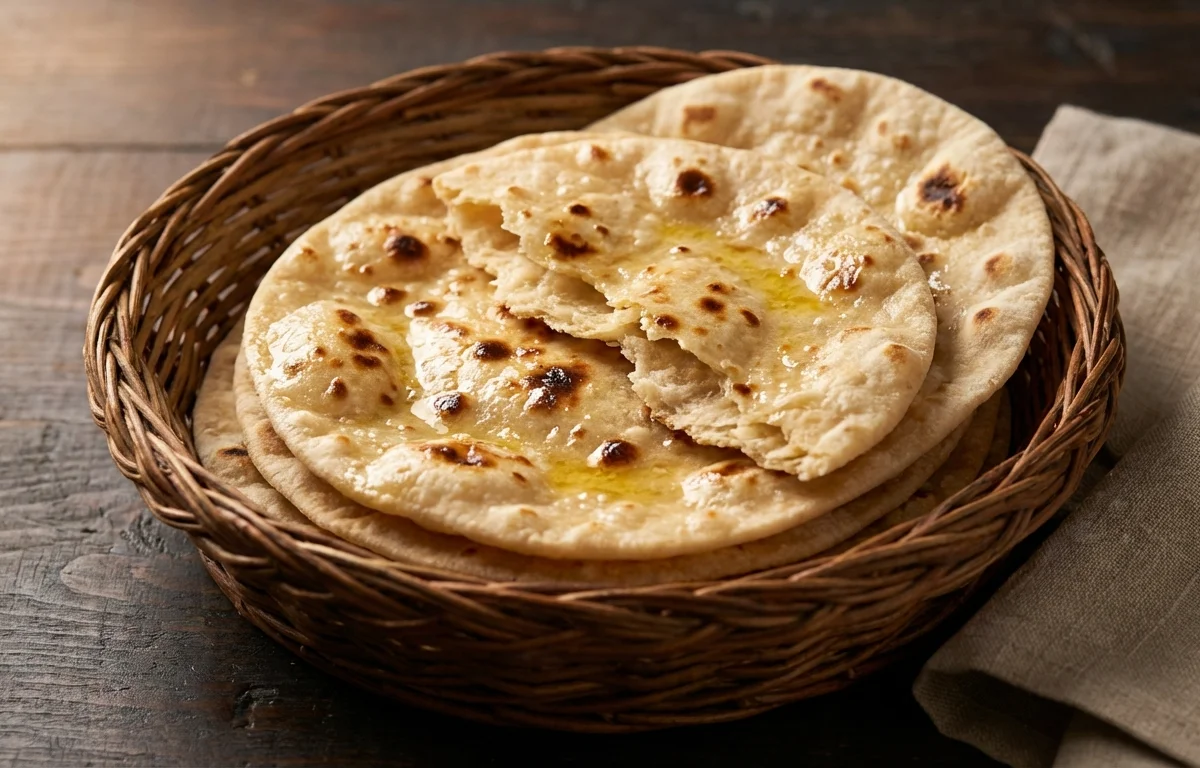
Sada Roti
Simple, rustic whole wheat flatbreads cooked on a hot tawa until puffed and speckled with golden-brown spots. A Bengali everyday staple that needs no ghee or oil in the dough — just atta, water, and a pinch of salt. Soft, wholesome, and perfect for scooping up curries and dal.
For 4 servings
- knead · ~15 min
Knead the dough.
1.Mix atta and salt in a large bowl.2.Add warm water gradually, mixing with fingers.3.Knead for 8 minutes until smooth and pliable.4.Cover with damp cloth and rest for 15 minutes.TIPThe dough should be slightly firmer than regular roti dough — it rolls thinner without sticking. - prep · ~2 min
Divide and shape the dough balls.
1.Knead rested dough once more for a minute.2.Divide into 8 equal portions.3.Roll each portion into a smooth ball between your palms.4.Flatten each ball slightly with your palm. - prep · ~5 min
Roll out the rotis.
1.Dust a ball lightly with dry atta.2.Roll into a 6-inch thin round, rotating as you go.3.Aim for even thickness — about 1mm thin.4.Keep rolled rotis covered while you heat the tawa.TIPBengali sada roti is rolled thinner than Punjabi phulka — this gives it a slight crisp edge. - fry · ~2 min
Cook on the tawa until golden spots appear.
1.Heat tawa over medium-high flame.2.Place rolled roti on the hot tawa.3.Cook 30 seconds until bubbles form on top.4.Flip and smear 0.25 tsp oil on the cooked side.5.Flip again and smear 0.25 tsp oil on the other side.6.Press gently with spatula to encourage puffing.7.Cook until both sides have golden-brown spots.TIPDon't let the tawa get too hot — medium-high gives the perfect speckled char without burning. - assemble · ~8 min
Stack and rest the rotis.
1.Transfer cooked roti to a roti basket or plate lined with a kitchen towel.2.Cover to keep warm and soft.3.Repeat with remaining rotis. - serve
Serve warm with your favorite sides.
What to keep in mind.
6 tips from the recipe — small details that make a real difference to the final dish.
- 1Knead the dough until it feels slightly firmer than regular roti dough — this prevents sticking when rolling thin.
- 2Rest the dough for at least 15 minutes under a damp cloth so the gluten relaxes and the rotis stay soft.
- 3Roll each roti to about 1mm thickness — thinner than a typical phulka — for a slight crispness on the edges.
- 4Use medium-high heat on the tawa; if it's too hot, the roti will burn before puffing up.
- 5Press gently with a spatula while cooking to encourage even puffing and char spots.
- 6Stack cooked rotis in a cloth-lined basket and cover immediately to trap steam and keep them pliable.
Adapt it for your goals.
Methi roti
Add 1/2 cup finely chopped fresh fenugreek leaves and a pinch of ajwain to the dough for a fragrant, bitter-spiced variation popular in Bengali homes (also called methi roti).
Low oilLow-oil
Skip the oil on the tawa entirely and cook the roti dry on a non-stick pan; the roti will be slightly more rustic with less crispness.
StuffedStuffed
Fill each dough ball with a tablespoon of spiced mashed potato or grated radish before rolling to make a stuffed paratha variation.
Why this is on our healthy list.
Whole Grain Goodness
Atta is a whole wheat flour rich in dietary fiber and complex carbohydrates, providing slow-release energy without refined grains.
Low in Fat
No fat in the dough and minimal oil on the tawa keeps these flatbreads light, making them a heart-healthy base for vegetable or lentil curries.
Digestion Friendly
The long kneading and resting process develops gluten that is gentle on digestion, and the fiber in whole wheat aids regularity.
Frequently asked questions
The dough might be too dry or the tawa not hot enough — ensure the dough is well-kneaded and rested, and that the pan is at medium-high heat before placing the roti.



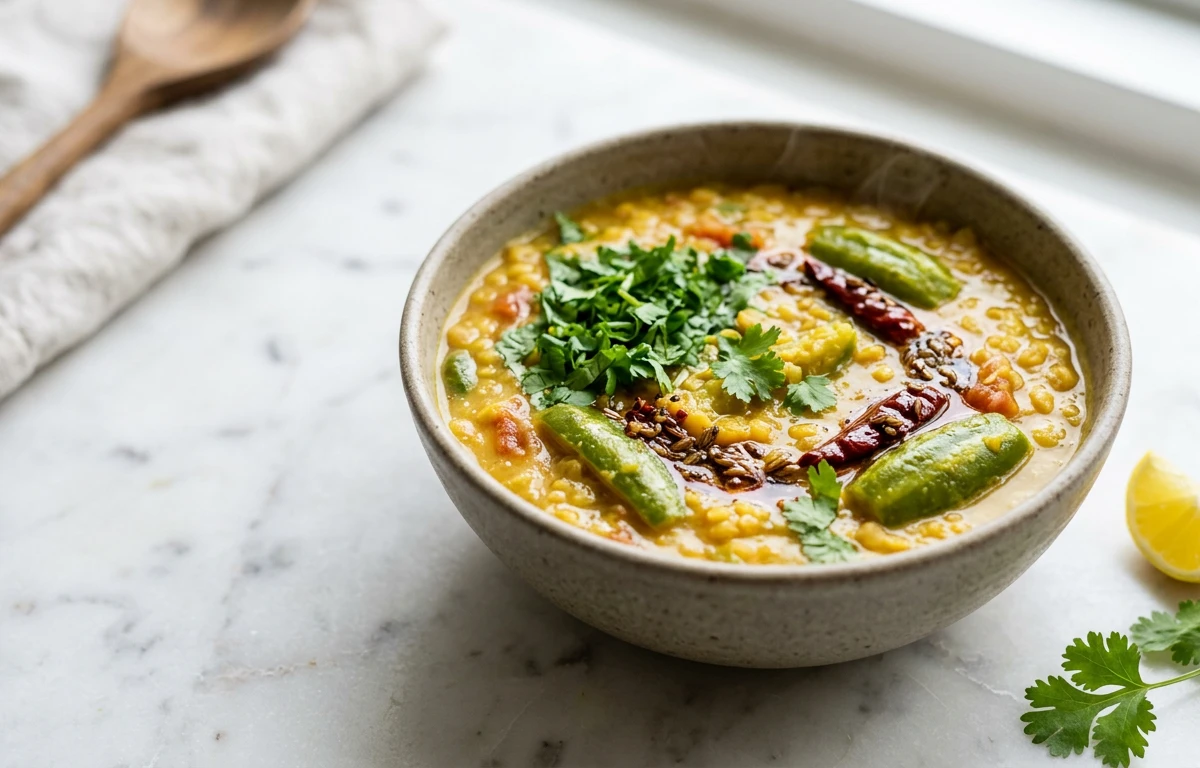
-curry.webp)
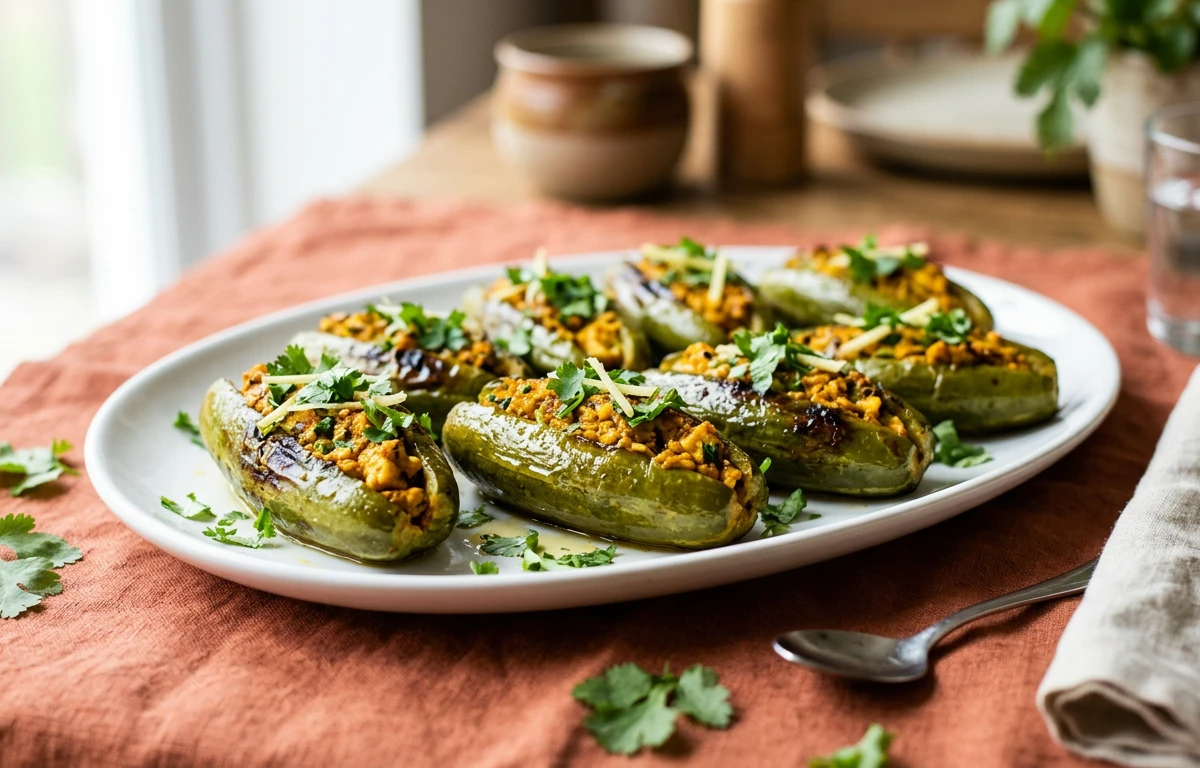
.webp)