Spice10 recipes
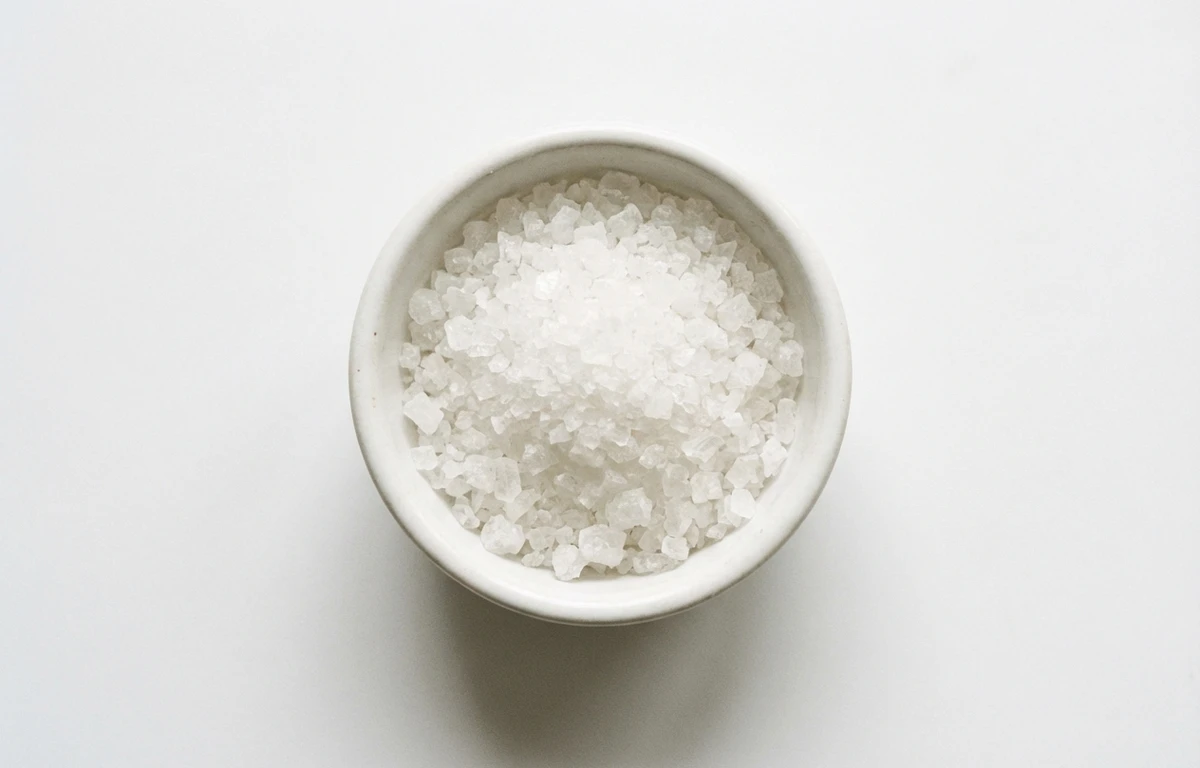
sea salt.
VegetarianVeganGluten-freeDairy-freeNut-freePeanut-freeSoy-freeEgg-freeShellfish-freeHoney-freeAlcohol-free
ALSO KNOWN AS
maris salunrefined saltsolar saltbay saltsamudra namak
SERVING
CALORIES
0
PROTEIN
0g
CARBS
0g
FAT
0g
FIBER
0g
NUTRITION PROFILE · per 100 g
Everything in this ingredient.
MACRONUTRIENTS
Calories0kcal—
Protein0g0%
Carbohydrates0g0%
Fiber0g0%
Sugar0g0%
Total fat0g0%
Saturated fat0g0%
Trans fat0g—
Cholesterol0mg0%
Water0.20g—
MINERALS
Sodium38758mg1685%
Potassium8.0mg0%
Calcium24mg2%
Iron0.33mg2%
Magnesium1.0mg0%
Phosphorus0mg0%
Zinc0.10mg1%
Copper0.03mg3%
Manganese0.10mg4%
Selenium0.10µg0%
VITAMINS
Vitamin A0µg0%
Vitamin C0mg0%
Vitamin D0µg0%
Vitamin E0mg0%
Vitamin K0µg0%
Thiamin (B1)0mg0%
Riboflavin (B2)0mg0%
Niacin (B3)0mg0%
Pantothenic acid (B5)0mg0%
Vitamin B60mg0%
Folate (B9)0µg0%
Vitamin B120µg0%
%DV based on a 2,000 cal diet. Source: USDA FoodData Central. A dash in the %DV column means there’s no established Daily Value for that nutrient.
MEASUREMENT CONVERSIONS
How much is what.
1 cup288g
1 tablespoon18g
1 teaspoon6g
1 oz28.4g
1 lb453.6g
1 ml1.2g
1 liter1200g
HEALTH BENEFITS
Why eat it.
- ✓Provides essential sodium for nerve and muscle function
- ✓Helps maintain fluid balance in the body
- ✓Contains trace minerals like magnesium and calcium
- ✓Can aid in digestive health by stimulating stomach acid
- ✓Supports electrolyte balance during intense physical activity
COOKING TIPS
In the kitchen.
- 1Use as a finishing salt to add texture and a burst of flavor to dishes
- 2Add to boiling water for pasta or vegetables to season from within
- 3Use coarse sea salt for brining meats to improve moisture retention
STORAGE
Keep it fresh.
- Store in a cool, dry place away from moisture to prevent clumping
- Keep in an airtight container, preferably glass or ceramic
- Avoid storing in metal containers for long periods as salt can cause corrosion
FAQ
Frequently asked questions.
How long does sea salt last?
Sea salt has an indefinite shelf life as it is a mineral and does not support bacterial growth, provided it is kept dry.
Is sea salt healthier than table salt?
Nutritionally they are similar in sodium content, but sea salt is less processed and contains small amounts of trace minerals.
Can I substitute table salt for sea salt?
Yes, but use a 1:1 ratio by weight. If measuring by volume, use slightly more sea salt if it is coarse, as the crystals take up more space.
Does sea salt contain iodine?
Naturally, sea salt contains very little iodine. Unless it is specifically labeled as 'iodized,' it should not be relied upon as a source of iodine.
How should I pick a high-quality sea salt?
Look for salt that is slightly moist or has a greyish/pinkish tint, which indicates the presence of natural trace minerals and lack of heavy refining.
Can sea salt be frozen?
There is no need to freeze salt; it is stable at room temperature and freezing will not affect its quality or longevity.
What are the best uses for coarse sea salt?
Coarse sea salt is ideal for salt-crusting fish or meat, seasoning thick steaks, or as a decorative finishing touch on baked goods.
Is sea salt suitable for a low-sodium diet?
No, sea salt is primarily sodium chloride and should be limited just like table salt if you are on a sodium-restricted diet.
Why does my sea salt clump?
Salt is hygroscopic, meaning it absorbs moisture from the air. Adding a few grains of rice to your salt shaker can help absorb excess moisture.
Is sea salt vegan and vegetarian?
Yes, sea salt is a mineral harvested from evaporated seawater and contains no animal products.
RECIPES
Cook with sea salt.
10 recipes · sorted by what’s quick