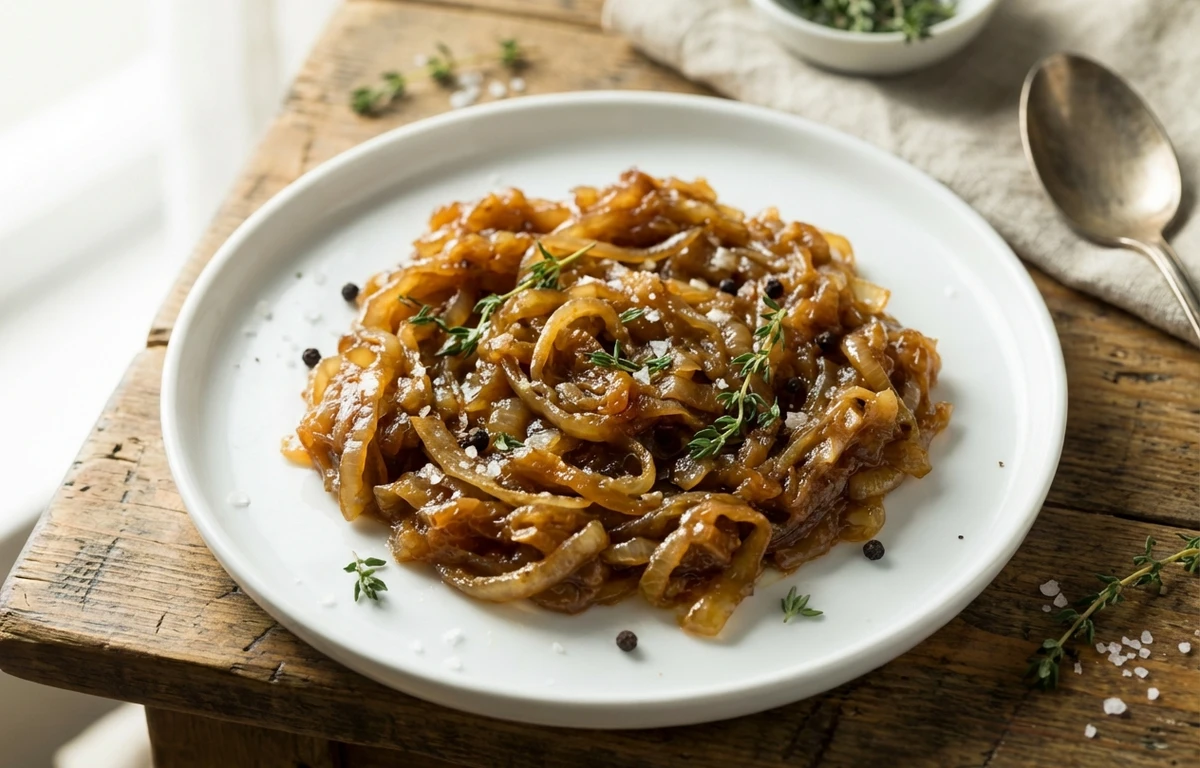
Slow-Caramelized Onions
Deep golden, buttery-soft strands of onion cooked low and slow until they melt into pure savory-sweet silk. No rushing, no cheating — just patience rewarded with a jammy, intensely flavorful condiment that elevates burgers, steaks, soups, and sandwiches from good to unforgettable.
For 8 servings
- prep
Slice the onions into thin half-moons.
Peel the onions, cut in half from root to stem, and slice thinly into even half-moons. Even thickness ensures uniform caramelization.
- saute · ~3 min
Melt the butter and oil, then add onions.
1.Heat butter and olive oil in a large skillet over medium heat until the butter stops foaming.2.Add all the sliced onions and a pinch of salt. Stir to coat evenly in the fat.TIPThe salt helps draw out moisture from the onions, jumpstarting the softening process. - saute · ~10 min
Cook until softened and translucent.
1.Cook for about 10 minutes, stirring occasionally, until onions soften, turn translucent, and release their liquid. - simmer · ~35 min
Caramelize low and slow until deep golden brown.
1.Reduce heat to medium-low.2.Cook for another 30 to 40 minutes, stirring every 3-4 minutes.3.When brown bits stick to the pan, add a splash of water and scrape them up with a wooden spoon. The onions will absorb that flavor and keep cooking gently.TIPPatience is everything. Rushing with high heat burns the natural sugars instead of caramelizing them. - garnish
Finish and remove from heat.
Onions are done when they are jammy, deeply browned, and reduced to about a quarter of their original volume. Remove from heat and use immediately or store for later.
TIPKeep going a few extra minutes if they look pale — true caramelized onions are mahogany brown, not golden.
What to keep in mind.
7 tips from the recipe — small details that make a real difference to the final dish.
- 1Choose yellow or sweet onions; they have the highest sugar content for deep caramelization.
- 2Slice onions evenly in thickness; uneven slices will cook at different rates and burn some edges.
- 3Use a wide, heavy-bottomed pan so the onions spread in a single layer and steam less.
- 4Resist the urge to stir too often; letting the onions sit builds fond for richer flavor.
- 5Deglaze with water, broth, wine, or vinegar each time you see brown bits stick to the pan.
- 6If the onions start browning too fast, lower the heat immediately to prevent bitterness.
- 7Caramelized onions freeze beautifully; portion them into ice cube trays for easy use later.
Adapt it for your goals.
Balsamic-glazed
Add 1 tablespoon of balsamic vinegar in the last 5 minutes of cooking for a tangy, sweet glaze that pairs beautifully with roasted meats and grilled cheese.
herb infusedHerb-infused
Add a sprig of fresh thyme or a bay leaf during cooking to infuse the onions with earthy, aromatic notes. Remove the herb before serving.
wine enrichedWine-enriched
Deglaze with 1/4 cup of dry red or white wine instead of water for a deeper, more complex flavor profile ideal for French onion soup or pasta.
sugar free ketoSugar-free keto
Use ghee or avocado oil instead of butter, and skip any added sugar. The onions' natural sweetness still shines. Ideal for low-carb diets.
Why this is on our healthy list.
Rich in Antioxidants
Onions are packed with quercetin, a powerful antioxidant that may help reduce inflammation and support heart health.
Low Calorie, High Flavor
Caramelized onions deliver intense savory-sweet taste with very few calories, making them a guilt-free way to enhance meals.
Digestive Support
Onions contain inulin, a prebiotic fiber that feeds beneficial gut bacteria and supports healthy digestion.
Heart-Healthy Fats
Butter and olive oil provide a balance of saturated and monounsaturated fats, which can be part of a heart-conscious diet when used in moderation.
Frequently asked questions
Bitter onions usually result from cooking on too high heat, which burns the sugars. Keep the heat low and stir often to prevent burning.