Sweet Sanna
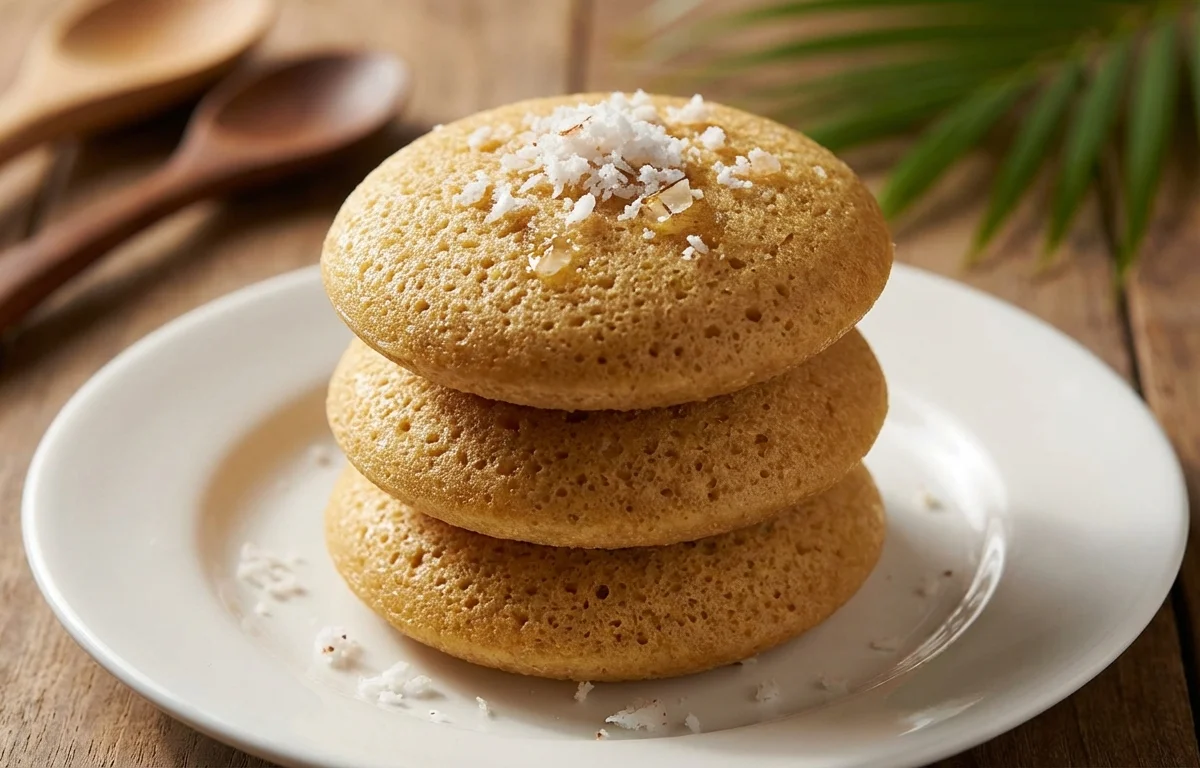
Soft, fluffy steamed rice cakes from Goa, sweetened with jaggery and delicately flavored with coconut. These traditional sannas carry a hint of toddy-like tang from fermentation, making them a beloved festive treat served at celebrations and Christmas feasts across coastal India.
For 4 servings
- prep
Soak the rice and dal.
1.Wash rice thoroughly and soak in water for 4 hours.2.Wash urad dal and poha together, soak for 1 hour separately. - mix
Grind the batter.
1.Drain the urad dal and poha, grind to a smooth paste with minimal water.2.Add soaked rice and grated coconut, grind coarsely — batter should be slightly grainy, not too fine.3.Add jaggery and cardamom powder during the final grind, mix well until dissolved.4.Pour batter into a large bowl — it should be thick, dropping consistency.TIPDon't add too much water while grinding — a thick batter gives fluffier sannas. - rest · ~480 min
Ferment the batter overnight.
1.Add a pinch of salt and stir the batter a few times with your hand to aerate.2.Cover and leave in a warm place to ferment for 8 hours or overnight until doubled and bubbly.TIPIn cooler weather, place the bowl in an oven with just the pilot light on, or wrap in a warm towel. - prep
Prepare the steamer.
1.Grease idli moulds lightly with oil.2.Pour water into the steamer base and bring to a boil. - steam · ~18 min
Steam the sweet sannas.
1.Gently stir the fermented batter once — do not deflate completely.2.Pour batter into greased moulds, filling only halfway.3.Place moulds in the steamer, cover and steam on medium heat for 15-18 minutes.TIPA toothpick inserted in the center should come out clean when done. Avoid opening the lid mid-steam. - rest · ~2 min
Cool slightly and unmould.
1.Switch off the heat and let sannas sit for 2 minutes.2.Unmould gently with a spoon and transfer to a serving plate.
What to keep in mind.
7 tips from the recipe — small details that make a real difference to the final dish.
- 1Use parboiled or idli rice for the right texture — raw rice yields dense, less fluffy sannas.
- 2Grind the batter to a slightly coarse consistency; over-grinding can make sannas heavy.
- 3Ferment the batter in a warm spot (80-85°F) for a good tangy rise — a cooler kitchen slows fermentation.
- 4Do not over-stir the fermented batter; gentle folding preserves the air bubbles for fluffiness.
- 5Fill idli moulds only halfway to allow room for the sannas to puff up while steaming.
- 6Let sannas rest for 2 minutes after steaming before unmoulding to prevent tearing.
- 7Store leftover sannas in an airtight container in the fridge for up to 2 days; re-steam lightly to refresh.
Adapt it for your goals.
Savory sanna
Omit jaggery and cardamom, add fresh green chilies, ginger, and curry leaves for a savory, snack-style sanna served with coconut chutney.
veganVegan
This recipe is already naturally vegan; ensure jaggery is plant-based (some commercial jaggery may contain refining agents, but traditional jaggery is vegan).
gluten freeGluten-free
All ingredients (rice, urad dal, poha, jaggery, coconut) are naturally gluten-free — confirm poha is labeled gluten-free if you have celiac concerns.
low sugarLow-sugar
Reduce jaggery by half and add a mashed ripe banana for natural sweetness and moisture — great for those watching sugar intake.
Why this is on our healthy list.
Good source of complex carbs
Parboiled rice provides sustained energy, and urad dal adds plant-based protein for a balanced snack.
Naturally sweetened with jaggery
Jaggery is an unrefined sugar rich in iron and minerals, offering a deeper flavor than white sugar.
Contains healthy fats from coconut
Fresh coconut provides medium-chain triglycerides (MCTs) and fiber, supporting digestion and satiety.
Fermented for gut health
The natural fermentation process introduces beneficial bacteria that aid digestion and improve nutrient absorption.
Frequently asked questions
The batter may not have fermented enough (needs 8–12 hours in a warm spot) or you added too much water — it should be thick, dropping consistency.