Tawa Paratha
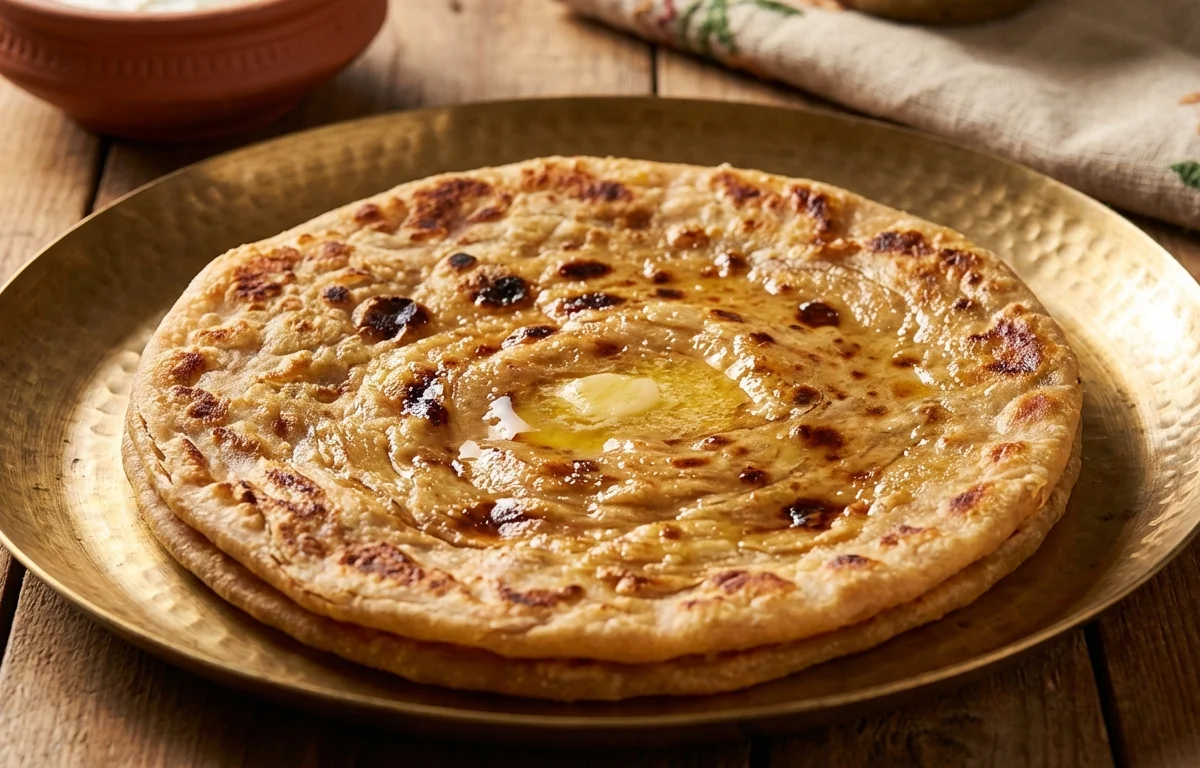
Tawa paratha is a simple layered Indian flatbread with a crisp golden surface and soft inner folds. Made with whole wheat flour, it cooks quickly on a hot griddle and pairs well with sabzi, curry, pickle, or yogurt.
For 8 servings
- knead · ~15 min
Knead the dough.
1.Add whole wheat flour and salt to a wide bowl.2.Mix in oil, then pour in water little by little.3.Knead into a soft, smooth dough for 5 to 6 minutes.4.Cover the dough and keep it aside for 15 minutes.TIPA slightly soft dough gives softer parathas and makes rolling easier. - prep · ~7 min
Divide and shape the dough.
1.Knead the rested dough briefly until smooth.2.Divide it into 8 equal balls.3.Flatten one ball lightly and dust it with whole wheat flour.4.Roll it into a thin circle about 6 to 7 inches wide. - assemble · ~4 min
Make the paratha layers.
1.Brush the rolled circle with a little ghee.2.Sprinkle a light dusting of whole wheat flour over it.3.Fold it into pleats from one side to the other.4.Roll the pleated strip into a spiral and press it gently.TIPKeep the flour layer light so the folds separate without making the paratha dry. - rest · ~5 min
Rest the shaped dough for 5 minutes.
- prep · ~3 min
Roll the paratha.
Dust the spiral lightly with flour and roll it gently into a circle about 5 to 6 inches wide. Keep the pressure even so the layers stay intact.
- fry · ~3 min
Cook the paratha on the tawa.
1.Heat a tawa over medium-high heat until hot.2.Place the rolled paratha on the tawa and cook until light bubbles appear.3.Flip it, spread a little ghee on top, and cook the second side until light golden spots form.4.Flip again, spread a little more ghee, and press gently until both sides are golden and crisp in places.TIPCook on medium-high heat. Low heat makes parathas hard, while very high heat can leave raw patches inside. - assemble
Repeat with the remaining dough balls.
Shape, rest, roll, and cook the remaining parathas the same way. Stack them in a cloth-lined container to keep them warm and soft.
- serve
Serve the tawa paratha hot.
What to keep in mind.
7 tips from the recipe — small details that make a real difference to the final dish.
- 1Add water gradually while kneading; the dough should feel soft, not sticky, so the layers stay tender.
- 2Resting the dough after kneading and again after shaping the spiral helps the gluten relax for easier rolling.
- 3Keep the flour sprinkling between layers very light, or the paratha can turn dry and dusty inside.
- 4Roll the final spiral with gentle, even pressure so the pleats do not flatten out completely.
- 5Start cooking only when the tawa is properly hot; early bubbles are the cue to flip the first time.
- 6Press the paratha lightly around the edges after the second flip to help raw spots cook and the layers puff.
- 7Store cooked parathas in a cloth-lined container, not uncovered, so they stay soft while the surface remains lightly crisp.
Adapt it for your goals.
Low-oil
Use less ghee and dry-roast most of the way, then finish with a light brush of ghee for a lighter everyday paratha.
veganVegan
Replace ghee with neutral oil for layering and cooking; the paratha stays flaky and suits a dairy-free meal.
ajwainAjwain
Add a pinch of ajwain to the dough for a more aromatic paratha that pairs especially well with potato sabzi and yogurt.
lachha styleLachha-style
Make thinner pleats and roll more loosely into the spiral for a more pronounced layered texture similar to lachha paratha.
Why this is on our healthy list.
Whole Grain Goodness
Made primarily with whole wheat flour, this paratha offers the bran and germ that are naturally present in whole grains.
Satisfying Energy Base
The combination of whole wheat and a little fat from oil and ghee makes it filling and well suited to a balanced meal.
Simple Pantry Ingredients
This recipe uses a short ingredient list without refined flour, making it a straightforward homemade flatbread option.
Frequently asked questions
Usually the dough was too stiff, the tawa heat was too low, or the paratha was overcooked. Keep the dough soft and cook on medium-high heat.



.webp)