Meal Planning · 9 MIN READ
AI Meal Planning: Can Artificial Intelligence Build a Better Diet?
AI promises to take the thinking out of what to eat — balancing your macros, your budget, your allergies, and your taste in seconds. But can an algorithm…
Loading...
AI promises to take the thinking out of what to eat — balancing your macros, your budget, your allergies, and your taste in seconds. But can an algorithm…
AI promises to take the thinking out of what to eat — balancing your macros, your budget, your allergies, and your taste in seconds. But can an algorithm really plan a healthier diet than a dietitian? We dug into what it gets right, where it fails, and how to use it well..
The hardest part of eating well was never the recipes — it’s the decisions. What to cook, that hits your protein target, uses what’s in the fridge, fits your budget, avoids your allergies, and doesn’t bore you by Wednesday. AI meal planning promises to make all those decisions disappear. The question is whether the diet it builds is actually better, or just faster.
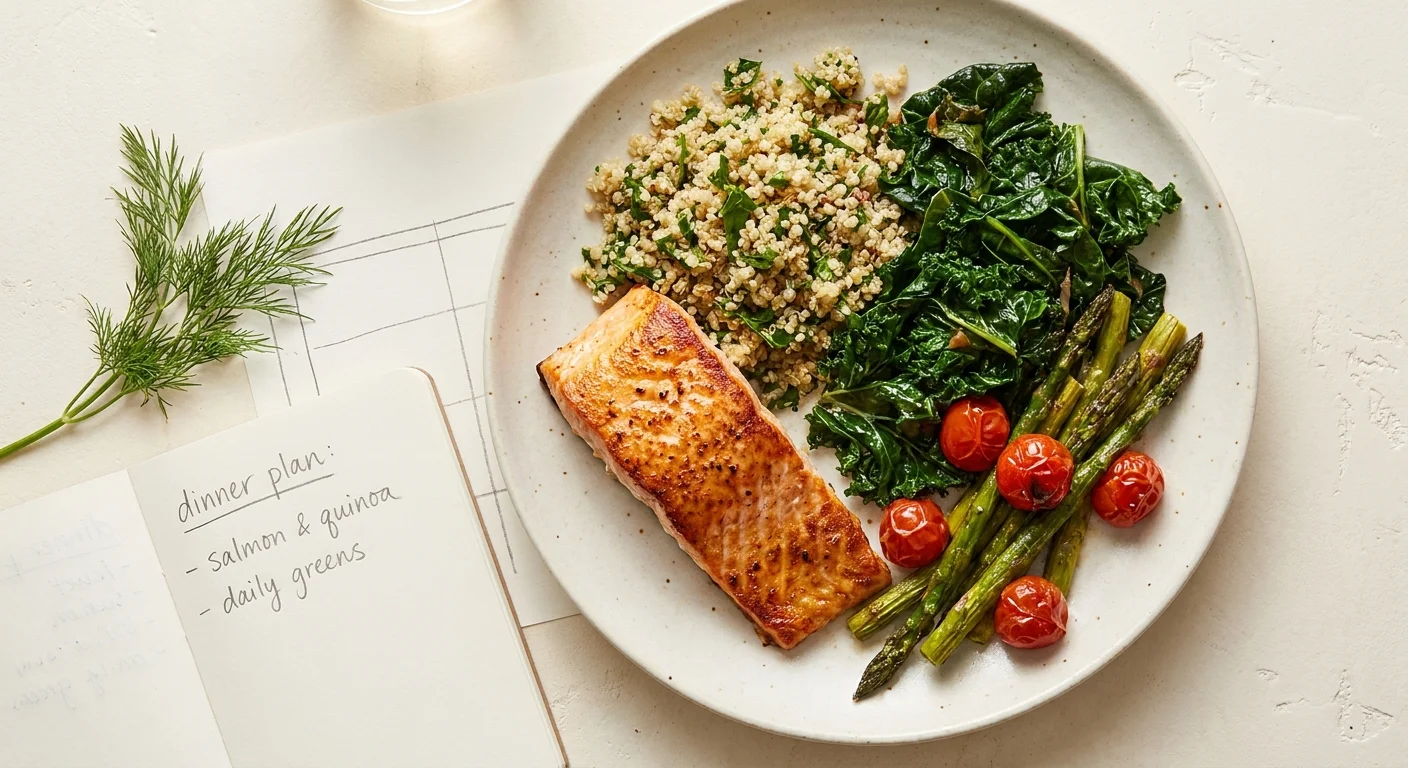
At its core, an AI meal planner takes your inputs — goals, calories, dietary restrictions, taste preferences, sometimes your pantry — and generates a structured plan: meals, portions, macros, and a grocery list. Modern systems combine a nutrition database with a language model that can reason about constraints and explain its choices.
The good ones don’t just pick recipes at random. They optimise across multiple goals at once: hit your protein, stay under your calorie ceiling, respect a nut allergy, keep the cost down, and avoid repeating the same dinner. That kind of multi-constraint balancing is exactly what computers are good at — and what humans find exhausting.
They’re not really competitors — they’re good at different things. Here’s how they compare on the dimensions that matter:
Research on digital and AI-assisted nutrition is still young, but the early signal is encouraging. Studies on app-based and algorithmic meal planning consistently show that structure and personalisation improve adherence — and adherence, not perfection, is what drives results.
The mechanism is simple: people don’t fail at healthy eating because they lack recipes — they fail because every meal is a fresh decision. Remove the decisions, and consistency follows. That’s where AI delivers measurable value, regardless of how sophisticated the underlying nutrition science is.
It helps to know what’s happening under the hood, because it explains both the strengths and the failure modes. A modern AI meal planner is really three systems working together.
When these three are well-integrated, you get plans that are both nutritionally sound and genuinely usable. When they’re not — when a language model guesses at nutrition numbers instead of pulling from the database — you get output that sounds authoritative but isn’t. Knowing the difference is the key to trusting a tool.
AI meal planning isn’t equally useful for everyone. It delivers the most value for specific situations:
Conversely, it’s least suited to people with complex medical needs, anyone in recovery from disordered eating, and those for whom food is primarily about culture and connection rather than optimisation. For these groups, a human should always lead.
The technology is improving fast, and the next few years will close some of today’s biggest gaps. Three shifts are already underway.
First, deeper personalisation. Wearables and continuous glucose monitors are starting to feed real, individual data into planners — so instead of generic targets, your plan can respond to how your body actually handles specific foods. Early research into personalised nutrition shows people vary enormously in their glucose response to the same meal, and AI is uniquely suited to act on that.
Second, better cultural and emotional intelligence. Today’s planners are blunt about cuisine and comfort; the next generation will weight family recipes, regional dishes, and the simple fact that you want pizza on Friday — because a plan you enjoy is a plan you’ll keep.
Third, tighter integration with clinicians. The most promising model isn’t AI replacing dietitians — it’s AI doing the legwork so dietitians can focus on strategy. A clinician sets the guardrails; the algorithm fills in seven days of compliant, varied meals and updates them as life changes.
AI won’t out-think a good dietitian on the hard cases. But for the everyday question of "what should I eat this week?", it removes the one barrier that stops most people: having to decide.
— Dr. Lena Hoff, RD
Our planner builds a full week around your goals, conditions, budget, and pantry — with macros and a grocery list generated in seconds. You stay in control; it does the deciding.
Try the meal planner →Eating well is rarely about willpower. It’s about having a short list of dinners you actually want to eat. Pick two from this list. Make them next week. The rest will follow.
If you want these on autopilot, our weekly meal planner can drop the picks above into your calendar with one click and build a single grocery list from the merged ingredients.

Kayte is a nutrition writer, food and recipe content creator, and wellness educator. She bridges evidence-based nutrition science with everyday cooking — translating research into practical recipes, meal ideas, and wellness habits that readers can actually use in their kitchens.
Meet the editorial team →Built using verified nutrition databases, culinary research, and traditional cooking knowledge — every claim is cross-referenced against the sources listed in the article. Last reviewed May 2026.
Articles are curated using trusted food databases (USDA FoodData Central, IFCT), culinary literature, and dietary guidelines, then structured by our editorial team for clarity, accuracy, and usefulness.