Meal Planning · 11 MIN READ
A 7-Day High-Protein Vegetarian Meal Plan for Indian Kitchens
An honest 7-day high-protein vegetarian Indian meal plan: 65-78g protein/day from paneer, dal, soya, curd, sprouts. With ICMR-NIN portion math and per-meal…
Loading...
An honest 7-day high-protein vegetarian Indian meal plan: 65-78g protein/day from paneer, dal, soya, curd, sprouts. With ICMR-NIN portion math and per-meal…
Hitting a real protein target on a vegetarian Indian diet is harder than the wellness internet pretends. A katori of plain dal carries 7-9 grams of protein, not the 22 grams you'd read off a dry-lentil label [1][2]. A regular cube of paneer is 30-40 grams, which is 6-7 grams of protein, not the 18 you'd read off a 100-gram block [1]. Across the day those gaps add up, and most lacto-vegetarian Indians eating intuitively land at 40-50 grams of protein — fine for the ICMR-NIN safe-intake floor of 0.83 g/kg/d for a sedentary adult [3], well under the 1.2-1.6 g/kg the evidence supports for anyone training, losing weight, or past 50 [4][5].
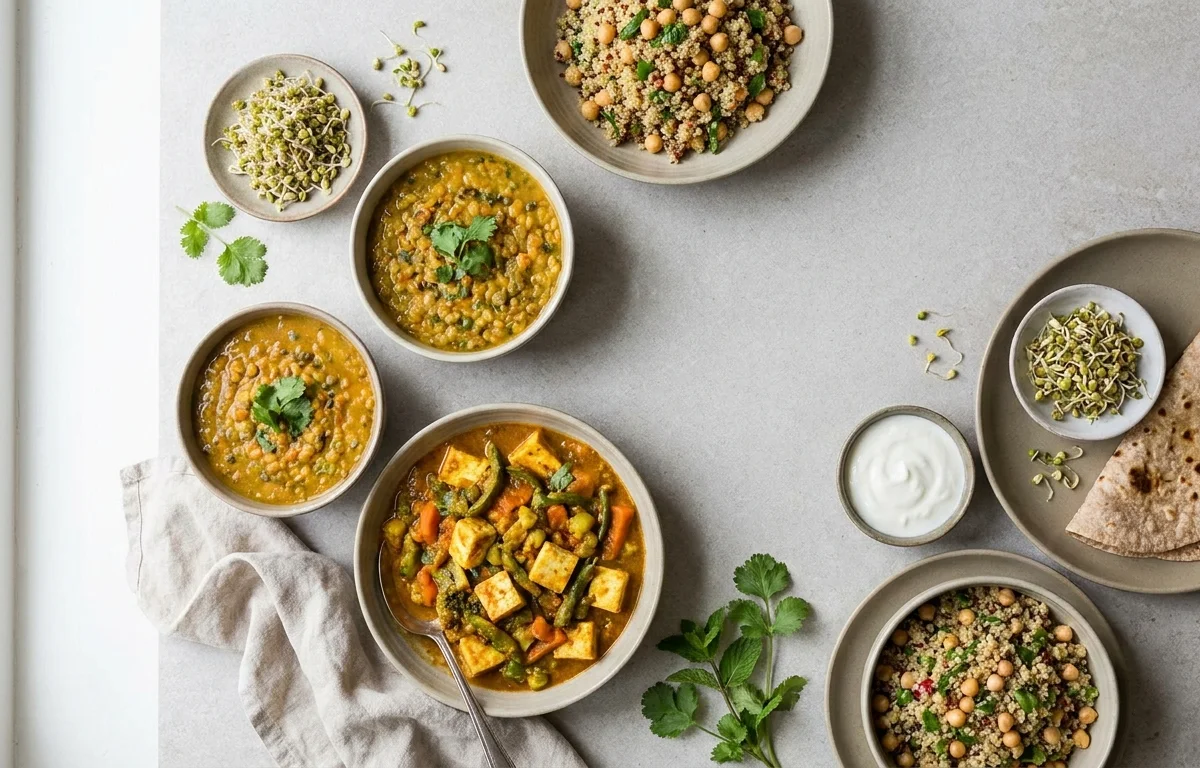
This plan closes that gap honestly. Seven days, four eating windows each, anchored on the highest-protein-per-rupee Indian ingredients: dal plus a complementary grain, paneer or tofu as the centre of one main meal, hung curd or Greek-style dahi as the snack workhorse, soya chunks twice a week, sprouts on the side. Per-day totals land in the 65-78 gram range — enough for a 60-65 kg active vegetarian at roughly 1.1-1.2 g/kg, with the room to push to 1.6 g/kg by adding a 25-gram scoop of whey or two extra paneer cubes. The seven main meals below are the dinners; everything else is the supporting cast that does the actual arithmetic.
Two things separate vegetarian Indians who hit 70+ grams of protein a day from those who don't, and neither is willpower. The first is per-meal distribution — Leidy's 2015 review found that roughly 25-30 grams of protein at each of three or four meals beats one big-protein dinner for satiety and lean-mass preservation, regardless of the daily total [5]. The second is treating concentrated protein sources as the centre of the plate rather than the garnish: a 100-gram block of paneer, a 25-gram dry portion of soya chunks (which rehydrates to 75 grams cooked), or a cup of hung curd, at most meals.
If you adopt one habit from this plan, make it the hung-curd swap: hang 500 grams of plain dahi in muslin for 4-6 hours and you get roughly 250 grams of dense, ~10 g protein-per-100g curd that works as a snack, a dip, or a marinade for the whole week. It's the single highest-yield change a lacto-vegetarian can make. And if your goal is muscle gain rather than maintenance — meaning the 1.6-2.2 g/kg range from Morton's 2018 BJSM meta-analysis [4] — the honest answer is that hitting that on Indian vegetarian food alone is a daily logistics problem, and a 25-30 g whey or pea-protein scoop after training stops being optional.

Sourabh writes about Indian cuisine, budget cooking, and the everyday nutrition questions that come up in Indian kitchens — chapati portions, dal protein, how to keep dishes balanced without losing the flavours families actually want. His pieces lean on credible sources (ICMR-NIN, peer-reviewed studies) and home-cook reality in equal measure.
Meet the editorial team →Built using verified nutrition databases, culinary research, and traditional cooking knowledge — every claim is cross-referenced against the sources listed in the article. Last reviewed May 2026.
Articles are curated using trusted food databases (USDA FoodData Central, IFCT), culinary literature, and dietary guidelines, then structured by our editorial team for clarity, accuracy, and usefulness.
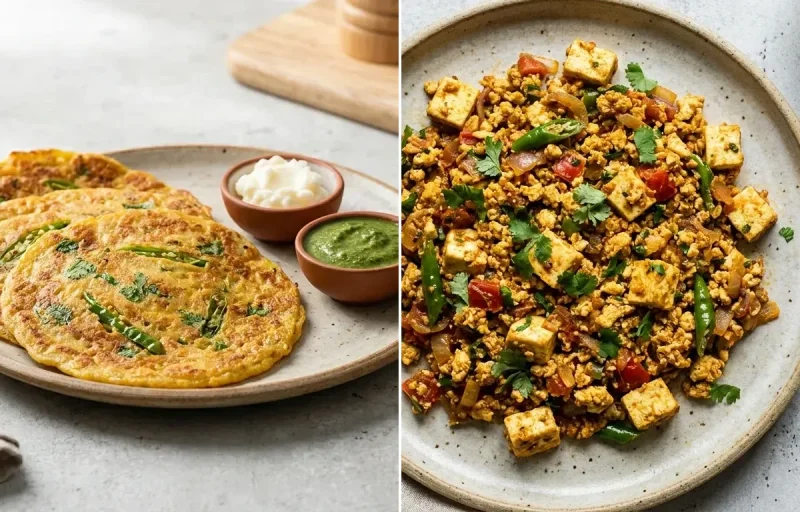
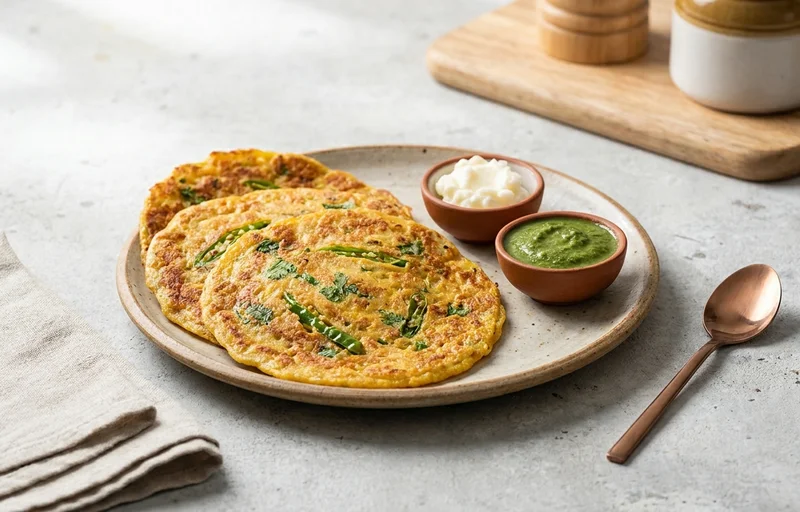
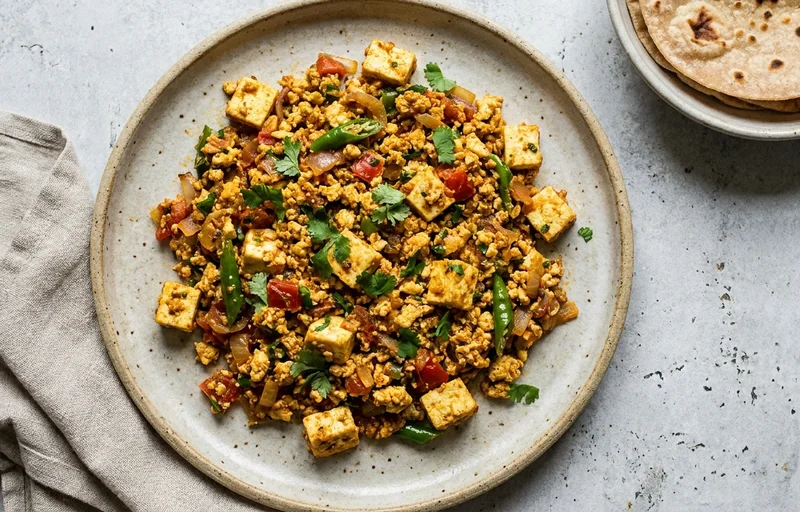
Monday opens the week with the highest-protein breakfast in the plan: a moong dal chilla (~14 g protein from 50 g dry moong) topped with 100 g paneer bhurji (~18 g). One plate clears 22-25 g — more than most lacto-vegetarian Indians manage at breakfast all week. Moong is one of the lower-FODMAP dals, so it's also the gentlest on a stomach that isn't used to a high-legume day.
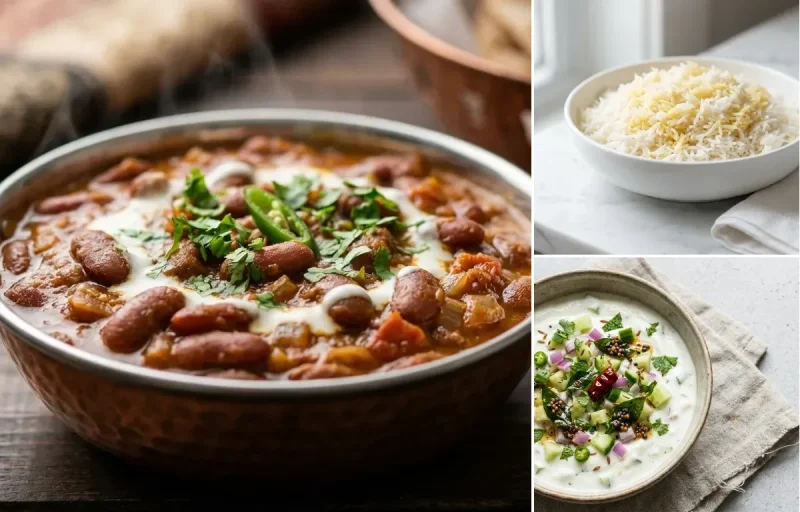
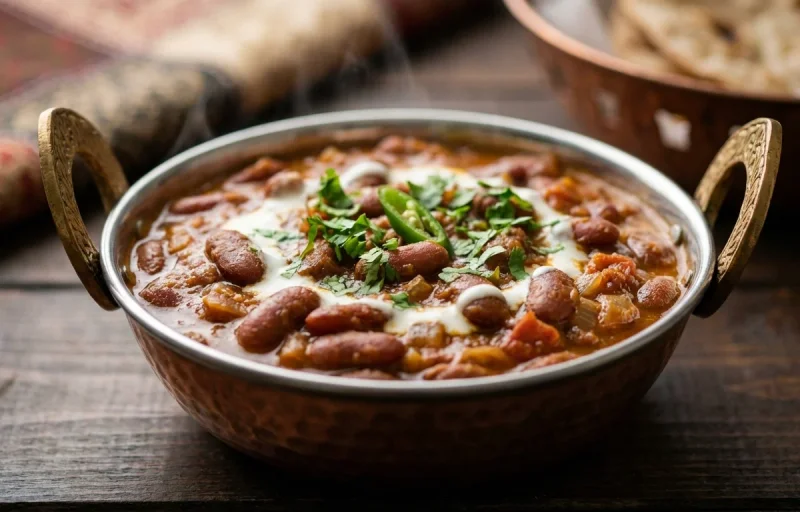
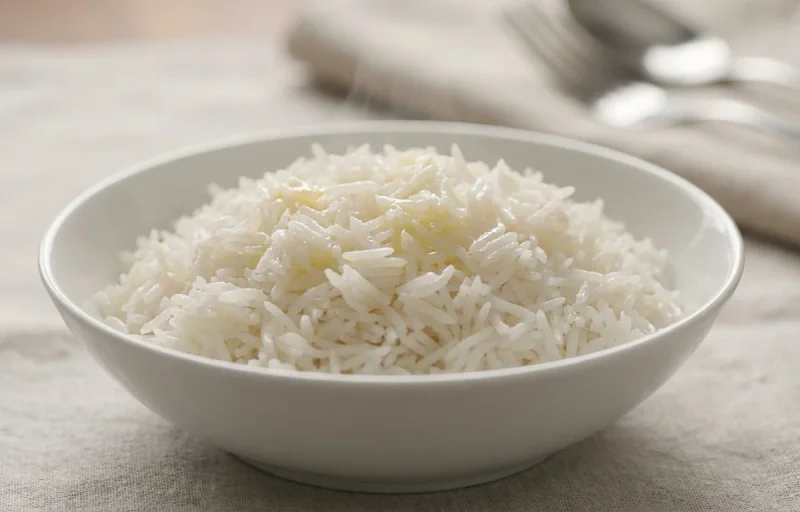
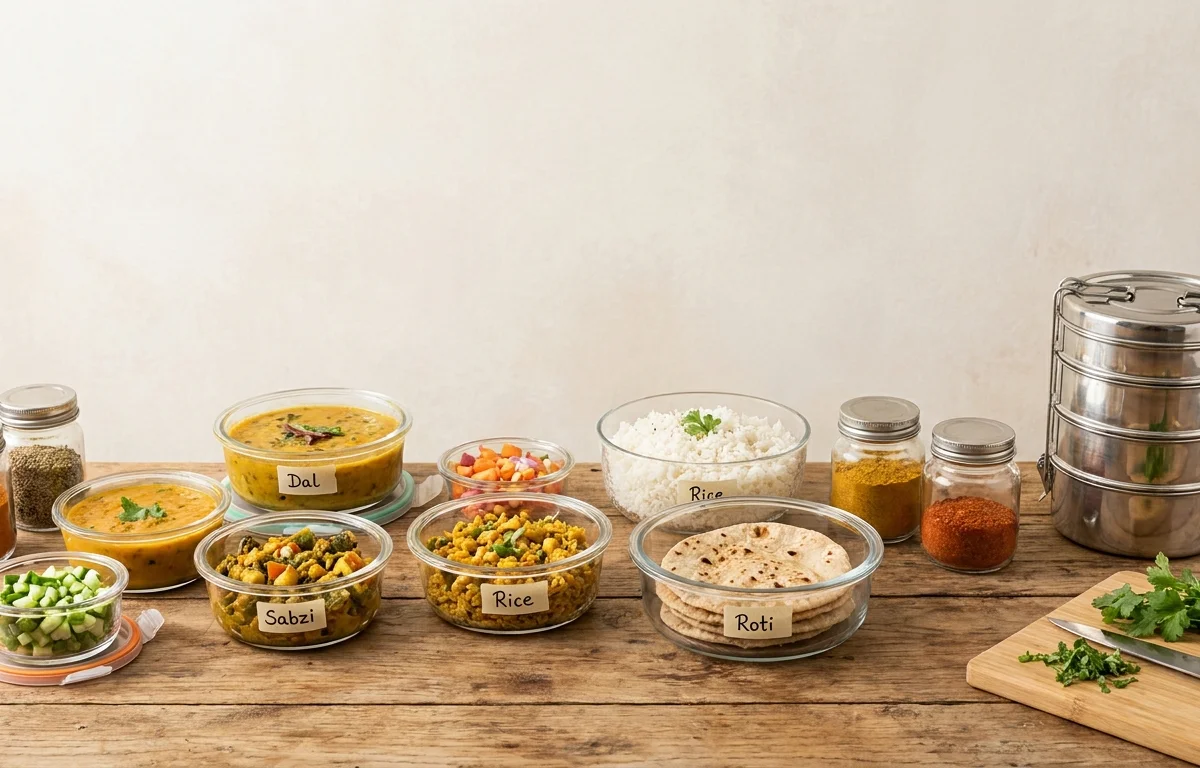
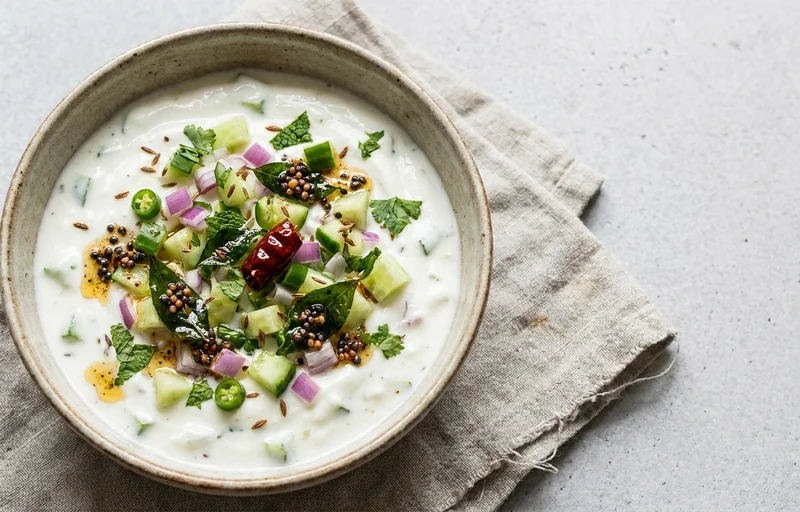
Tuesday's lunch is the classic rajma chawal, and the protein math holds up: a cooked katori of rajma (~150 g) carries 9-10 g protein, paired with 1 cup of cooked basmati (~5 g) and 100 g cucumber raita made with hung-style dahi (~9 g). Total: 23-25 g protein in one plate. The cooked-legume + cooked-grain combination delivers a full amino-acid profile, though as the Academy of Nutrition and Dietetics noted in 2016 [6], you don't actually need to combine them at the same meal — eating them across the day works too. This combination is just delicious.
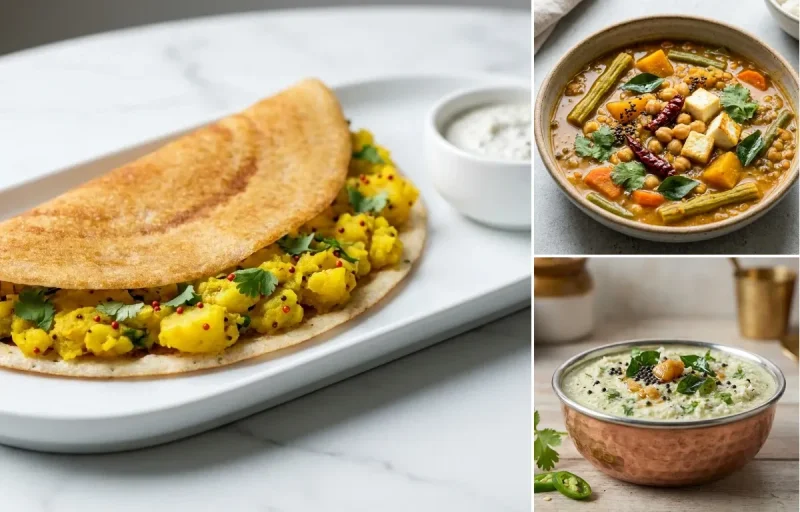
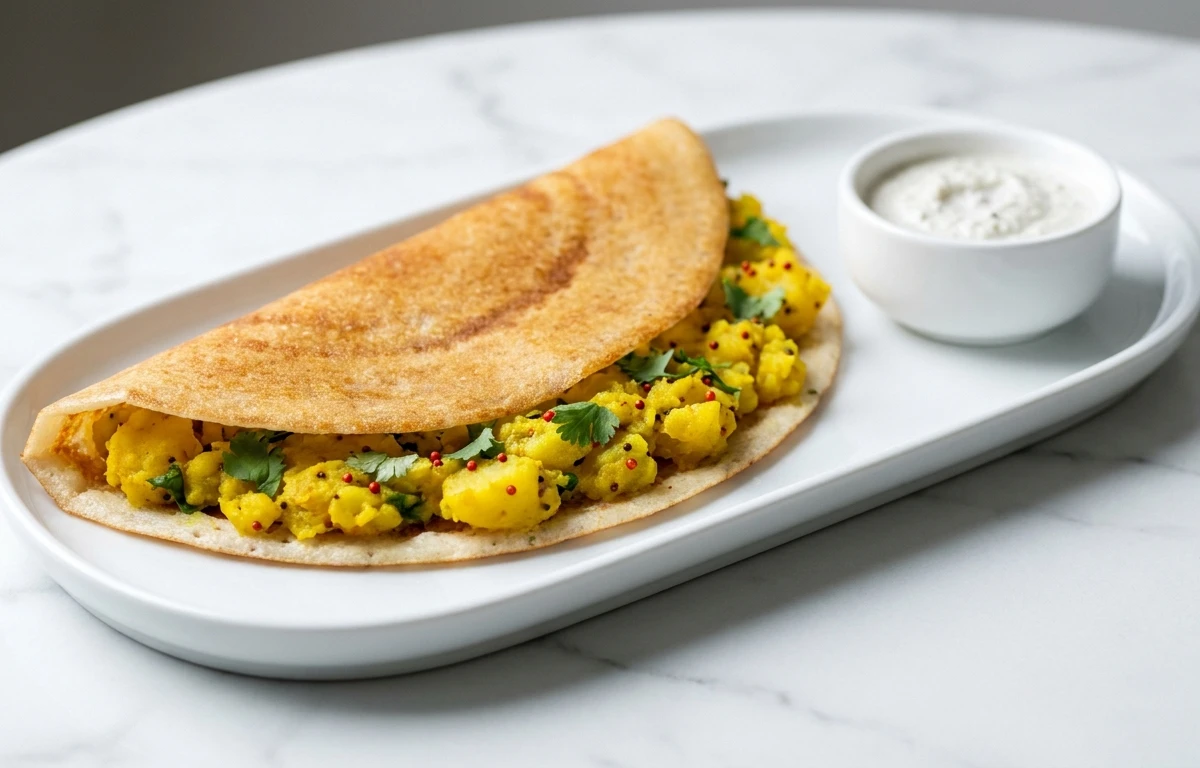
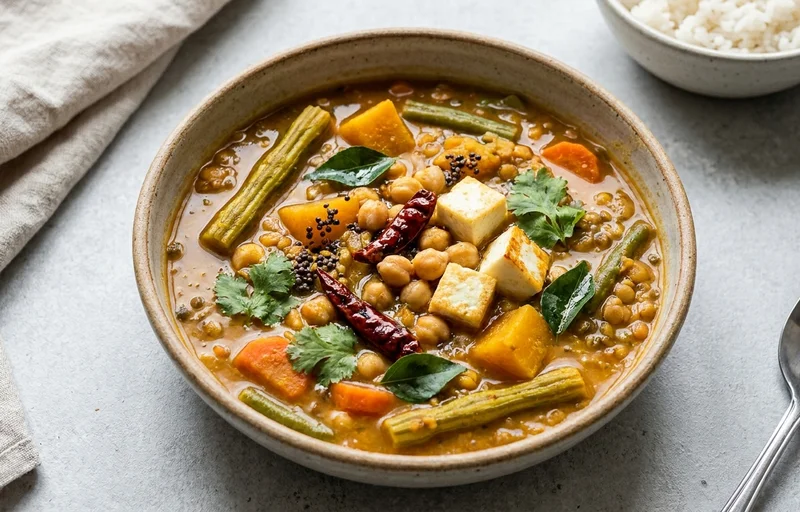
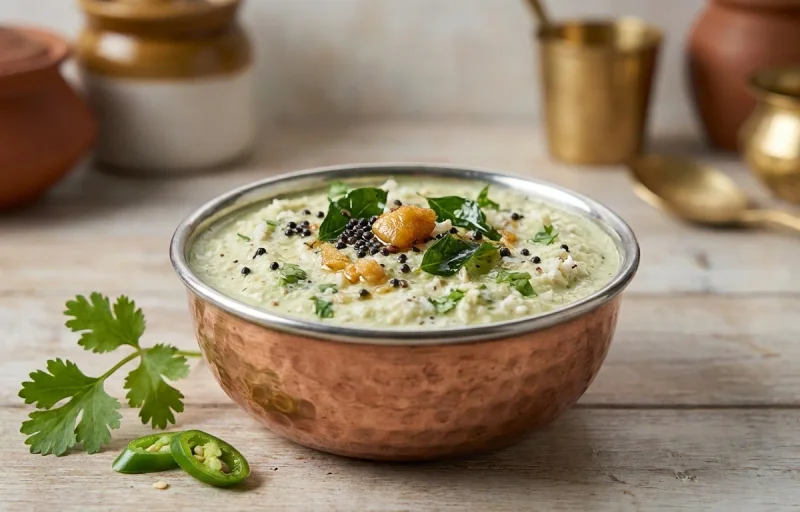
Thursday's South Indian morning: a masala dosa with a high-protein sambar (toor dal-forward, with extra moong dal added for density — ~12-14 g protein per katori instead of the standard 7-9) and naralachi (coconut) chutney for fat. The fermentation of the dosa batter (overnight) does measurably improve the bioavailability of B vitamins and reduces the phytate content, but it doesn't dramatically increase protein — the headline protein here comes from the sambar, not the dosa. Total plate: ~18-20 g protein, the lowest-protein anchor of the week, which is why Thursday's plan has two protein-heavy snacks layered in.
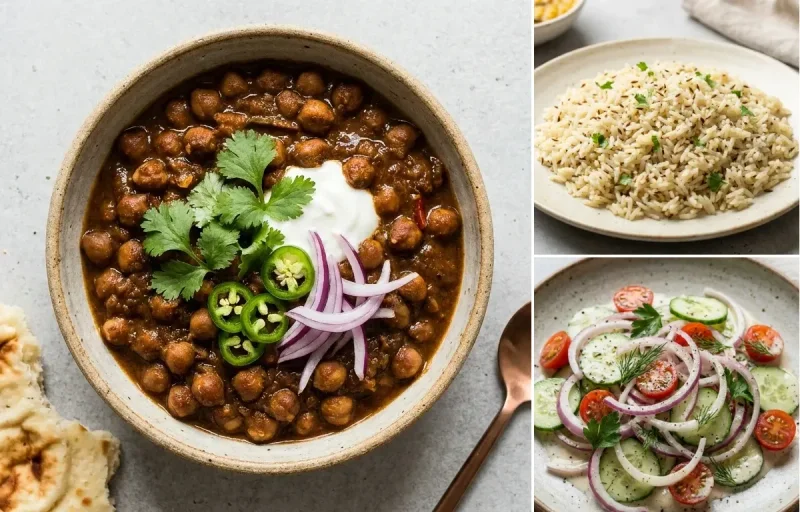
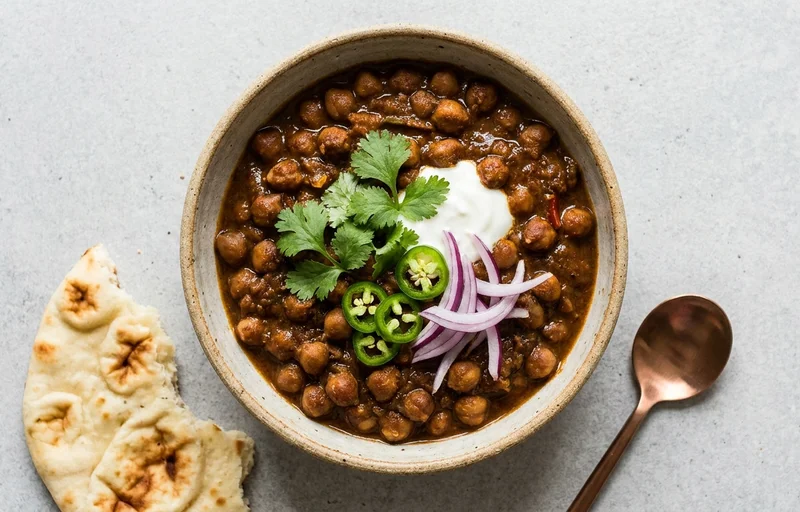
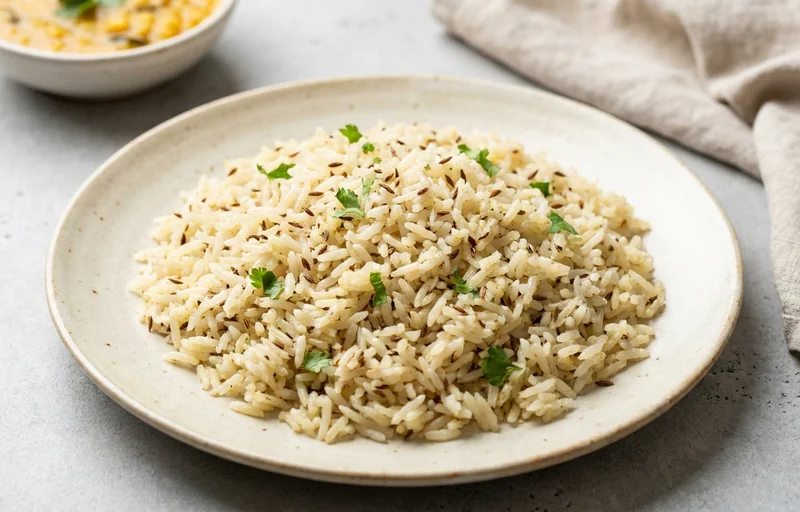
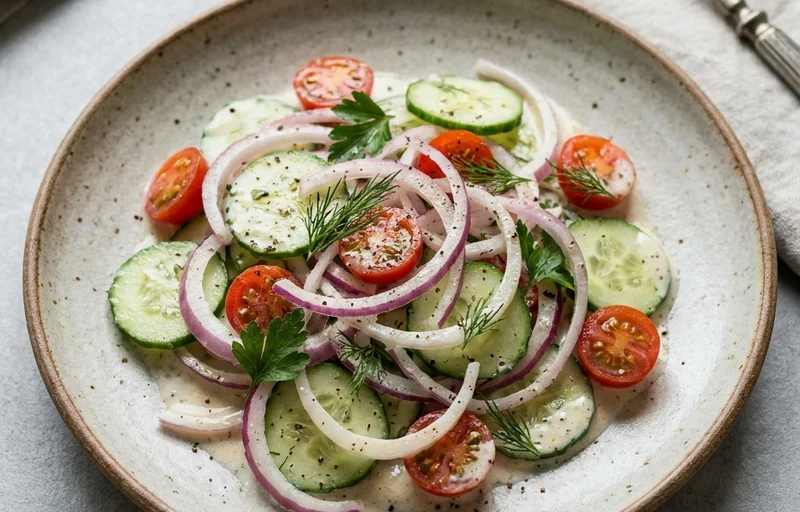
Friday's lunch is the highest-protein dinner of the week: chana masala built from a full katori of cooked chickpeas (~150 g) carrying 9-10 g protein, served with jeera rice (~5 g) and a simple onion salad. With a small bowl of dahi on the side, the plate clears 26-28 g protein — close to the per-meal target Leidy 2015 identified as optimal for satiety and muscle protein synthesis [5]. Chickpeas also bring 12-14 g of fibre per katori, which is half the daily recommended intake in one meal.
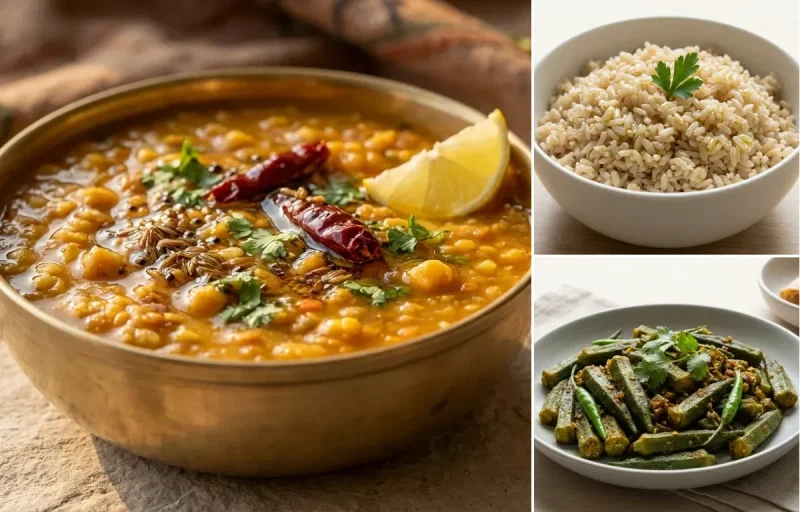
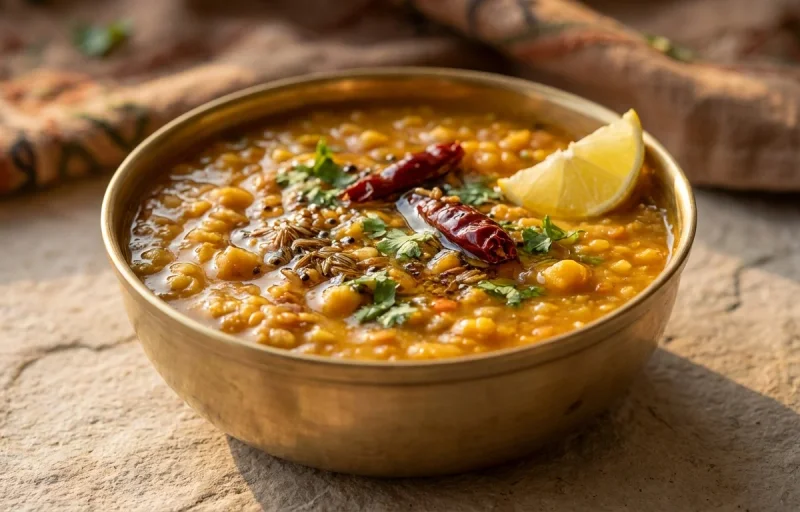
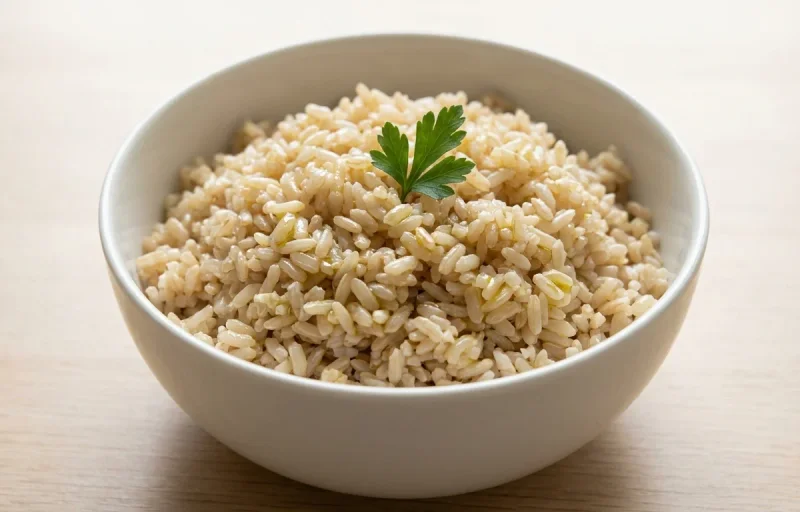
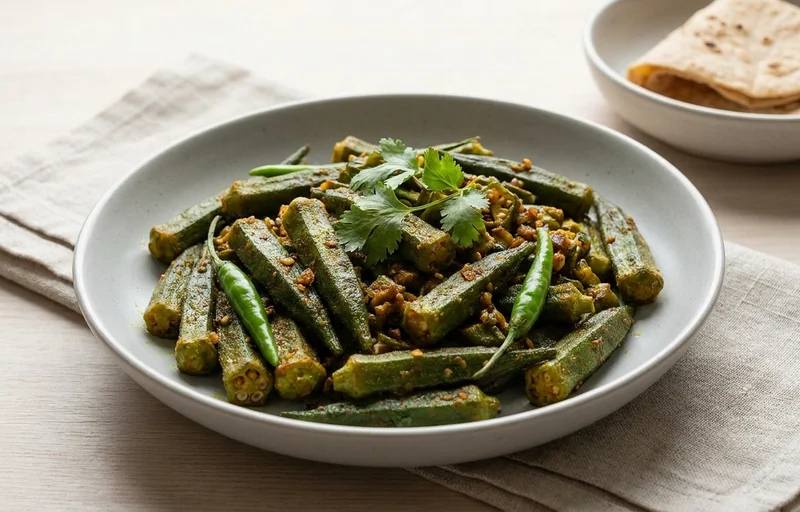
Sunday closes the week on the panchmel principle: five different dals (toor, chana, masoor, urad, moong) cooked together so the meal carries a fuller amino-acid profile than any single dal alone. A cooked katori of mixed panchmel dal delivers 9-11 g protein (slightly higher than single-dal katoris because of the chana and urad contribution), brown rice adds 5-6 g, and a simple bhindi sabzi rounds out the fibre. Total: 20-22 g protein, and one of the most fibre-dense plates of the week at ~16-18 g.