The turnip is one of the most misunderstood vegetables in the aisle. Most of us think of sad, boiled cubes, but that's a failure of cooking, not the vegetable itself. Eaten raw, it's crisp and peppery like a radish. Roasted, it turns sweet and tender. And nutritionally, it's quietly brilliant: shockingly low in calories and carbs, but with a very respectable amount of vitamin C. It's time to give the turnip a second chance.
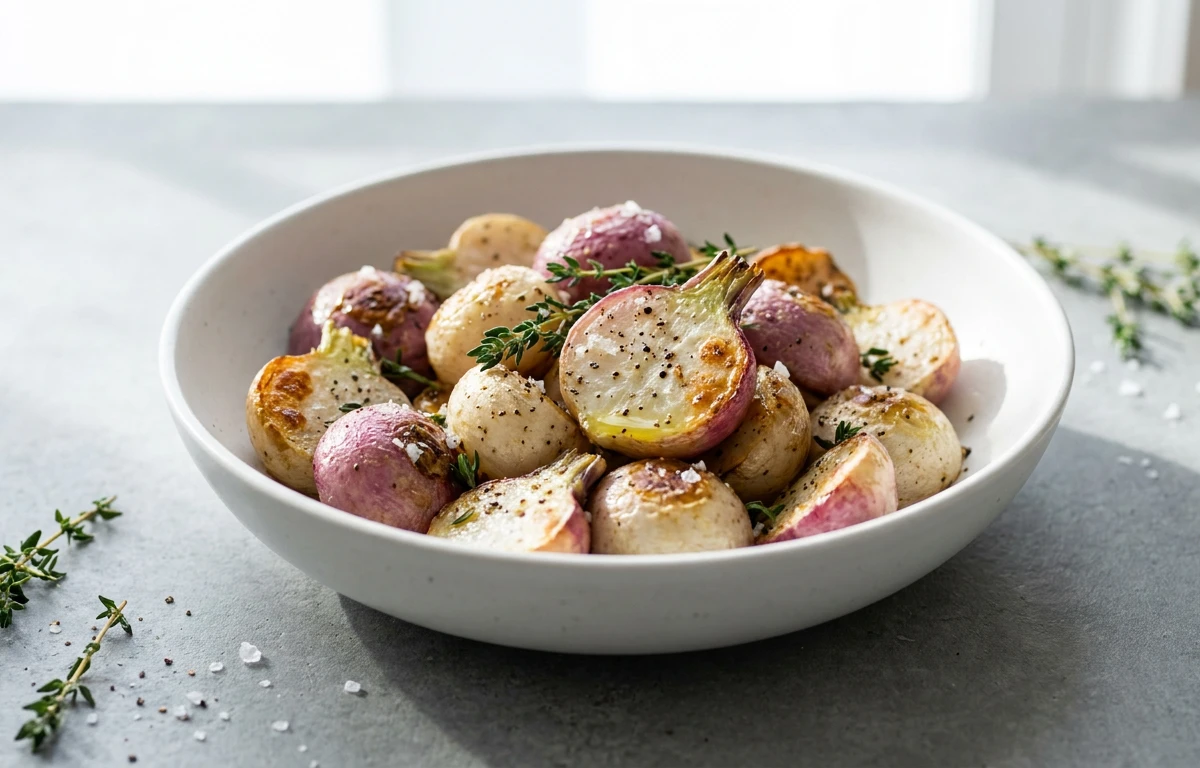
↑ The humble turnip: crisp and peppery when raw, sweet and earthy when roasted.
The underrated root vegetable
Let's be honest, turnips don't have the best reputation. They're often seen as the bland, watery cousin of the potato. But that's usually because they've been boiled to death. A well-cooked turnip is a different vegetable entirely. Roasting brings out a gentle sweetness, while eating them raw—thinly sliced in a salad—reveals a surprisingly crisp, peppery bite, almost like a mild radish.
They're a member of the cruciferous family, alongside broccoli and cabbage, and they pack a nutritional profile that's far more impressive than their pale appearance suggests. They are incredibly low in calories and carbohydrates, making them a fantastic, filling swap for starchier roots.
IN ONE LINE
Turnips are a low-carb, low-calorie workhorse. Eat them raw for a peppery crunch or roast them to bring out a surprising sweetness. Just please, don't boil them into submission.
Turnip nutrition facts
Here’s the nutritional breakdown for a standard 100-gram (about 3.5 ounces, or 3/4 of a cup, cubed) serving of raw turnip. It's a very light vegetable, so this is a decent-sized portion.
The two numbers that jump out are the calories and the vitamin C. At just 28 calories per 100g, turnips are one of the lightest root vegetables you can eat. And with 21mg of vitamin C, a single serving gets you nearly a quarter of the way to your daily goal. The carbohydrate count is also remarkably low, which is why it's become so popular in low-carb and keto circles as a potato substitute.
Turnip's glycemic index: a tale of two turnips
The glycemic index (GI) of a turnip is tricky because it changes dramatically depending on how you prepare it. Raw turnips have a very low GI, as their carbohydrates are locked within fibrous cell walls. Your body digests them slowly.
Cooking, especially boiling, breaks down these structures. Boiled turnips have a medium-to-high GI, meaning they can raise blood sugar more quickly—not as fast as pure glucose, but significantly faster than their raw form. Roasting is a better middle ground, as it doesn't involve waterlogging the vegetable and breaking it down quite as much.
GLYCEMIC INDEX · TURNIP vs COMMON FOODS
Cooked turnips sit in the medium-GI band
Apple
whole fruit
LOW
Pineapple
whole fruit
MEDIUM
Turnip (cooked)
estimate
MEDIUM
Watermelon
whole fruit
HIGH
White bread
refined
HIGH
SCALE 0–90
04590
How to cook turnips right
Getting the best from a turnip is all about choosing the right cooking method. Here's how to avoid the watery fate so many turnips suffer.
01
Roast them.
This is the best way to cook turnips. Cut them into chunks, toss with olive oil, salt, and herbs (thyme is great), and roast at 400°F (200°C) until tender and caramelized. It makes them sweet.
02
Eat them raw.
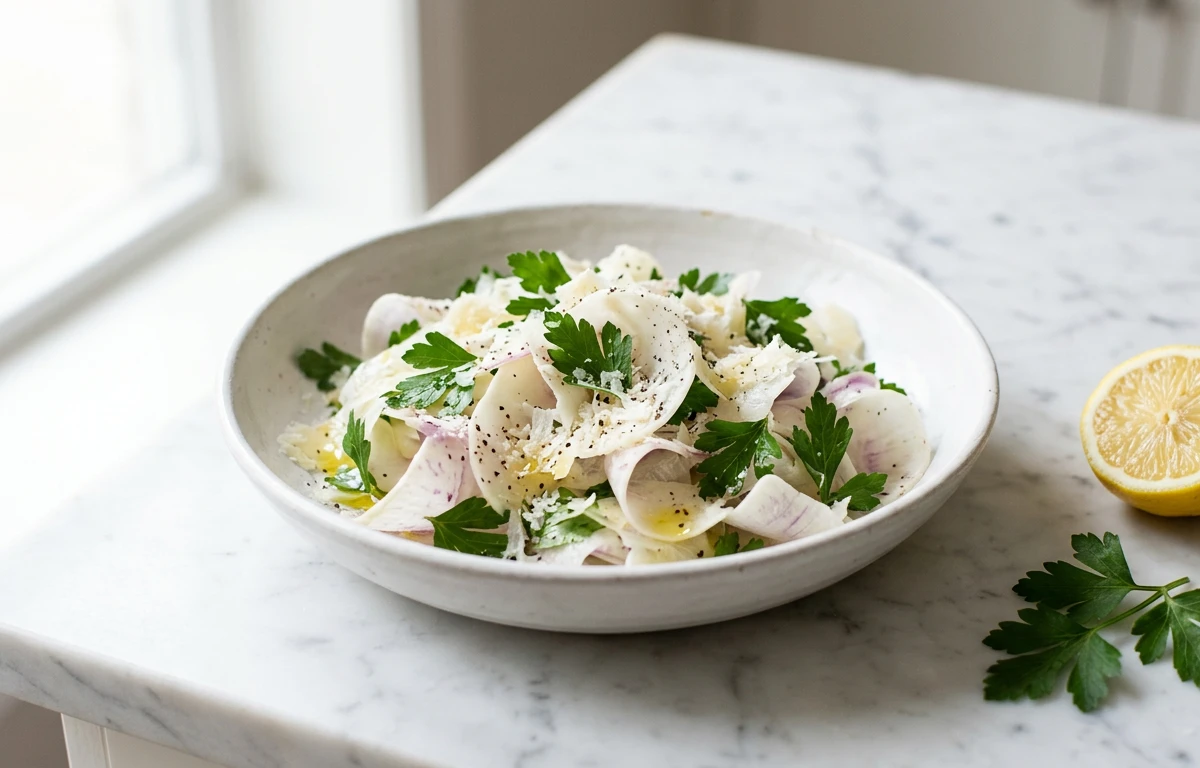
Don't knock it 'til you've tried it. Use a mandoline or vegetable peeler to shave turnip into thin ribbons. Toss with lemon juice, olive oil, parmesan, and black pepper for a crisp, refreshing salad.
03
Mash them (with a friend).
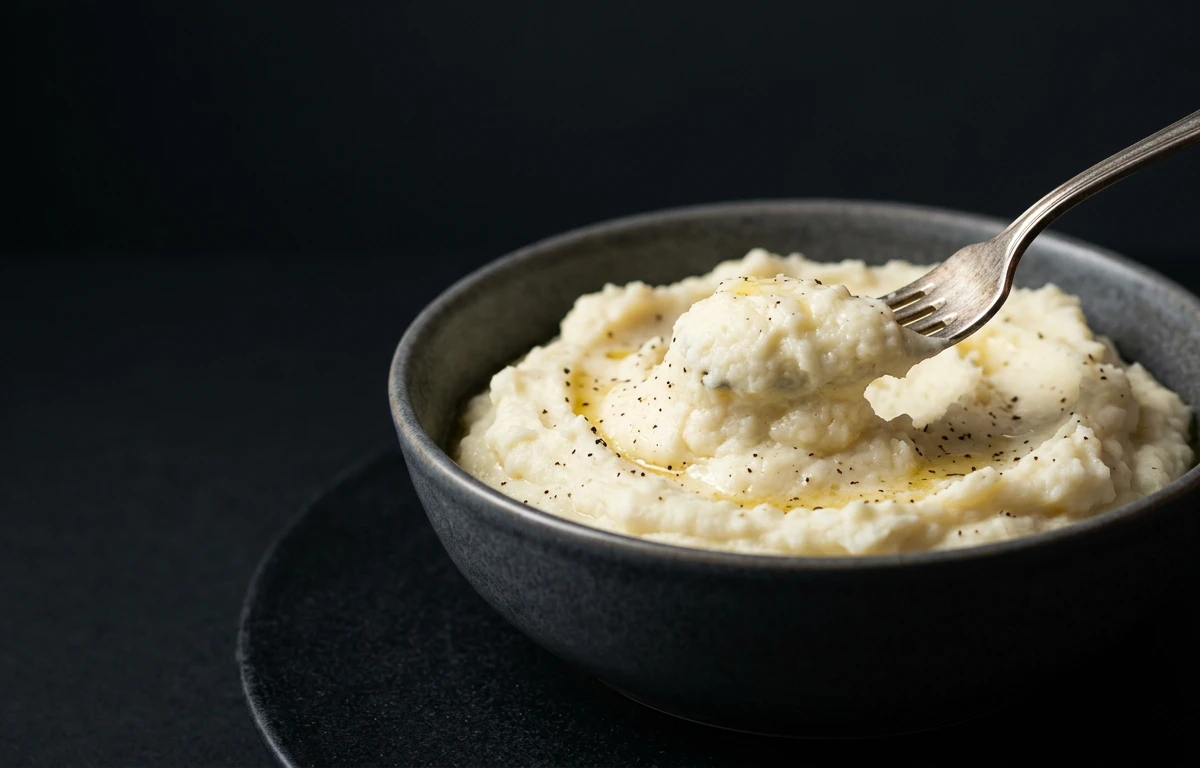
Mashed turnips alone can be a bit strong. But a 50/50 mash with potatoes is fantastic. It lightens the carb load and adds a subtle, earthy complexity. Use plenty of butter and a splash of cream.
04
Sauté or stir-fry.
Because they're crisp, diced turnips hold up well in a quick, high-heat sauté. They absorb flavors beautifully while retaining a pleasant bite.
05
Don't just boil them.
If you must boil them (for a mash, for instance), do it quickly and drain them thoroughly. Over-boiling is what creates that sulfurous smell and watery texture.
What turnips are good for
01
Excellent for weight management
At only 28 calories per 100g, turnips offer volume and fibre with very little energy density, helping you feel full on fewer calories.
28
cals/100g
02
A great low-carb potato swap
With just 4.6g of net carbs per 100g, turnips are a go-to for keto and low-carb diets to make fries, mashes, and gratins.
4.6g
net carbs
03
A surprising vitamin C boost
One small serving provides nearly a quarter of your daily vitamin C, which is essential for immune function and skin health.
23%
vit C DV
04
Supports healthy digestion
The 1.8g of fibre per serving helps promote regularity and feeds beneficial gut bacteria, contributing to a healthy digestive system.
1.8g
fiber
What to pair turnips with
Turnip's earthy, slightly sweet flavor profile works beautifully with rich, savory, and sharp ingredients that balance its character.
Eat freely — or be mindful?
Three simple turnip recipes
Ready to give turnips a try? Here are three easy ways to prepare them that highlight their best qualities.
Want more smart vegetable swaps in your week?
Our meal planner can help you build balanced meals that use low-carb vegetables like turnips to meet your health goals, complete with a single, simple grocery list.
Build my weekly plan →SOURCES & REFERENCES · 3
One more thing
Eating well is rarely about willpower. It’s about having a short list of dinners you actually want to eat. Pick two from this list. Make them next week. The rest will follow.
If you want these on autopilot, our weekly meal planner can drop the picks above into your calendar with one click and build a single grocery list from the merged ingredients.
FREQUENTLY ASKED QUESTIONS
Frequently asked questions
Are turnips keto-friendly?
Yes, absolutely. With only about 4.6 grams of net carbohydrates per 100g serving, turnips are an excellent vegetable for a ketogenic diet and a great substitute for high-carb potatoes.
What is the glycemic index of turnips?
It varies. Raw turnips have a low glycemic index. However, cooking, especially boiling, increases the GI into the medium-to-high range. If you have diabetes, it's best to eat them raw, roasted, or in moderation, and be mindful of boiled preparations.
Are turnips healthier than potatoes?
It depends on your goals. Turnips are significantly lower in calories and carbohydrates, making them better for weight loss or low-carb diets. Potatoes offer more potassium and energy. Both can be part of a healthy diet.
What do turnips taste like?
Raw turnips are crisp and have a peppery, slightly spicy flavor similar to a radish. When cooked, especially roasted, that pepperiness mellows into a mild, earthy sweetness.
METHODOLOGY
How this article was created
Built using verified nutrition databases, culinary research, and traditional cooking knowledge — every claim is cross-referenced against the sources listed in the article.
· USDA data· Culinary research· Quality reviewed
Read our methodology →TRANSPARENCY
About this content
Articles are curated using trusted food databases (USDA FoodData Central, IFCT), culinary literature, and dietary guidelines, then structured by our editorial team for clarity, accuracy, and usefulness.
· Verified data sources· Culinary research· Quality reviewed
Read our editorial policy →EXPLORE OUR MEALS
Meals that fit this article

AMERICAN · 1677 CAL
Almonds with Sliced Apple + supplement + iron

MEDITERRANEAN · 809 CAL
Greek Yogurt with Berries Almonds and Granola + supplement + iron

GENERAL_HEALTHY · 705 CAL
Banana with Peanut Butter Pregnancy + supplement + iron

MODERN · 982 CAL
Hummus with Crudits and Pita with Fresh Orange Snack + supplement + iron
TAGGED
KEEP READING