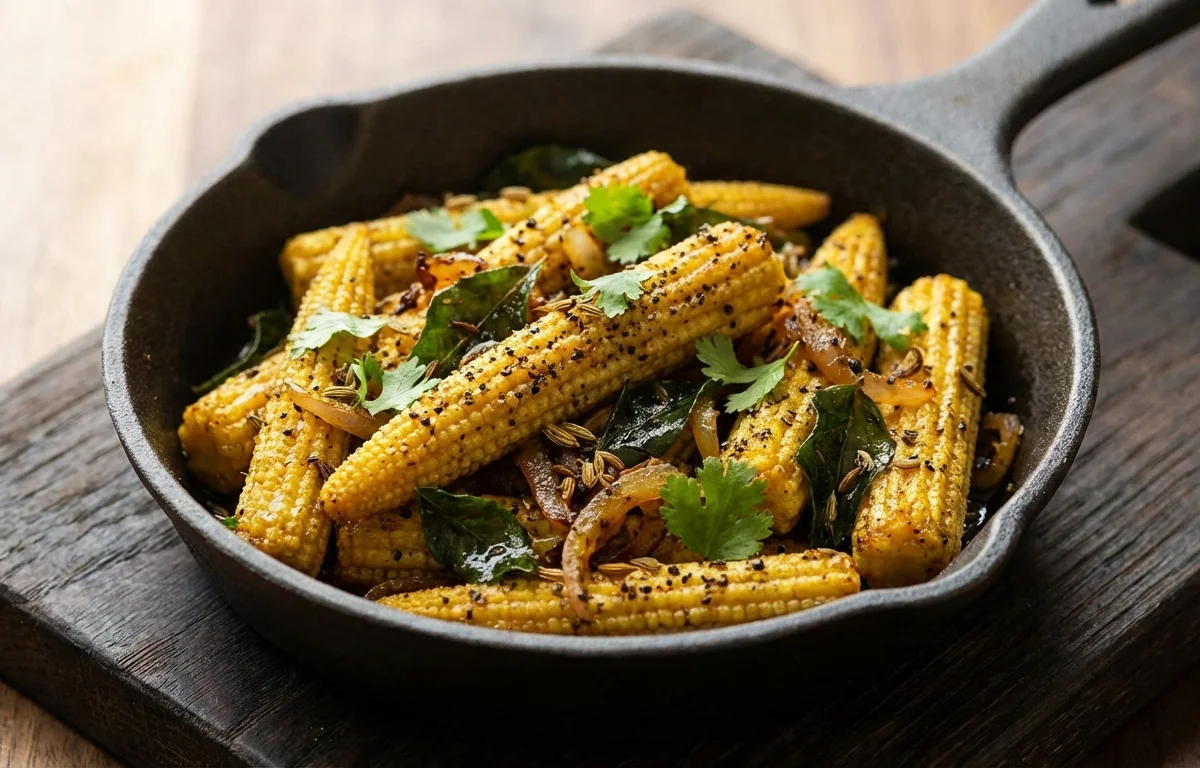
Let's clear something up: baby corn isn't some special, miniature variety of corn. It's just regular corn, harvested super early before it has a chance to mature and get starchy. The result? A vegetable that's tender, snappy, and wonderfully low in calories and carbs. It's mostly found in stir-fries, but I think it's wildly underrated. You can eat it raw, roast it, or just snack on it. It's the crunch you're after, without the nutritional baggage.
↑ Baby corn is just immature maize, harvested before it becomes starchy.
The ultimate crunch vegetable
Baby corn lives in the shadow of its mature, sweet-and-starchy parent. Most of us only meet it in a Thai green curry or a Chinese stir-fry. But thinking of it as just 'corn' is a mistake. Nutritionally, it's a completely different animal.
Because it's harvested before pollination, its sugars never develop. It's a non-starchy vegetable, more like a bell pepper or a green bean in how it behaves in your body. It's mostly water and fibre, which makes it an incredible tool for adding bulk, texture, and satisfaction to meals for very few calories.
IN ONE LINE
Think of baby corn not as 'corn', but as a low-calorie, low-carb, high-crunch vegetable perfect for stir-fries, salads, and snacking.
Baby corn nutrition facts
Here's the nutritional breakdown for a 100-gram serving of baby corn, which is about half a cup or 8-10 cobs.
The numbers speak for themselves. This is a very light vegetable. The most important figures are the low carbohydrate count and the decent amount of fiber. This combination means you get only about 2.4 grams of 'net carbs'—the kind that impacts blood sugar—making it a fantastic choice for low-carb and keto diets.
Glycemic index of baby corn
The glycemic index (GI) hasn't been formally tested for baby corn, and there's a simple reason why: it contains so few carbohydrates that its effect on blood sugar is minimal. Non-starchy vegetables with high fiber and water content like this are presumed to have a very low GI.
For practical purposes, you can treat it as a 'free' vegetable in terms of blood sugar impact. It's in a completely different category from starchy, high-GI foods like white bread or even its parent, sweet corn.
GLYCEMIC INDEX · BABY CORN vs COMMON FOODS
Baby corn's glycemic impact is very low
Baby Corn
non-starchy veg
LOW
Apple
whole fruit
LOW
Pineapple
whole fruit
MEDIUM
White bread
refined
HIGH
SCALE 0–90
04590
The best ways to eat it
The biggest mistake with baby corn is overcooking it until it's limp and sad. You want to preserve its signature snap.
01
Eat it raw.
Seriously. It's crisp, subtly sweet, and fantastic on a veggie platter with dip or chopped into salads for texture.
02
Blanch or quick-steam.
A 1-2 minute dip in boiling water is all it needs to become tender-crisp. Perfect for adding to dishes without it getting lost.
03
Stir-fry it last.
Add baby corn in the last minute or two of cooking. This keeps it crunchy next to softer vegetables.
04
Roast it hot and fast.
Toss with a little oil, salt, and pepper, and roast at 400°F (200°C) for 10-15 minutes until it gets a little char. Delicious.
05
Check the can.
Canned baby corn is convenient, but check the label. Choose brands packed in water with no added salt or sugar.
What baby corn is good for
01
Weight management
At only 26 calories per 100g, baby corn adds satisfying volume and crunch to meals, helping you feel full on fewer calories.
26
calories
02
Low-carb & keto diets
With just 2.4g of net carbs, it's one of the few 'corn' products that fits perfectly into a ketogenic or low-carb eating plan.
2.4g
net carbs
03
Blood sugar control
Its low carb content and high fibre mean it has a negligible effect on blood sugar, making it an excellent choice for people with diabetes.
LOW
glycemic impact
04
Adding texture & variety
Sometimes health is about enjoyment. Baby corn's unique snap and mild flavor can make salads, stir-fries, and vegetable curries more interesting.
CRUNCH
factor
What to pair baby corn with
Baby corn's mild flavor makes it a team player. It works best with bold flavors and contrasting textures.
Eat freely — or be mindful?
Three ways to use it
Go beyond the basic stir-fry. Here are three simple ideas to make baby corn a regular in your kitchen.
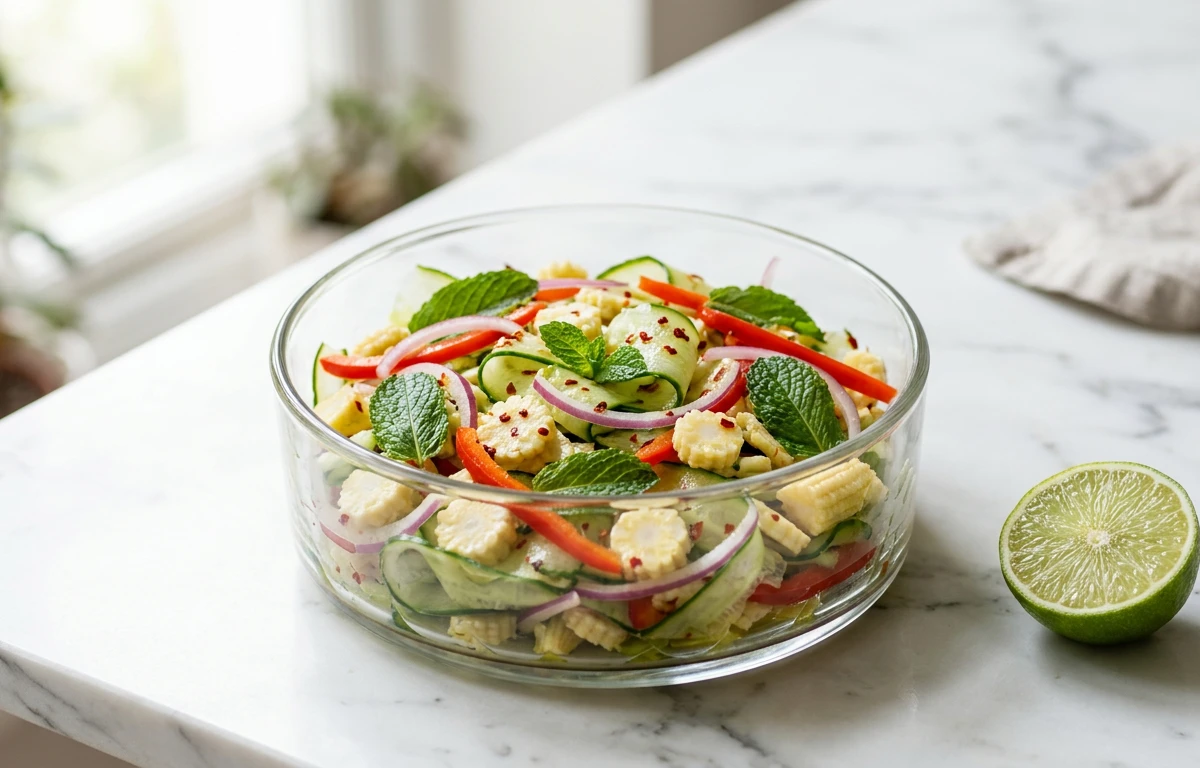
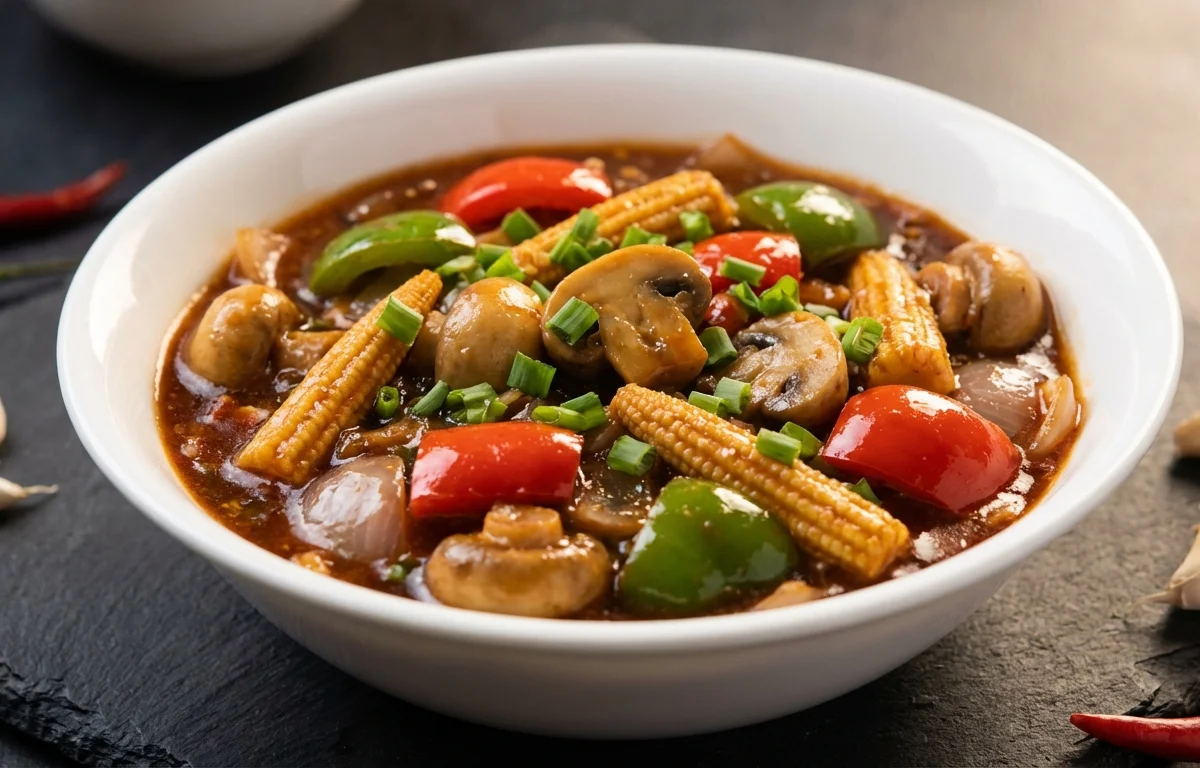
Want more low-carb vegetables in your life—without the guesswork?
Our meal planner can help you build balanced, low-carb weeks, incorporating versatile ingredients like baby corn into delicious meals with macros calculated and ready to go.
Build my weekly plan →SOURCES & REFERENCES · 3
One more thing
Eating well is rarely about willpower. It’s about having a short list of dinners you actually want to eat. Pick two from this list. Make them next week. The rest will follow.
If you want these on autopilot, our weekly meal planner can drop the picks above into your calendar with one click and build a single grocery list from the merged ingredients.
FREQUENTLY ASKED QUESTIONS
Frequently asked questions
Is baby corn keto-friendly?
Yes, absolutely. With only 2.4 grams of net carbohydrates per 100g serving, baby corn is an excellent vegetable choice for a ketogenic diet.
Can you eat baby corn raw?
Yes, and you should try it! Raw baby corn is crisp, slightly sweet, and makes a great addition to salads or a crudités platter. Just give it a good rinse first.
Is baby corn as healthy as regular corn?
They're healthy in different ways. Regular sweet corn is a whole grain with more calories, carbs, and certain B vitamins. Baby corn is a non-starchy vegetable, much lower in calories and carbs, making it better for weight loss and low-carb diets.
What's the difference between fresh and canned baby corn?
Fresh baby corn has the best flavor and crunch. Canned baby corn is a good pantry staple but can be softer and is often packed in a salty brine. If you use canned, it's a good idea to rinse it thoroughly before using to remove excess sodium.

ABOUT THE AUTHOR
Shreya Chatterjee
NUTRITION WRITER
Shreya is a nutrition writer and the voice behind The Nutrition Pen, where she turns evidence-based nutrition into simple, repeatable eating habits. Her writing focuses on practical food guidance — what to actually put on the plate — for readers who want to eat well without the noise.
Meet the editorial team →METHODOLOGY
How this article was created
Built using verified nutrition databases, culinary research, and traditional cooking knowledge — every claim is cross-referenced against the sources listed in the article.
· USDA data· Culinary research· Quality reviewed
Read our methodology →TRANSPARENCY
About this content
Articles are curated using trusted food databases (USDA FoodData Central, IFCT), culinary literature, and dietary guidelines, then structured by our editorial team for clarity, accuracy, and usefulness.
· Verified data sources· Culinary research· Quality reviewed
Read our editorial policy →EXPLORE OUR MEALS
Meals that fit this article

AMERICAN · 1677 CAL
Almonds with Sliced Apple + supplement + iron

MEDITERRANEAN · 809 CAL
Greek Yogurt with Berries Almonds and Granola + supplement + iron

GENERAL_HEALTHY · 705 CAL
Banana with Peanut Butter Pregnancy + supplement + iron

MODERN · 982 CAL
Hummus with Crudits and Pita with Fresh Orange Snack + supplement + iron
TAGGED
KEEP READING