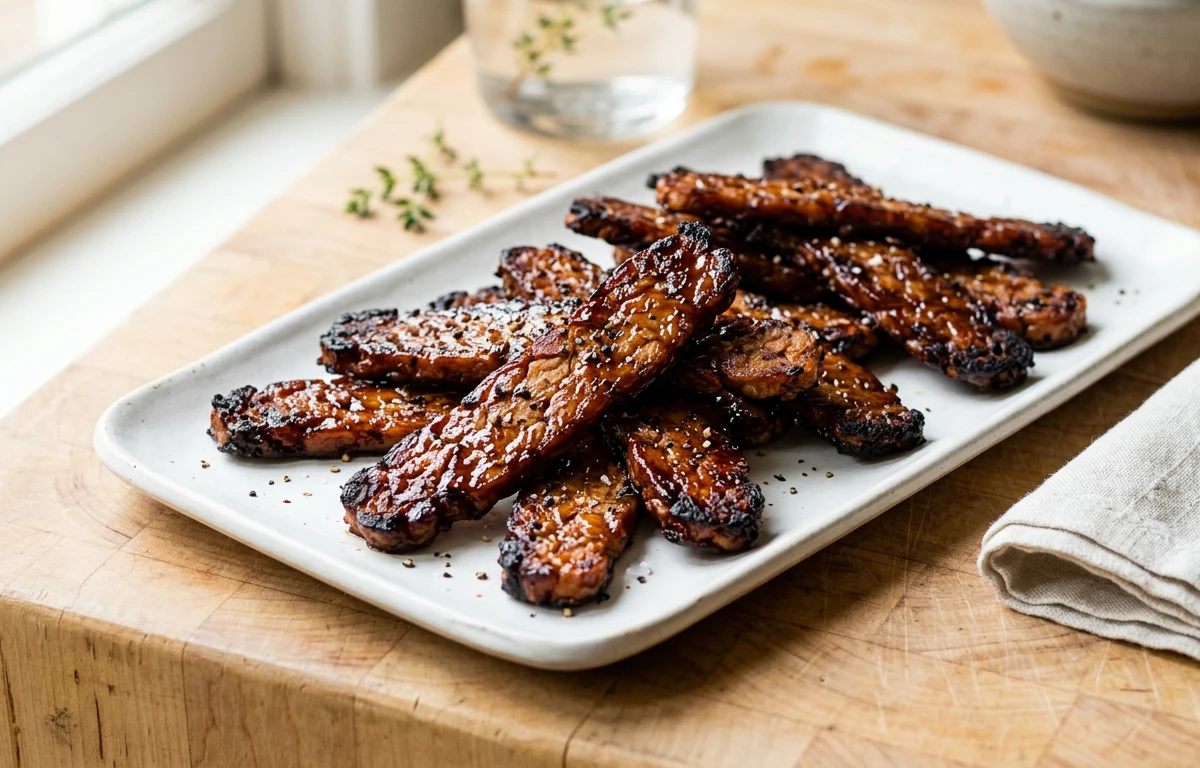
Protein10 recipes
bacon.
VegetarianVeganGluten-freeDairy-freeNut-freePeanut-freeSoy-freeEgg-freeShellfish-freeHoney-freeAlcohol-freeHalalKosher
ALSO KNOWN AS
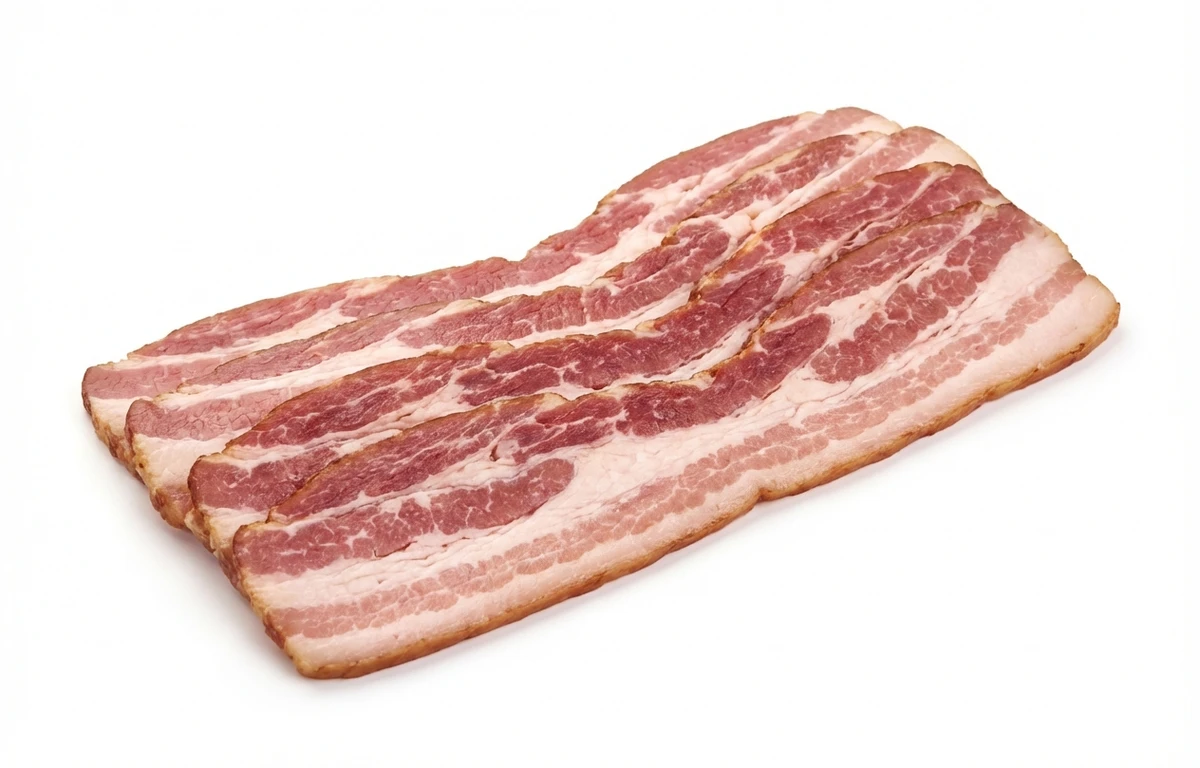
uncooked baconraw baconstreaky baconbacon stripspork baconrasherscured pork belly
SERVING
CALORIES
417
PROTEIN
12.6g
CARBS
1.3g
FAT
39.7g
FIBER
0g
NUTRITION PROFILE · per 100 g
Everything in this ingredient.
MACRONUTRIENTS
Calories417kcal—
Protein12.6g25%
Carbohydrates1.3g0%
Fiber0g0%
Sugar0g0%
Total fat39.7g51%
Saturated fat13.3g67%
Trans fat0.13g—
Cholesterol66mg22%
MINERALS
Sodium662mg29%
Potassium198mg4%
Calcium5.0mg0%
Iron0.41mg2%
Magnesium12mg3%
Phosphorus144mg12%
Zinc1.2mg11%
Copper0.04mg4%
Manganese0.01mg0%
Selenium20.1µg37%
VITAMINS
Vitamin A37µg4%
Vitamin C0mg0%
Vitamin D0.40µg2%
Vitamin E0.43mg3%
Vitamin K0µg0%
Thiamin (B1)0.28mg23%
Riboflavin (B2)0.08mg6%
Niacin (B3)4.0mg25%
Pantothenic acid (B5)0.56mg11%
Vitamin B60.27mg16%
Folate (B9)0µg0%
Vitamin B120.50µg21%
%DV based on a 2,000 cal diet. Source: USDA FoodData Central. A dash in the %DV column means there’s no established Daily Value for that nutrient.
MEASUREMENT CONVERSIONS
How much is what.
1 cup100g
1 tablespoon6.3g
1 teaspoon2.1g
1 oz28.4g
1 lb453.6g
1 ml0.4g
1 liter416.7g
1 piece9g
HEALTH BENEFITS
Why eat it.
- ✓Good source of complete protein, essential for muscle maintenance and repair.
- ✓Rich in B vitamins, particularly B1, B3, and B12, which support energy metabolism and nervous system function.
- ✓Contains choline, an important nutrient for brain health, memory, and mood regulation.
- ✓Provides selenium, a mineral that acts as an antioxidant and supports thyroid function.
COOKING TIPS
In the kitchen.
- 1For evenly cooked, crispy bacon, start the strips in a cold skillet over medium-low heat. This allows the fat to render slowly.
- 2To cook a large batch with less mess, arrange bacon on a wire rack over a foil-lined baking sheet and bake at 400°F (200°C) for 15-20 minutes.
- 3After cooking, strain the rendered bacon fat into a heatproof jar. Store it in the refrigerator and use it as a flavorful cooking fat for eggs, potatoes, or vegetables.
- 4To reduce shrinkage, you can briefly rinse bacon strips under cold water before cooking.
STORAGE
Keep it fresh.
- Store unopened packages of bacon in the refrigerator at or below 40°F (4°C) and use by the date on the package.
- Once opened, wrap bacon tightly in plastic wrap or foil, or store in an airtight container in the refrigerator for up to one week.
- For long-term storage, freeze bacon for up to 6 months. Wrap slices in portions with parchment paper before placing in a freezer bag to prevent sticking.
FAQ
Frequently asked questions.
Is bacon healthy?
Bacon provides high-quality protein and essential B vitamins, but it is high in saturated fat, sodium, and calories. It often contains nitrates used for curing, so it is best enjoyed in moderation as part of a balanced diet rather than as a primary protein source.
How much protein and fat are in bacon?
Per 100g, bacon contains approximately 12.62g of protein and 39.69g of fat. While it is a source of complete protein for muscle maintenance, its high fat content contributes to a high caloric density of 417 calories per 100g.
Is bacon keto-friendly?
Yes, bacon is a staple in keto and low-carb diets because it is high in fat and contains only about 1.28g of carbs per 100g. However, you should check labels for added sugars, honey, or maple glazes which can increase the carbohydrate count.
What are the health benefits of bacon?
Bacon is rich in B vitamins (B1, B3, and B12) which support energy metabolism, and choline, which is vital for brain health. It also provides selenium, an antioxidant that supports thyroid function, and serves as a complete protein source.
Is bacon gluten-free?
Pure pork bacon is naturally gluten-free. However, some brands use flavorings, liquid smoke, or curing agents that may contain gluten, so it is important to check the packaging for a gluten-free label if you have a sensitivity.
How do you know if bacon has gone bad?
Fresh bacon should be pink or red with white fat; if it turns grey, brown, or greenish, it has spoiled. Other signs of spoilage include a sour or ammonia-like smell and a texture that feels slimy or sticky rather than moist.
How long does bacon last in the refrigerator?
Unopened bacon can typically last in the fridge for up to two weeks or until the 'use by' date. Once the package is opened, it should be tightly wrapped and consumed within 5 to 7 days for optimal safety.
Can you freeze bacon?
Yes, bacon freezes very well for up to 4 months. For convenience, you can freeze individual slices separated by parchment paper in a freezer bag, allowing you to defrost only what you need for a single meal.
What is the best way to cook bacon?
While pan-frying is traditional, baking bacon in the oven at 400°F (200°C) on a parchment-lined tray is often preferred for even cooking and less mess. This method allows the fat to render out evenly, resulting in consistently crispy slices.
Is bacon halal or kosher?
Traditional bacon is made from pork and is not halal or kosher. However, alternatives made from turkey, beef, or lamb are available and can be certified halal or kosher if they are prepared according to specific religious dietary laws.
RECIPES
Cook with bacon.
10 recipes · sorted by what’s quick