Sweetener10 recipes
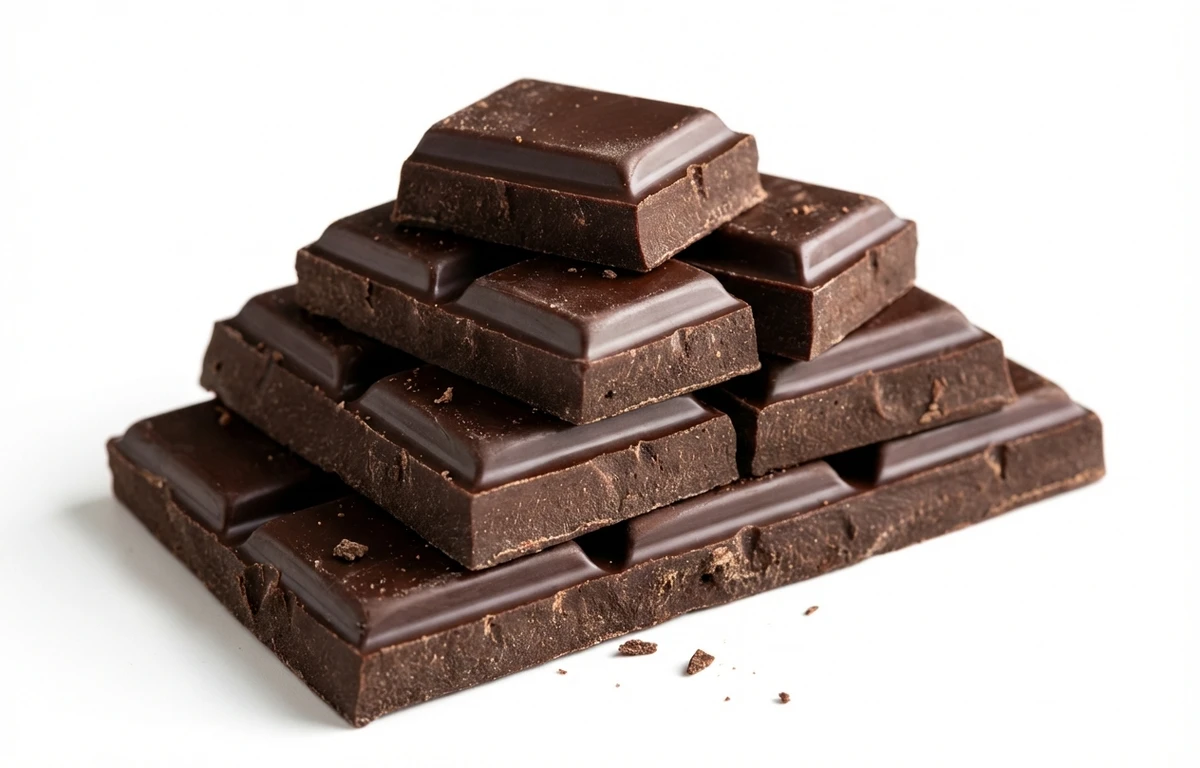
dark chocolate.
VegetarianVeganGluten-freeDairy-freeNut-freePeanut-freeSoy-freeEgg-freeShellfish-freeHoney-freeAlcohol-freeFermented
ALSO KNOWN AS
bitter chocolatecouverture chocolate
SERVING
CALORIES
598
PROTEIN
7.9g
CARBS
45.9g
FAT
42.6g
FIBER
10.9g
NUTRITION PROFILE · per 100 g
Everything in this ingredient.
MACRONUTRIENTS
Calories598kcal—
Protein7.9g16%
Carbohydrates45.9g17%
Fiber10.9g39%
Sugar23.9g48%
Total fat42.6g55%
Saturated fat25.2g126%
Trans fat0.11g—
Cholesterol3.0mg1%
Water1.3g—
MINERALS
Sodium20mg1%
Potassium734mg16%
Calcium73mg6%
Iron11.9mg66%
Magnesium146mg35%
Phosphorus206mg16%
Zinc2.0mg18%
Copper1.0mg114%
Manganese1.4mg62%
Selenium3.0µg5%
VITAMINS
Vitamin A1.0µg0%
Vitamin E0.54mg4%
Vitamin K8.1µg7%
Thiamin (B1)0.03mg3%
Riboflavin (B2)0.05mg4%
Niacin (B3)0.73mg5%
Pantothenic acid (B5)0.30mg6%
Vitamin B60.04mg2%
Vitamin B120.23µg10%
%DV based on a 2,000 cal diet. Source: USDA FoodData Central. A dash in the %DV column means there’s no established Daily Value for that nutrient.
MEASUREMENT CONVERSIONS
How much is what.
1 cup170g
1 tablespoon10.7g
1 teaspoon3.5g
1 oz28.4g
1 lb453.6g
1 ml0.7g
1 liter720g
HEALTH BENEFITS
Why eat it.
- ✓Rich in powerful antioxidants called flavonoids, which help protect cells from damage.
- ✓May improve heart health by helping to lower blood pressure and improve blood flow to the heart and brain.
- ✓A good source of essential minerals such as iron, magnesium, copper, and manganese.
- ✓Contains stimulants like theobromine and caffeine, which can enhance brain function and mood.
COOKING TIPS
In the kitchen.
- 1When melting, chop the chocolate into small, uniform pieces and use a double boiler or microwave at 50% power in short intervals, stirring frequently to prevent scorching.
- 2Ensure all utensils are completely dry when melting chocolate, as even a tiny drop of water can cause it to 'seize' and become a thick, grainy paste.
- 3To achieve a glossy finish for coatings and decorations, temper the chocolate by carefully heating and cooling it to specific temperatures.
- 4Dark chocolate with a higher cacao percentage (70% or more) provides a more intense, less sweet flavor ideal for balancing rich desserts.
STORAGE
Keep it fresh.
- Store in a cool, dry, and dark place, ideally between 60-65°F (15-18°C), away from strong odors.
- Avoid refrigeration, which can cause condensation and lead to 'sugar bloom', a harmless but unappealing white coating.
FAQ
Frequently asked questions.
Is dark chocolate healthy?
Yes, dark chocolate, especially with a high cocoa content, is rich in powerful antioxidants called flavonoids, which can help protect cells from damage. It may also improve heart health by helping to lower blood pressure and improve blood flow. However, it is high in calories and fat, so moderation is key.
How many calories and carbs are in dark chocolate?
Per 100g, dark chocolate contains approximately 598 calories, 45.9g of carbohydrates, and 42.6g of fat. It also provides about 7.87g of protein. The exact nutritional values can vary slightly based on the cocoa percentage and specific brand.
Can dark chocolate improve mood or brain function?
Dark chocolate contains stimulants like theobromine and a small amount of caffeine, which can enhance brain function and alertness. It also contains compounds that may stimulate the production of endorphins, potentially leading to improved mood and feelings of pleasure.
Is dark chocolate vegan?
Dark chocolate can be vegan, but it's crucial to check the ingredient list. Many dark chocolates, especially those with higher cocoa percentages (70% or more), are made without milk solids. However, some brands may include dairy or process it on shared equipment, so always look for a vegan certification or explicit 'dairy-free' label.
Is dark chocolate gluten-free?
Pure dark chocolate made from cocoa beans, cocoa butter, and sugar is naturally gluten-free. However, cross-contamination can occur during processing if it's made in facilities that also handle gluten-containing ingredients. For strict gluten-free diets, look for certified gluten-free labels.
Is dark chocolate keto-friendly?
While dark chocolate is high in fat, its carbohydrate content can be significant. Very dark chocolate (85% cocoa or higher) has fewer net carbs and can be consumed in small amounts on a ketogenic diet. Always check the nutrition label for net carb count and consume in moderation to stay within your daily carb limits.
What does the cocoa percentage in dark chocolate signify?
The cocoa percentage indicates the total amount of cocoa solids and cocoa butter in the chocolate. A higher percentage means a more intense chocolate flavor, less sugar, and often a more bitter taste. For example, 70% dark chocolate has 70% cocoa components and 30% other ingredients, primarily sugar.
What's the best way to melt dark chocolate for baking?
The best methods are using a double boiler or a microwave. For a double boiler, place chopped chocolate in a heatproof bowl over a saucepan of simmering water, stirring until smooth. In a microwave, heat in 15-30 second intervals, stirring well after each, until just melted to prevent scorching.
How should I store dark chocolate?
Store dark chocolate in a cool, dry place, ideally between 60-70°F (15-21°C), away from direct sunlight and strong odors. An airtight container can protect it from moisture and absorption of other smells. Refrigeration is generally not recommended as it can cause 'sugar bloom' and alter texture, unless you live in a very hot and humid climate.
Does dark chocolate expire?
Dark chocolate typically has a 'best by' date, but it doesn't truly expire in the sense of becoming unsafe to eat for a long time. Over time, it may develop a white or grayish film called 'bloom' (either fat bloom or sugar bloom), which affects appearance and texture but not safety. It's usually still safe to consume, though its peak flavor may diminish.
RECIPES
Cook with dark chocolate.
10 recipes · sorted by what’s quick