dinner rolls
Also known as: yeast rolls, soft rolls, dinner buns, white rolls, pav, table rolls
Loading...
Also known as: yeast rolls, soft rolls, dinner buns, white rolls, pav, table rolls
Per 100g
Nutrition data source: USDA FoodData Central
Common measurement equivalents in grams
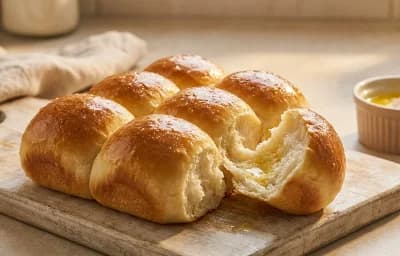
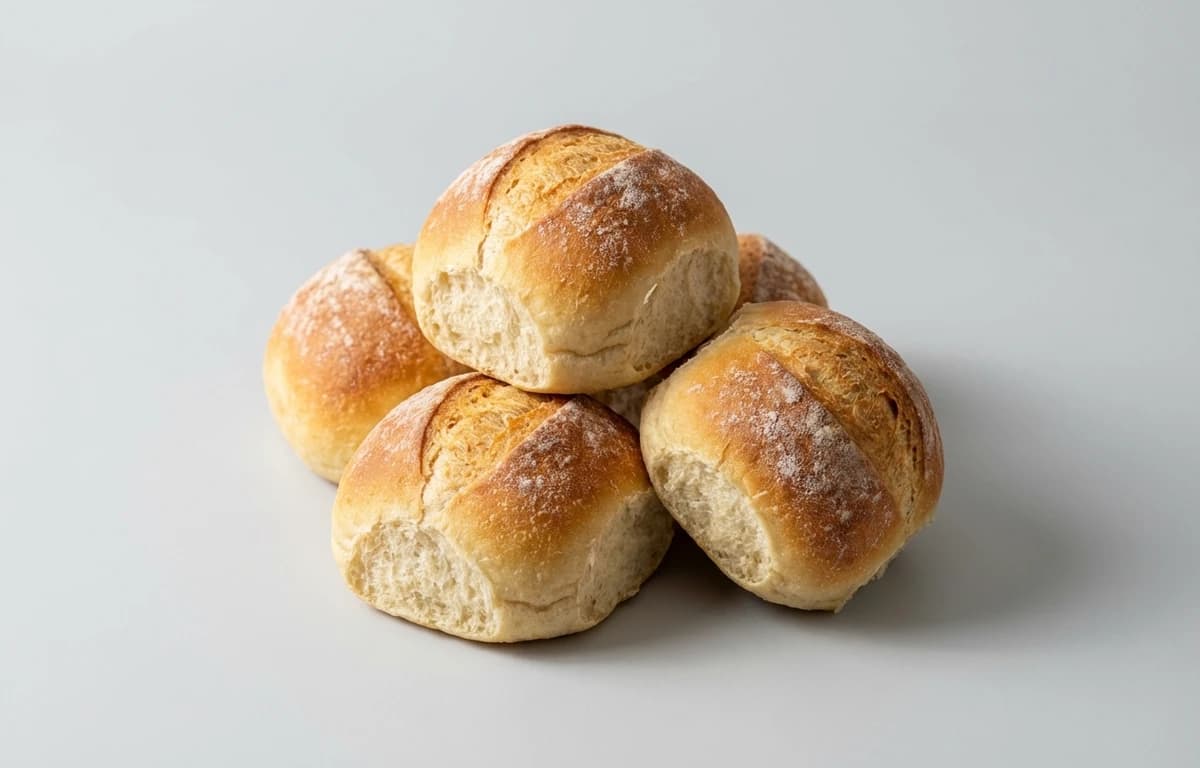
Soft, fluffy, and wholesome dinner rolls made with 100% whole wheat flour. They have a hint of sweetness from honey and a rich, nutty flavor, perfect for serving alongside any meal.
Soft, fluffy, and wholesome dinner rolls made with 100% whole wheat flour. They have a hint of sweetness and are perfect for serving alongside soups, salads, or your favorite main course.
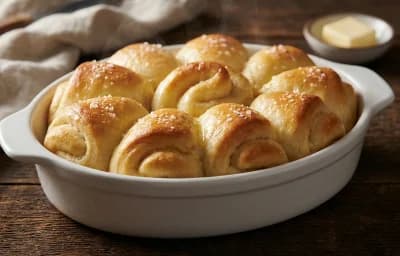
These iconic New England dinner rolls are unbelievably soft, rich, and buttery. Famous for their unique folded 'pocketbook' shape, they are made with a rich, eggy dough that bakes up golden brown. Perfect for holidays, Sunday dinners, or any special meal.
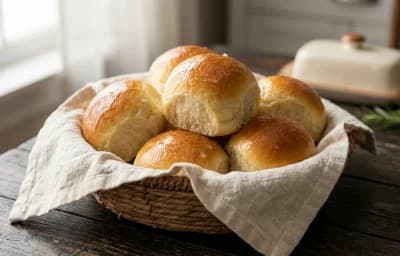
Warm, fluffy, and brushed with melted butter, these classic dinner rolls are irresistibly soft. Perfect for soaking up gravy or enjoying on their own, they make any meal feel special.
At room temperature, dinner rolls typically stay fresh for 2 to 3 days if kept in an airtight container or bag.
Yes, dinner rolls freeze very well. Wrap them tightly in foil or place them in a freezer bag; they will last for up to 3 months.
The best way is in the oven at 350°F (175°C) for about 5-7 minutes. You can also wrap them in foil to prevent the crust from getting too hard.
Most traditional dinner rolls are not vegan as they contain milk, butter, and sometimes eggs. Check the label for plant-based alternatives.
Sliced bread, biscuits, brioche buns, or even focaccia can serve as suitable substitutes depending on the meal.
Look for visible mold spots, a sour or off smell, or an extremely hard, dry texture that doesn't soften when heated.
Stale rolls are perfect for making homemade croutons, bread pudding, or grinding into fresh breadcrumbs.
Density usually results from under-proofing the dough, using expired yeast, or over-kneading the flour which develops too much gluten.
A single medium roll (45g) contains about 135 calories. While not excessively high, they are calorie-dense due to the flour and fat content.
dinner rolls is a versatile ingredient found in cuisines around the world. With 299 calories per 100g and 8.5 grams of protein, it's a nutritious addition to many dishes.
Explore more ingredients in the other category with complete nutrition information.
View all other →Discover 0 recipes featuring dinner rolls with step-by-step instructions.
Browse recipes →