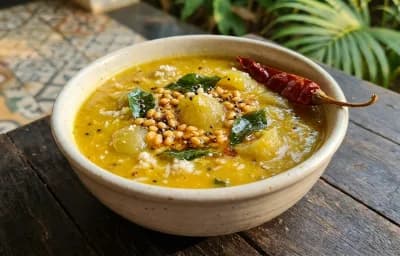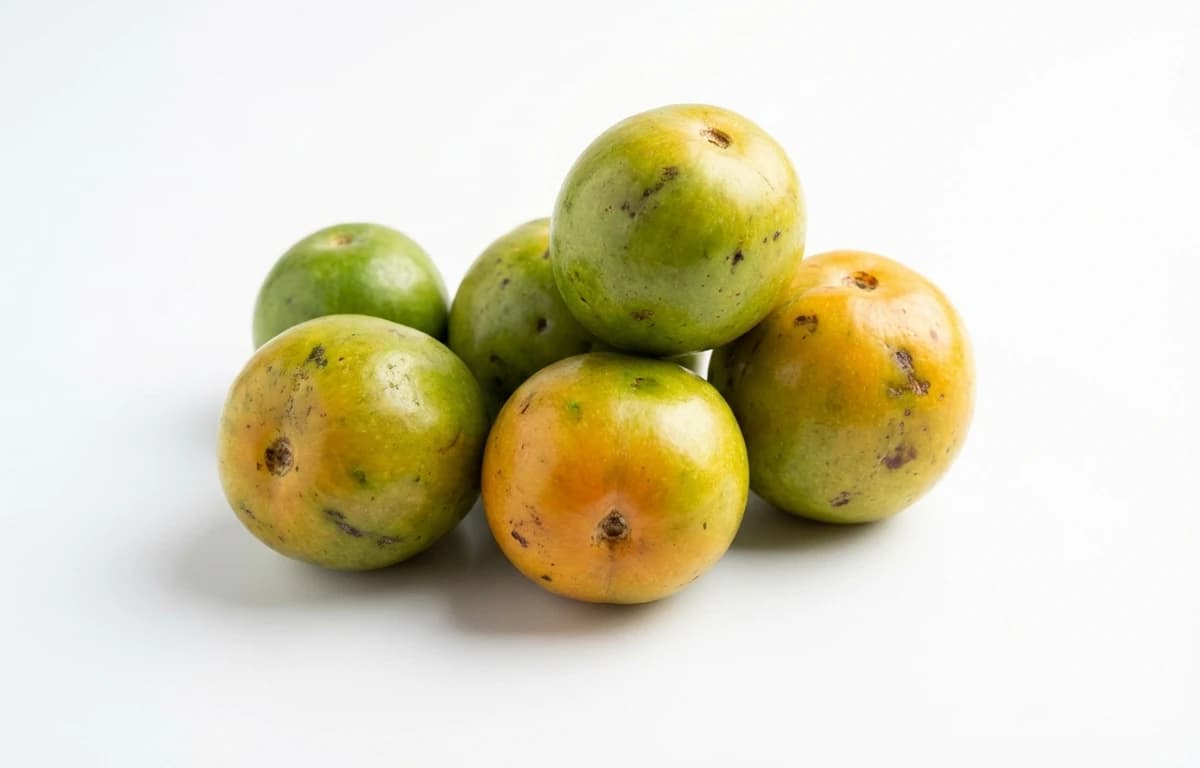
hog plum
Also known as: amra, ambade, ambalam, spanish plum, gully plum
Loading...
Also known as: amra, ambade, ambalam, spanish plum, gully plum
Per 100g
Nutrition data source: USDA FoodData Central
Common measurement equivalents in grams
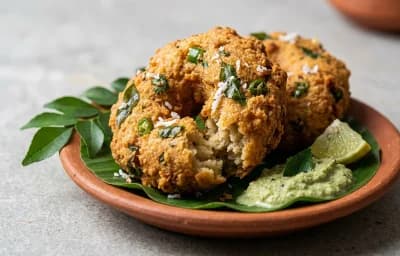
A beloved Mangalorean delicacy, Ambade Vada are crispy, savory fritters with a delightful tangy kick from hog plums (ambade). These golden-brown vadas boast a fluffy interior and a crunchy exterior, making them an irresistible tea-time snack, especially when paired with fresh coconut chutney.
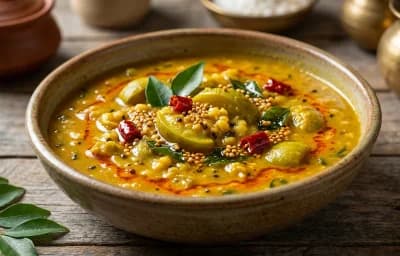
A traditional Goan curry featuring tangy hog plums, earthy urad dal, and a hint of bitter fenugreek, all simmered in a fragrant coconut gravy. This unique sweet, sour, and savory dish is a coastal classic.
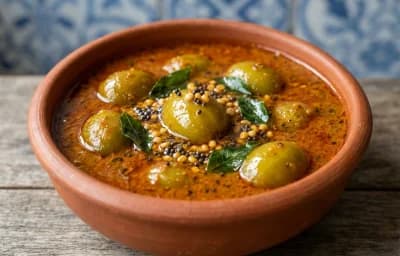
A unique Goan curry with a delightful balance of tangy, sweet, and spicy flavors. Featuring hog plums (ambade) in a creamy roasted coconut base with urad dal and fenugreek, it's a coastal classic best served with steamed rice.
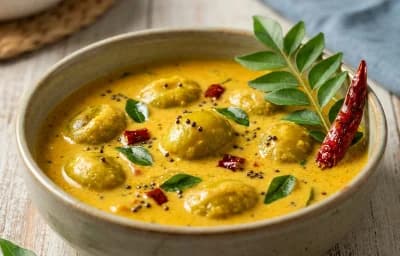
A traditional Goan curry featuring tangy hog plums (ambade) in a unique sweet and pungent gravy made from coconut and mustard seeds. This dish is a delightful explosion of sweet, sour, and spicy flavors.
At room temperature, ripe hog plums last 2-3 days. In the refrigerator, they can stay fresh for up to a week.
Yes, you can freeze the whole fruit or the extracted pulp. Frozen pulp is excellent for smoothies and sauces.
For eating raw, look for fruit that is yellow-orange and slightly soft. For pickling, choose firm, bright green fruit.
Green mango, tamarind, or starfruit can be used as substitutes due to their similar sour and tangy profiles.
Wash them thoroughly. You can peel the skin if it's tough, or slice the flesh away from the large central stone.
They have a unique sweet-and-sour profile. Unripe ones are very tart, while ripe ones are musky and sweet with a tangy finish.
Yes, the skin is edible, though it can be slightly leathery or astringent in some varieties.
No, while related, they are different species. Hog plums (Spondias mombin) are usually smaller and have a different texture than June plums (Spondias dulcis).
They are widely used in Indian 'Amra' pickles, Thai salads, Caribbean juices, and various South Asian lentil dals.
hog plum is a versatile ingredient found in cuisines around the world. With 55 calories per 100g and 0.8 grams of protein, it's a nutritious addition to many dishes.
Explore more ingredients in the other category with complete nutrition information.
View all other →