Ambade Sasam
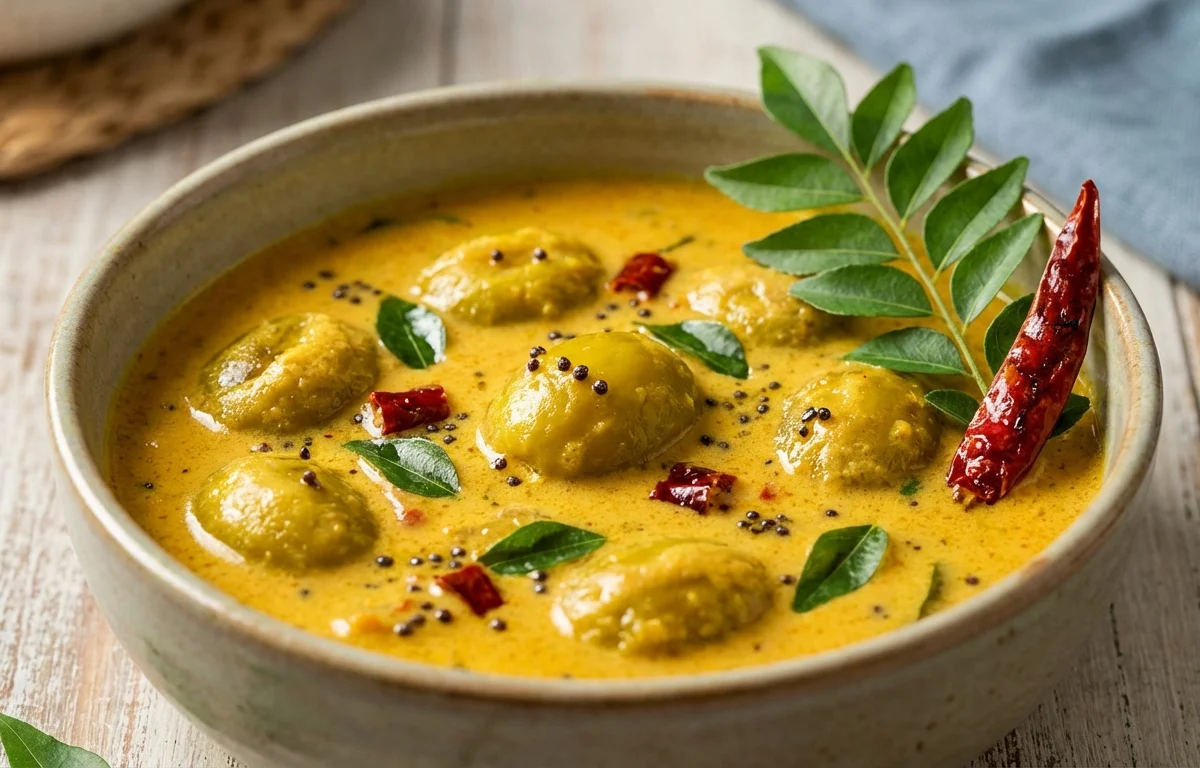
A tangy, gently spiced Mangalorean curry made with hog plums simmered in a fresh coconut and mustard paste. It has a bright sour bite, soft fruit, and a lightly tempered finish that goes beautifully with plain rice.
For 4 servings
- prep · ~3 min
Prepare the hog plums.
Wash the hog plums and lightly crush each one with a pestle or the side of a knife so the flavor releases easily into the curry.
TIPDo not break them into tiny pieces; a light crack is enough and keeps the fruit from turning mushy. - mix · ~3 min
Grind the coconut paste.
1.Add fresh coconut, mustard seeds, and dried red chili to a grinder jar.2.Pour in 0.5 cup water.3.Grind to a smooth, slightly thick paste. - boil · ~10 min
Cook the hog plums.
Place the crushed hog plums in a pan with the remaining water and bring to a boil. Cook until the fruit softens slightly and the water turns tangy.
- simmer · ~7 min
Add the ground paste and seasonings.
1.Lower the heat and stir in the ground coconut paste.2.Add salt and jaggery.3.Mix well and simmer gently until the raw mustard smell fades and the curry looks smooth.TIPKeep the heat low after adding mustard paste so the curry stays balanced and the mustard does not turn bitter. - temper · ~1 min
Make the tempering.
Heat coconut oil in a small pan, add curry leaves, and let them crackle for a few seconds.
- assemble · ~1 min
Finish the sasam.
Pour the hot tempering over the simmered curry and mix gently. Cook for 1 minute more, then turn off the heat.
- serve
Serve the Ambade Sasam warm.
What to keep in mind.
7 tips from the recipe — small details that make a real difference to the final dish.
- 1Lightly crack the hog plums without splitting them apart, so they flavor the curry but still hold shape.
- 2Grind the coconut-mustard paste very smooth; a coarse paste can make the sasam feel gritty instead of silky.
- 3After adding the mustard paste, keep the flame low and do not let the curry boil hard, or the mustard can turn sharp and bitter.
- 4Cook the hog plums only until slightly soft; overcooking makes them collapse and muddy the texture.
- 5Taste only after the raw mustard smell fades, then adjust jaggery carefully so the sour ambade still leads.
- 6Pour the curry leaf tempering over the curry while it is hot to trap the coconut oil aroma in the sasam.
- 7This curry tastes even better after a short rest, once the coconut, mustard, and hog plum flavors settle together.
Adapt it for your goals.
Spicier
Add 1-2 extra dried red chilies in the paste for a hotter, more robust sasam that still keeps its tangy coconut base.
thinner curryThinner-curry
Add a little more water while simmering if you prefer a lighter sasam to mix generously with rice.
milderMilder
Reduce the dried red chilies for a gentler version that highlights the sour hog plums and sweet coconut more clearly.
no jaggeryNo-jaggery
Skip the jaggery if you want a sharper, more traditional sour-forward finish with less rounded sweetness.
Why this is on our healthy list.
Coconut-Based Satiety
Fresh coconut gives the curry body and richness, helping make a simple rice meal feel satisfying.
Plant Compounds from Spices
Mustard seeds, dried red chili, and curry leaves contribute natural aromatic compounds along with flavor.
Fruit-Forward Tang
Hog plums bring a naturally tart fruit element, adding brightness and variety beyond a standard coconut curry.
Frequently asked questions
Hog plums are the defining ingredient, so the flavor will change significantly without them. A substitute may give sourness, but it will not have the same fruity Mangalorean character.