
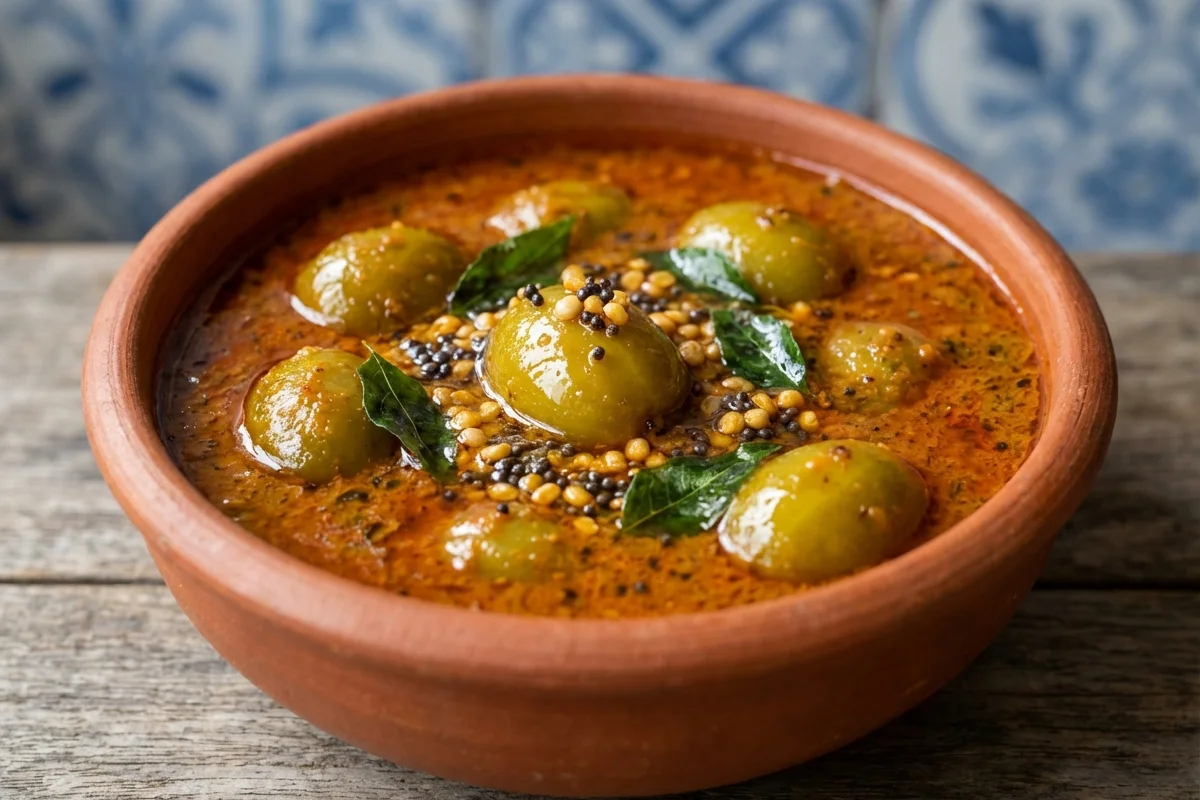
Ambadyachi Uddamethi
A tangy, spicy Malvani-style curry made with ambado (hog plums) and earthy fenugreek seeds. Fresh coconut, roasted spices, and a slow-cooked masala give this dish its signature deep, coastal flavor. Best enjoyed with steamed rice or bhakri.
For 4 servings
- boil · ~10 min
Boil the ambado (hog plums).
1.Place 8 ambado in a small pot with 0.5 cup water.2.Bring to a boil and cook until the skin splits and fruit softens (8-10 min).3.Drain the water or let it reduce to a couple of tablespoons; mash the fruit with the back of a spoon and set aside.TIPDon't discard the cooking water — it holds the tangy flavor. - saute · ~10 min
Roast the masala ingredients.
1.Heat 2 tsp oil in a small pan over medium-low heat.2.Add 1 tsp fenugreek seeds and sauté until they turn reddish-brown (1-2 min).3.Add 4 dried red chilies, 1 tbsp coriander seeds, and 0.5 tsp cumin seeds. Roast until aromatic (2-3 min).4.Add chopped onion, 6 garlic cloves, and a pinch of turmeric. Sauté until onion turns translucent (3-4 min).5.Turn off the heat. Add 0.5 cup grated coconut and mix well; the residual heat will warm the coconut.TIPFenugreek must turn a deep reddish color, not black — under-roasted methi tastes bitter. - mix · ~2 min
Grind the masala paste.
1.Transfer the roasted mixture to a blender.2.Add the mashed ambado and 1 cup water.3.Grind to a smooth, thick paste. Add an extra splash of water if the mixer needs it. - simmer · ~15 min
Cook the curry.
1.Pour the ground masala into a kadai or heavy-bottomed pan.2.Add 0.25 tsp salt and 0.5 tsp jaggery. Stir well.3.Bring to a gentle simmer over medium heat. Cook for 12-15 minutes, stirring occasionally, until the raw smell fades and the gravy thickens slightly.TIPKeep the flame low to medium — coconut-based curries can scorch at the bottom. - temper · ~2 min
Prepare the tempering.
1.In a small tadka pan, heat 1 tsp oil over medium heat.2.Add 0.5 tsp mustard seeds and 1 pinch of asafoetida. Let the mustard splutter (30 sec).3.Add 8 curry leaves and fry until crisp (20 sec).4.Pour the tempering immediately over the simmering curry. - simmer · ~7 min
Finish and rest the curry.
1.Stir the tempering into the curry and let it simmer together for 2 minutes.2.Turn off the heat. Cover and let the curry rest for 5 minutes — this allows the flavors to meld. - garnish
Garnish with chopped coriander leaves and serve hot with steamed rice or bhakri.
What to keep in mind.
7 tips from the recipe — small details that make a real difference to the final dish.
- 1Use Byadgi or Kashmiri dried chilies for a deep red color without overwhelming heat.
- 2Roast fenugreek seeds until reddish-brown — over-roasting turns them bitter and ruins the curry.
- 3Don't skip the resting time after tempering; it lets the curry leaves and asafoetida infuse fully.
- 4If ambado (hog plums) are unavailable, substitute raw green mango for a similar sour punch.
- 5Add the jaggery only if the curry tastes too tart — the ambado's sourness varies by ripeness.
- 6Use fresh coconut for the best texture and flavor; frozen can make the curry watery.
- 7Simmer the curry on low heat after adding the ground masala to prevent the coconut from splitting.
Adapt it for your goals.
Low-oil
Reduce the oil for sautéing the masala to 1 tsp and skip the final tempering's extra oil; dry-roast the fenugreek and spices in a pan instead of frying for a lighter version.
high proteinHigh-protein
Add 1/2 cup of cooked or canned chickpeas during simmering for extra protein and a heartier meal.
veganVegan
This dish is already vegan as written — no changes needed; the base is naturally plant-based.
jainJain
For Jain dietary requirements, omit the garlic and onion; replace with a pinch of asafoetida and grated ginger to retain flavor depth.
gluten freeGluten-free
This recipe is naturally gluten-free; just confirm your asafoetida brand is pure and not mixed with wheat flour.
Why this is on our healthy list.
Rich in Digestive Fibre
Ambado (hog plums) and fresh coconut both provide dietary fiber, aiding digestion and promoting gut health.
Anti-Inflammatory Spices
Fenugreek seeds and turmeric are known for their anti-inflammatory properties, supporting joint and immune health.
Source of Healthy Fats
Fresh coconut offers medium-chain triglycerides (MCTs), which are easily metabolized and provide quick energy.
Low in Added Sugar
This curry uses only a hint of jaggery as optional sweetness, keeping the sugar content minimal and natural.
Frequently asked questions
Yes, substitute with an equivalent amount of raw green mango or tamarind pulp (1 tablespoon) for similar sourness, adjusting water as needed.


