
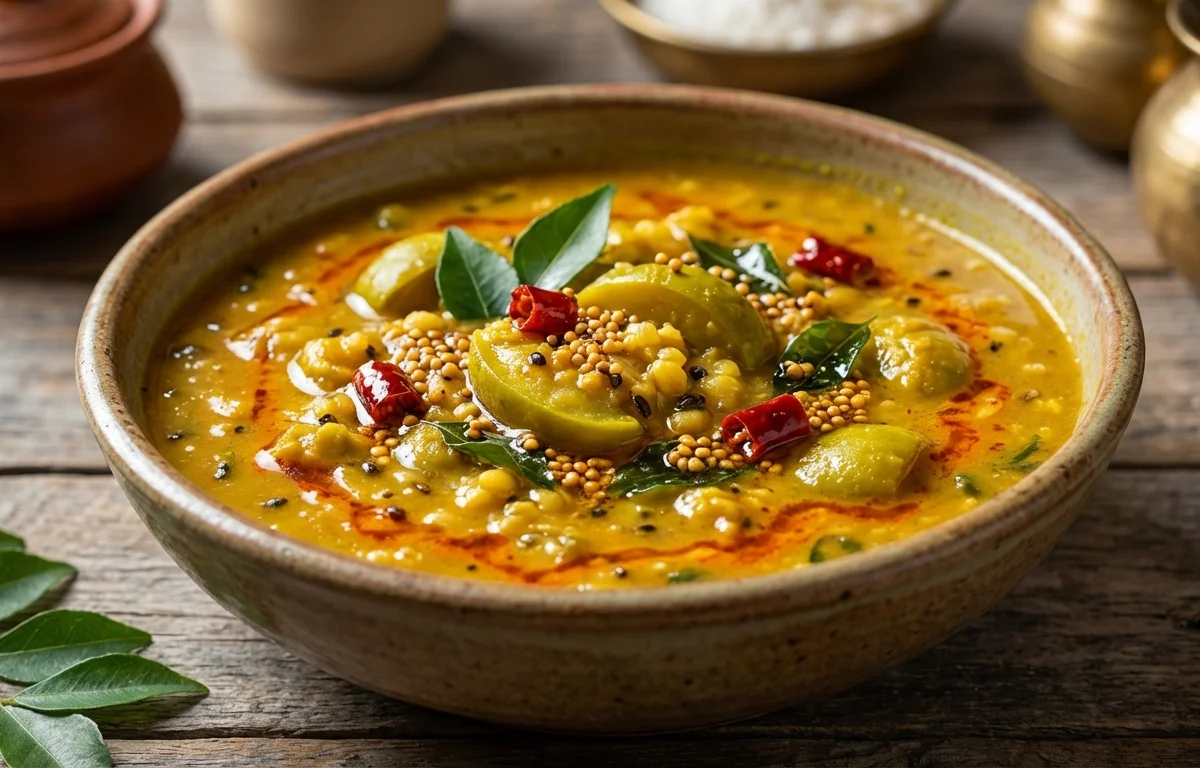
Ambade Udid Methi
A tangy, rustic Maharashtrian-style dry curry featuring tender sorrel leaves (ambade/gongura) cooked with protein-packed black gram lentils and finished with a fragrant garlic-methi tempering. The earthy richness of urad dal perfectly balances the sharp, citrusy notes of fresh sorrel, creating a simple yet deeply satisfying side dish that pairs beautifully with jowar bhakri or steamed rice.
For 4 servings
- boil · ~10 min
Cook the urad dal.
1.Drain the soaked urad dal and add it to a small pot with 1 cup of water.2.Bring to a boil, then reduce heat and simmer until just tender but still holding shape (8-10 minutes).3.Drain and set aside.TIPDo not overcook the dal — it should be soft but not mushy. Mushy dal will turn the dish pasty. - boil · ~3 min
Blanch the sorrel leaves.
1.Bring a pot of water to a rolling boil.2.Add the chopped ambade leaves and boil for 2 minutes until they soften and change color.3.Drain immediately and gently squeeze out excess water.TIPDon't discard the leafy water — it can be used in dals or soups for added tangy flavor. - temper · ~6 min
Make the tempering.
1.Heat oil in a heavy-bottomed kadhai over medium heat.2.Add mustard seeds and let them splutter (30 seconds).3.Add cumin seeds and fenugreek seeds, stir until fragrant (20 seconds).4.Add dried red chili pieces and chopped garlic, sauté until garlic turns light golden (1 minute).5.Add green chilies and chopped onion, cook until translucent (3-4 minutes).TIPKeep the heat medium — fenugreek seeds burn quickly and turn bitter if the oil is too hot. - saute · ~10 min
Combine and cook the bhaji.
1.Add the blanched sorrel leaves to the tempering and stir well.2.Add turmeric powder and salt, mix thoroughly.3.Add the cooked urad dal and gently fold everything together.4.Cook on low-medium heat for 8-10 minutes, stirring occasionally, until the mixture is well-blended and any excess moisture has evaporated.TIPStir gently when adding the dal — aggressive mixing will break the lentils and make the dish pasty. - garnish · ~2 min
Finish and serve.
Remove from heat and let the bhaji rest for 2 minutes. The flavors deepen as it sits. Serve warm with jowar bhakri or steamed rice.
What to keep in mind.
6 tips from the recipe — small details that make a real difference to the final dish.
- 1Always use tender sorrel leaves; older leaves can be too fibrous and may turn the dish stringy.
- 2Blanch the sorrel leaves just until they change color — overboiling destroys their signature tanginess.
- 3Squeeze excess water from the blanched leaves firmly but gently to avoid a watery bhaji.
- 4Cook the urad dal until just tender — it will continue to cook slightly when added to the bhaji.
- 5Let the bhaji rest for 2 minutes off heat before serving; this allows the flavors to meld beautifully.
- 6If reheating, add a splash of water and simmer gently to restore moisture without making it mushy.
Adapt it for your goals.
Protein-boost
Add 1/2 cup of cooked chickpeas or roasted peanuts along with the urad dal for an extra protein punch that makes the dish more filling as a main course.
low oilLow-oil
Reduce oil to 1 teaspoon and dry-roast the mustard seeds and cumin in a non-stick pan before adding a splash of water for the tempering — ideal for those watching their fat intake.
spicySpicy
Add 1 teaspoon of red chili powder or a pinch of black pepper along with the turmeric for a fiery version that pairs well with cooling yogurt rice.
south indian styleSouth-indian-style
Swap the fenugreek with a pinch of asafoetida and finish with a squeeze of lemon juice and fresh coconut gratings for a Kerala-inspired twist.
Why this is on our healthy list.
Rich in Antioxidants
Sorrel leaves are packed with vitamin C and polyphenols that help neutralize free radicals and support immune function.
High in Plant-Based Protein
Urad dal provides a substantial amount of vegetarian protein, making this dish a satiating choice for muscle repair and sustained energy.
Good Source of Dietary Fiber
The combination of sorrel leaves and black gram lentils offers both soluble and insoluble fiber, promoting healthy digestion and fullness.
Low in Calories and Fat
With minimal oil and no heavy creams, this bhaji is a light yet flavorful option that supports weight management.
Frequently asked questions
Yes, thawed frozen sorrel leaves work well — just drain them well after thawing and reduce the blanching time to 1 minute as they are already soft.


