Amlechi Uddamethi
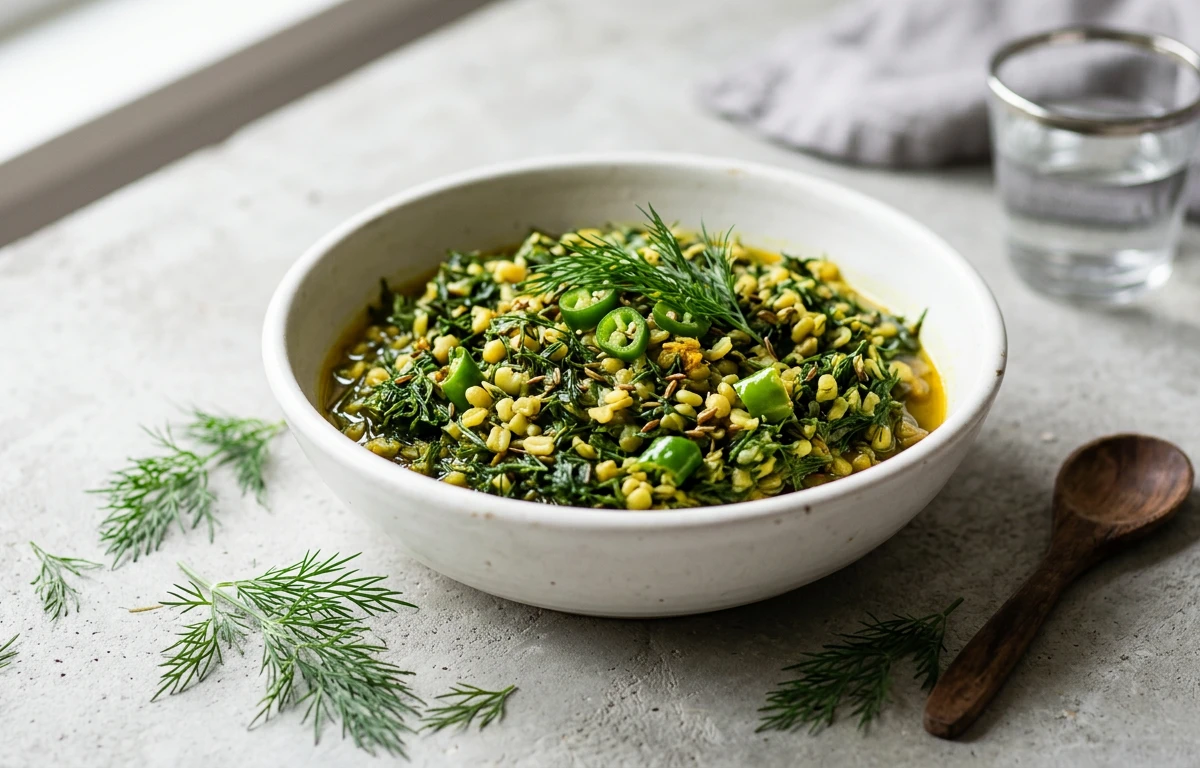
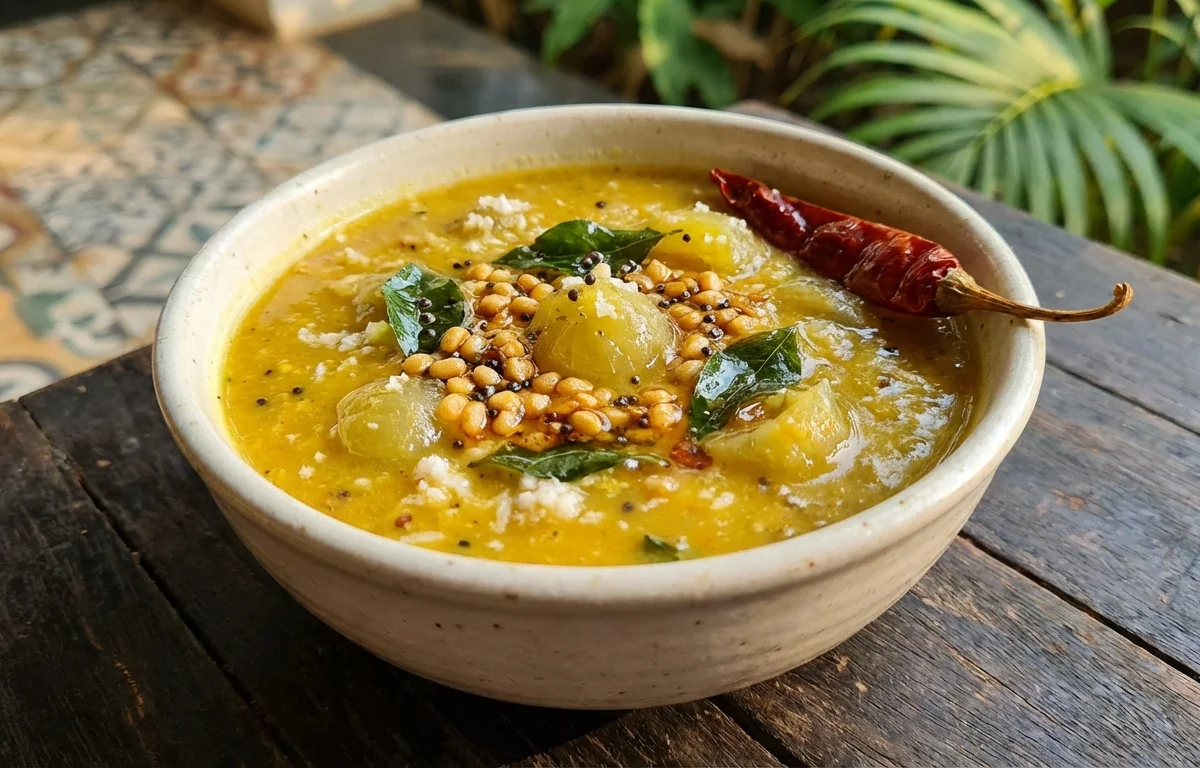
A homestyle Maharashtrian-style sour and gently spiced fenugreek dal made with tamarind and split black gram. It has a comforting, lightly tangy taste that works beautifully with plain rice or soft chapatis.
For 4 servings
- prep · ~30 min
Soak the dal and prepare the tamarind.
1.Rinse the urad dal well and soak it in water for 30 minutes.2.Soak the tamarind in a little warm water for 10 minutes.3.Squeeze and strain the pulp, then keep it aside.TIPA short soak helps the dal cook evenly without turning pasty. - pressure cook · ~15 min
Cook the dal until soft.
Drain the soaked urad dal and add it to a pressure cooker with 2 cups water, turmeric powder, and 0.25 tsp salt. Pressure cook for 4 to 5 whistles until the dal is soft but still holds some texture.
- temper · ~3 min
Make the tempering.
1.Heat oil in a pan over medium heat.2.Add mustard seeds and let them crackle.3.Add cumin seeds, asafoetida, and curry leaves.4.Add garlic and green chili, then cook for 30 seconds until fragrant.TIPKeep the heat medium so the garlic flavors the oil without burning. - saute · ~7 min
Cook the onion and fenugreek leaves.
1.Add the chopped onion and cook until soft and light golden.2.Add the chopped fenugreek leaves and mix well.3.Cook for 4 to 5 minutes until the leaves wilt and lose their raw bitterness.4.Sprinkle in the red chili powder and stir. - simmer · ~10 min
Combine the dal and tamarind.
Add the cooked dal, tamarind pulp, jaggery, remaining salt, and 1 cup water to the pan. Mix well and simmer for 8 to 10 minutes until the flavors come together and the dal turns lightly thick and tangy.
TIPIf the dal thickens too much, add a splash of water and simmer briefly. - garnish
Garnish with coriander leaves.
- serve
Serve hot with rice or chapati.
What to keep in mind.
7 tips from the recipe — small details that make a real difference to the final dish.
- 1Do not overcook the urad dal; it should be soft yet slightly textured, not gluey.
- 2Cook the methi until its raw smell fades before adding tamarind, or the bitterness will stand out.
- 3Add tamarind only after the fenugreek has wilted and the dal is cooked, as sourness can slow softening.
- 4Taste after simmering and adjust jaggery by a pinch if the tamarind feels too sharp.
- 5Keep the final consistency pourable for rice; it will thicken as it sits because urad dal turns creamy.
- 6This dal tastes even better after 20 to 30 minutes of resting, when the methi and tamarind mellow together.
- 7Reheat gently with a splash of water, since urad dal can tighten up noticeably in the fridge.
Adapt it for your goals.
No-onion
Skip the onion for a plainer homestyle version; the garlic, methi, and tamarind still keep the dal full-flavored.
spicierSpicier
Add an extra green chili or a little more red chili powder if you want the tangy dal to have more heat.
veganVegan
The dish is already vegan if your asafoetida is wheat-free and contains no additives derived from dairy.
garlic freeGarlic-free
Omit garlic and increase curry leaves slightly for a lighter, more herb-forward tempering.
Why this is on our healthy list.
Plant-Based Protein
Urad dal contributes satisfying plant protein and makes the dish filling enough for a simple rice or chapati meal.
Leafy Green Goodness
Fenugreek leaves add fiber and beneficial plant compounds, along with a distinctive bitter-green depth.
Gentle Digestive Support
Garlic, cumin, asafoetida, and curry leaves are traditional ingredients often used to make dals feel more digestible.
Frequently asked questions
Usually the methi was not cooked long enough. Sauté it until wilted and the raw bitterness reduces, then balance the tang with a little jaggery.



.webp)