
Vegetable10 recipes
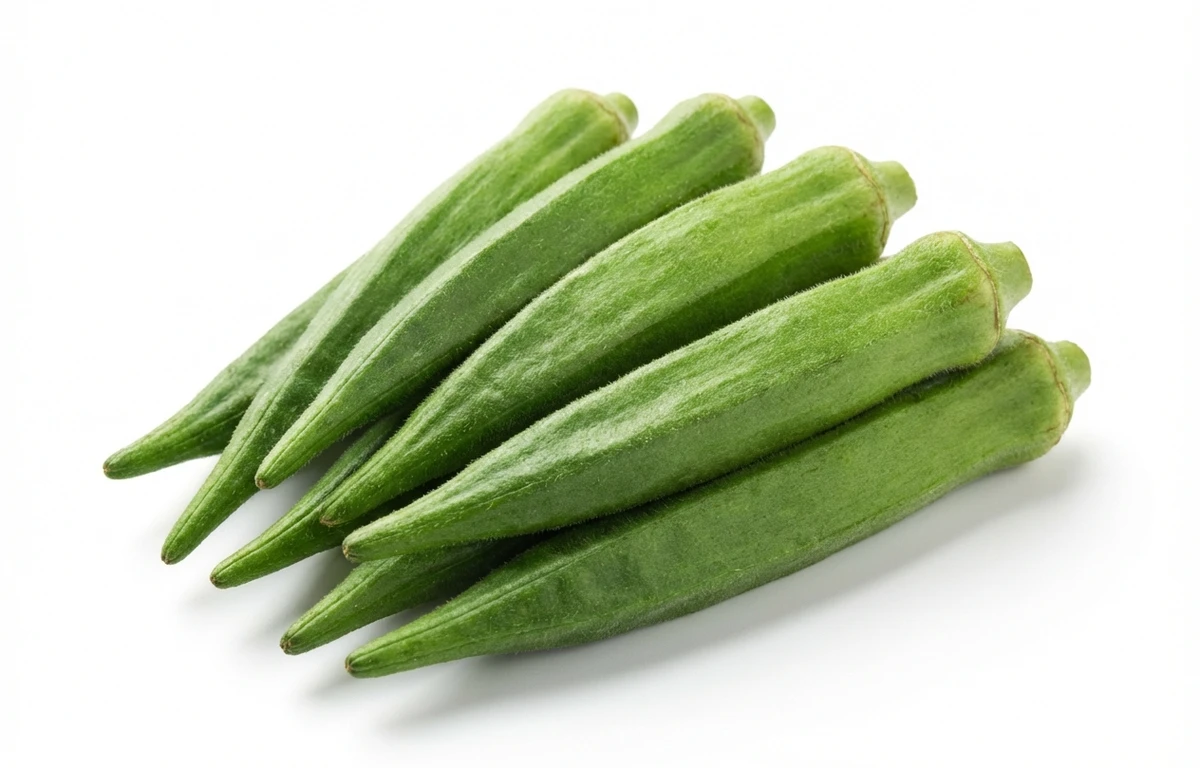
okra.
VegetarianVeganGluten-freeDairy-freeNut-freePeanut-freeSoy-freeEgg-freeShellfish-freeHoney-freeAlcohol-free
ALSO KNOWN AS
okra (bhindi), slicedokraladies' fingersfresh okralady's fingerbhindigumbobamiaokrovendakkaibendakayaquimbombo
SERVING
CALORIES
33
PROTEIN
1.9g
CARBS
7.5g
FAT
0.20g
FIBER
3.2g
This ingredient is flagged as naturally gluten-free. Per 100 g, it provides 31.3 µg of vitamin K.
NUTRITION PROFILE · per 100 g
Everything in this ingredient.
MACRONUTRIENTS
Calories33kcal—
Protein1.9g4%
Carbohydrates7.5g3%
Fiber3.2g11%
Sugar1.5g3%
Total fat0.20g0%
Saturated fat0.03g0%
Trans fat0g—
Cholesterol0mg0%
Water89.6g—
MINERALS
Sodium7.0mg0%
Potassium299mg6%
Calcium82mg6%
Iron0.60mg3%
Magnesium57mg14%
Phosphorus61mg5%
Zinc0.60mg5%
Copper0.10mg11%
Manganese0.80mg35%
Selenium0.70µg1%
VITAMINS
Vitamin A36µg4%
Vitamin C23mg26%
Vitamin D0µg0%
Vitamin E0.30mg2%
Vitamin K31.3µg26%
Thiamin (B1)0.20mg17%
Riboflavin (B2)0.10mg8%
Niacin (B3)1.0mg6%
Pantothenic acid (B5)0.20mg4%
Vitamin B60.20mg12%
Folate (B9)60µg15%
Vitamin B120µg0%
%DV based on a 2,000 cal diet. Source: USDA FoodData Central. A dash in the %DV column means there’s no established Daily Value for that nutrient.
MEASUREMENT CONVERSIONS
How much is what.
1 cup100g
1 tablespoon15g
1 teaspoon5g
1 oz28.4g
1 lb453.6g
1 ml1g
1 liter1000g
1 piece12g
HEALTH BENEFITS
Why eat it.
- ✓Good source of folate, which is important for pregnant women.
COOKING TIPS
In the kitchen.
- 1To reduce sliminess, cook okra quickly on high heat (frying or roasting) rather than simmering.
- 2Ensure okra is completely dry before cutting to minimize the release of mucilage.
- 3Adding an acidic ingredient like lemon juice, vinegar, or tomatoes can help neutralize the slime.
STORAGE
Keep it fresh.
- Store unwashed okra in a paper bag or wrapped in a paper towel inside a plastic bag.
- Keep in the refrigerator crisper drawer for up to 2-3 days.
- Avoid moisture during storage as it causes the pods to become slimy and moldy.
FAQ
Frequently asked questions.
How do I choose the best okra?
Look for pods that are bright green, firm to the touch, and free of dark spots. Smaller pods (2-4 inches) are usually more tender; larger ones can be woody.
Why is okra slimy and how can I stop it?
Okra contains mucilage, which thickens when wet. To minimize it, keep okra dry before cooking, cook it whole, or use high-heat methods like stir-frying.
Can I freeze okra?
Yes. Blanch the whole pods in boiling water for 3-4 minutes, cool in ice water, dry thoroughly, and store in freezer bags for up to a year.
What are good substitutes for okra?
If used as a thickener (like in gumbo), use file powder or a roux. If used as a vegetable side, green beans or zucchini are the best alternatives.
How long does fresh okra last?
Fresh okra is highly perishable and typically lasts only 2 to 3 days in the refrigerator before it starts to turn soft or develop black spots.
Do I need to peel okra?
No, okra does not need to be peeled. Simply wash it, pat it dry, and trim the stem ends before cooking.
Can you eat okra raw?
Yes, okra can be eaten raw. It is crunchy and can be thinly sliced into salads, though the texture may be slightly fuzzy.
RECIPES
Cook with okra.
10 recipes · sorted by what’s quick
RELATED GUIDES



















