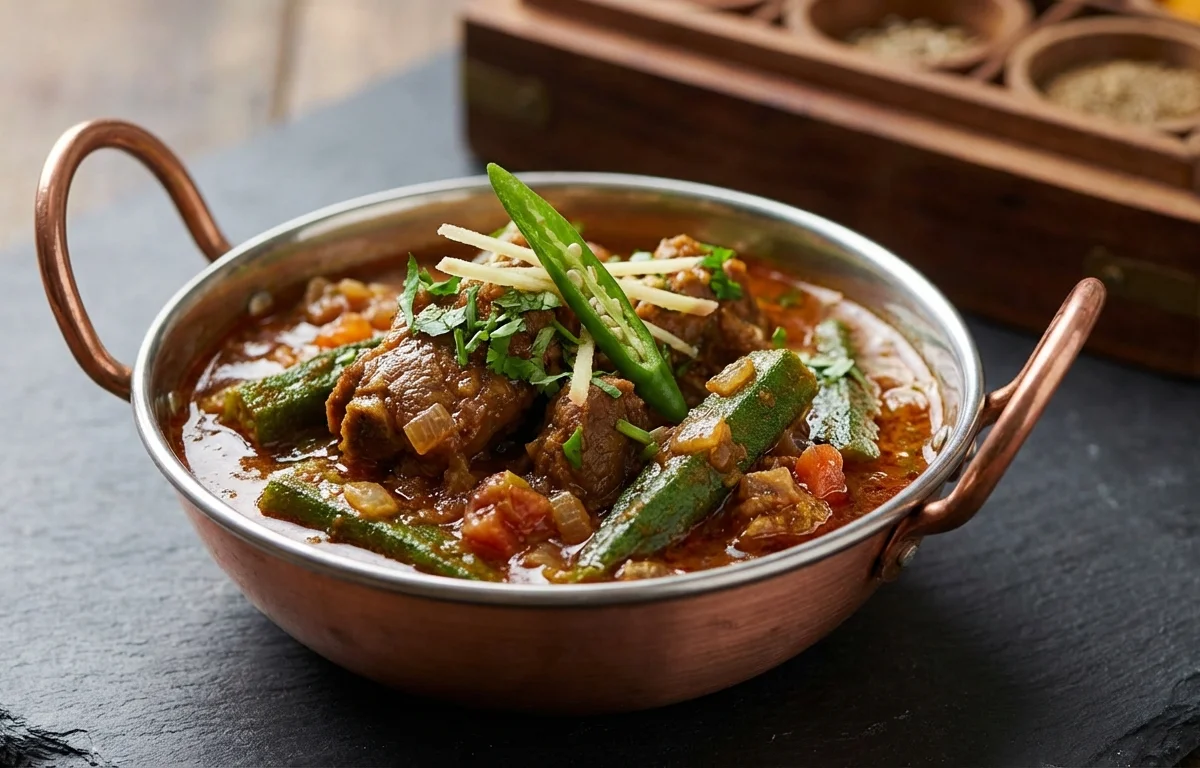
Bhindi Gosht
Tender chunks of mutton slow-cooked with slim, crisp-tender okra in a spiced onion-tomato gravy. A classic North Indian and Hyderabadi delicacy that balances the slight tartness of okra with the deep richness of bone-in meat, best mopped up with soft roti or steamed rice.
For 4 servings
- prep · ~15 min
Prep the mutton and okra.
1.Wash mutton pieces, pat dry thoroughly with a clean kitchen towel.2.Wash okra, pat completely dry, trim the ends, and slit each lengthwise without cutting all the way through.3.Slice onions thinly, chop tomatoes, slit green chilies, and whisk yogurt until smooth. - pressure cook · ~20 min
Pressure cook the mutton.
1.Place mutton pieces in the pressure cooker with 1 cup water, a pinch of turmeric powder, and 1/4 tsp salt.2.Close the lid and cook on medium heat until the first whistle.3.Reduce heat to low and cook for 15-18 minutes or 4-5 more whistles until meat is tender.4.Turn off heat and let pressure release naturally.TIPNatural release keeps the meat juicy. Don't rush it with a quick release. - fry · ~5 min
Lightly fry the okra separately.
1.Heat 1 tablespoon oil in a heavy-bottom pan over medium heat.2.Add the slit okra and sauté gently for 4-5 minutes until lightly browned and the sliminess reduces.3.Remove okra from the pan and set aside on a plate.TIPCook okra separately on medium-high heat and avoid covering the pan to keep it firm and non-slimy. - temper · ~11 min
Make the tempering and base.
1.In the same pan, heat the remaining 2 tablespoons oil over medium heat.2.Add cumin seeds, green cardamom, black cardamom, cloves, cinnamon stick, and bay leaves.3.Let whole spices sizzle and become fragrant, about 30-40 seconds.4.Add sliced onions and sauté, stirring often, until deep golden brown, about 8-10 minutes.TIPA deep brown onion color gives the gravy richness. Sprinkle a pinch of salt to speed up browning. - saute · ~8 min
Build the masala gravy.
1.Add ginger-garlic paste and slit green chilies. Sauté until raw smell disappears, about 1 minute.2.Add chopped tomatoes and cook until they soften completely and oil starts to separate, about 5 minutes.3.Turn heat to low, add turmeric powder, red chili powder, coriander powder, and cumin powder.4.Stir continuously for 30-40 seconds to toast the spices without burning.TIPKeep the heat low when adding spice powders — high heat will burn them and turn the gravy bitter. - saute · ~15 min
Cook the masala with yogurt.
1.Reduce heat to low. Add the whisked yogurt one spoon at a time, stirring continuously.2.Keep stirring for 2-3 minutes until yogurt blends smoothly into the masala and oil surfaces.3.Add the pressure-cooked mutton along with its cooking liquid. Mix well.4.Check salt and adjust. Bring to a gentle simmer and cook uncovered for 10-12 minutes until gravy thickens.TIPAlways add yogurt on low heat while stirring non-stop to prevent it from curdling. - assemble · ~6 min
Finish with okra and final touches.
1.Gently fold the lightly fried okra into the simmering gravy.2.Cook for 4-5 minutes on low heat until okra absorbs the flavors but still holds its shape.3.Sprinkle garam masala, drizzle ghee, and squeeze lemon juice over the top.4.Turn off heat. Cover and let it rest 5 minutes.TIPAdd okra only at the end and cook briefly. Overcooking makes it mushy and it will break apart. - garnish
Garnish with chopped coriander leaves and serve hot.
Transfer to a serving bowl, scatter fresh coriander leaves on top, and serve with hot rotis, naan, or steamed rice.
What to keep in mind.
6 tips from the recipe — small details that make a real difference to the final dish.
- 1Pat okra completely dry before frying to prevent sliminess.
- 2Do not skip the natural pressure release—it keeps mutton tender.
- 3Fry okra on medium-high heat uncovered to keep it crisp.
- 4Add yogurt spoon by spoon on low heat to stop it from curdling.
- 5Stir the spice powders on low heat for just 30 seconds to avoid bitterness.
- 6Rest the dish for 5 minutes before serving so flavors meld.
Adapt it for your goals.
Chicken bhindi gosht
Substitute bone-in chicken thighs for mutton and reduce pressure-cooking time to 2-3 whistles for a quicker, lighter version.
low oilLow-oil
Use a non-stick pan and reduce oil to 1.5 tbsp total; skip pressure-cooking by simmering mutton in a covered pot for 40-50 minutes until tender.
Why this is on our healthy list.
Rich in lean protein
Bone-in mutton provides high-quality protein and essential amino acids for muscle repair and satiety.
Good source of dietary fiber
Okra supplies soluble fiber that aids digestion and helps maintain stable blood sugar levels.
Packed with antioxidants
Okra is rich in vitamins C and K, along with flavonoids that combat oxidative stress.
Frequently asked questions
Sliminess happens when okra is wet or cooked covered. Dry okra thoroughly before frying and cook uncovered on medium-high heat.