Bendi Ghashi
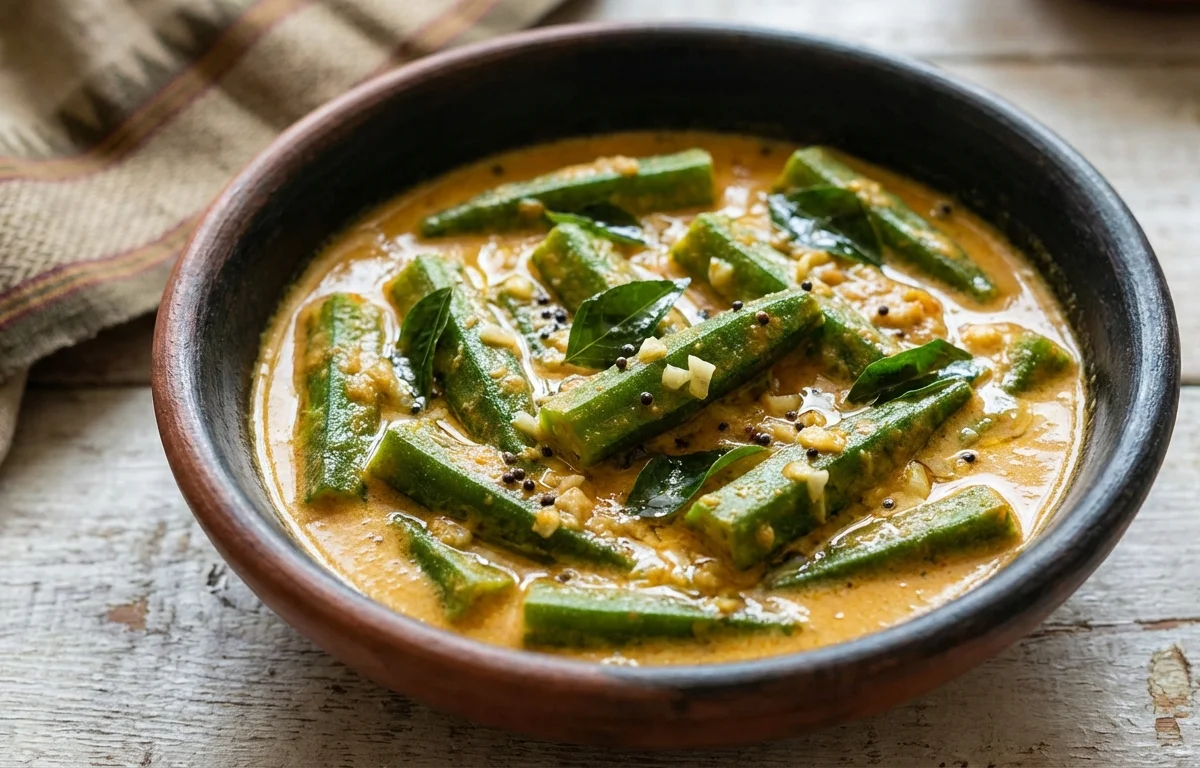
Tender okra simmered in a fragrant roasted coconut and spice masala, finished with a tangy tamarind kick. This coastal Karnataka classic is light, flavorful, and pairs beautifully with steamed rice.
For 4 servings
- prep · ~10 min
Wash, dry, and cut the okra.
Wash the okra thoroughly under running water. Pat each one completely dry with a kitchen towel to avoid sliminess. Trim the ends and cut into 1-inch pieces.
TIPCompletely dry okra ensures it stays crisp and not slimy while cooking. - roast · ~7 min
Dry roast the coconut and spices.
1.Heat a small pan on medium-low heat. Add the grated coconut and dry roast until light golden brown, stirring continuously (3-4 min).2.Add dried red chilies, coriander seeds, cumin seeds, and fenugreek seeds. Roast until aromatic (2-3 min).3.Transfer to a plate and let cool completely.TIPKeep the heat low and stir constantly to avoid burning the coconut. - mix · ~3 min
Grind the roasted masala.
In a mixer grinder, add the cooled roasted coconut-spice mixture, soaked tamarind, jaggery, turmeric powder, and salt. Add 0.25 cup water and grind to a smooth, thick paste. Set aside.
TIPGrind with as little water as possible for a thick, rich masala. - saute · ~8 min
Sauté the okra until lightly browned.
1.Heat 1 tablespoon coconut oil in a heavy bottom pan over medium heat.2.Add the cut okra pieces and sauté, stirring gently, until they are lightly browned and no longer slimy (7-8 min).3.Remove the okra from the pan and set aside.TIPStir gently and minimally to avoid breaking the okra pieces. - simmer · ~10 min
Combine masala and okra, then simmer.
1.In the same pan, add the ground masala paste. Add 0.25 cup water to adjust consistency.2.Bring the masala to a gentle simmer over low heat, stirring occasionally (2-3 min).3.Add the sautéed okra back to the pan. Mix gently to coat the okra with the masala.4.Cover and simmer on low heat for 5-7 minutes to let the flavors meld.TIPThe curry should be thick enough to coat the okra, not watery. - temper · ~2 min
Prepare the tempering.
1.In a small tempering pan, heat 1 teaspoon coconut oil over medium heat.2.Add mustard seeds and let them splutter (30 sec).3.Add curry leaves and fry until crisp (10 sec).4.Pour the tempering immediately over the simmering curry. - mix · ~1 min
Mix the tempering gently into the Bendi Ghashi.
Swirl the pan gently to mix the tempering without mashing the okra. Turn off the heat.
- serve · ~5 min
Serve hot with steamed rice.
Let the Bendi Ghashi rest for 5 minutes. Serve warm with steamed rice and a drizzle of extra coconut oil if desired.
TIPBendi Ghashi tastes even better after resting, as the flavors deepen.
What to keep in mind.
7 tips from the recipe — small details that make a real difference to the final dish.
- 1Dry okra thoroughly after washing to prevent sliminess during sautéing.
- 2Roast the coconut on low heat, stirring constantly, until golden for maximum aroma.
- 3Grind the masala with as little water as possible for a thick, rich paste.
- 4Sauté okra until browned and no longer slimy before adding the masala.
- 5Add the tamarind paste through the masala grind, not directly to the curry.
- 6Let the dish rest for 5 minutes after cooking to let flavors deepen.
- 7Use fresh curry leaves for the tempering for an authentic coastal aroma.
Adapt it for your goals.
Low-oil
Reduce coconut oil to 1 teaspoon for sautéing okra and skip or reduce the tempering oil. The masala itself provides enough moisture and flavor.
high proteinHigh-protein
Add 100g of cooked chickpeas or paneer cubes along with the okra in step 5 for a more filling meal.
veganVegan
This recipe is naturally vegan as written — just confirm jaggery is vegan-friendly (some are processed with bone char).
lower spiceLower-spice
Use only 2 dried red chilies or substitute with mild Kashmiri chilies for a less spicy version that retains color.
gluten freeGluten-free
This dish is naturally gluten-free; just ensure your tamarind paste and jaggery are certified gluten-free.
Why this is on our healthy list.
Rich in Dietary Fiber
Okra is a good source of soluble fiber, which aids digestion and helps maintain stable blood sugar levels.
Packed with Antioxidants
Coconut, curry leaves, and spices like fenugreek and coriander seeds are rich in antioxidants that help fight oxidative stress.
Supports Heart Health
Coconut oil contains healthy medium-chain triglycerides (MCTs) that may support metabolism and heart health in moderation.
Anti-Inflammatory Spices
Turmeric, cumin, and fenugreek have anti-inflammatory properties that can support joint health and immunity.
Source of Iron and Vitamin C
Curry leaves and tamarind provide iron and vitamin C, enhancing iron absorption and immune function.
Frequently asked questions
Wash okra and dry it completely before cutting. Sauté it in hot oil until lightly browned before adding the masala — this cooks off excess moisture and prevents sliminess.