plantain
Also known as: nendran banana, cooking banana, plantain banana
Loading...
Also known as: nendran banana, cooking banana, plantain banana
Per 100g
Nutrition data source: USDA FoodData Central
Common measurement equivalents in grams
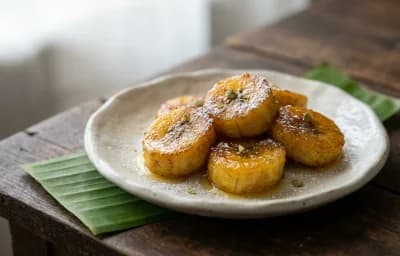
Sweet, ripe plantains fried to a perfect golden-brown caramelization. A classic Jamaican side dish that's wonderfully soft on the inside and slightly crisp on the edges. The perfect sweet and savory addition to any Caribbean meal.
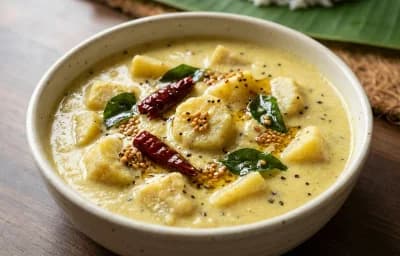
A classic Kerala Sadya dish, Kalan is a thick, tangy curry made with yam, raw plantain, and coconut, simmered in a yogurt base. Its unique sour and mildly spicy flavor is truly unforgettable.
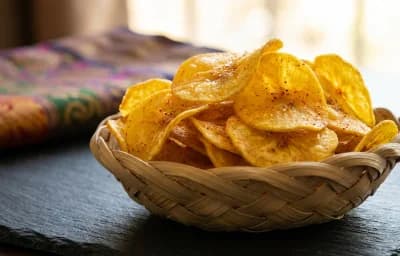
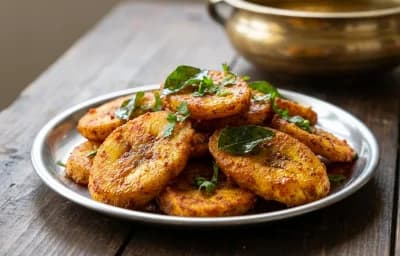
Crispy, savory, and incredibly addictive, these South Indian raw banana chips are a classic snack. Thinly sliced plantains are fried to golden perfection and seasoned simply with salt and chili powder.
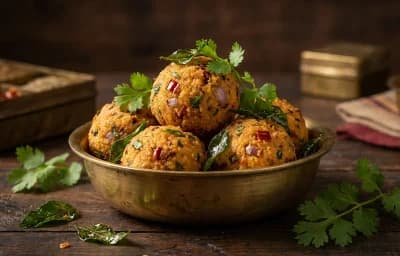
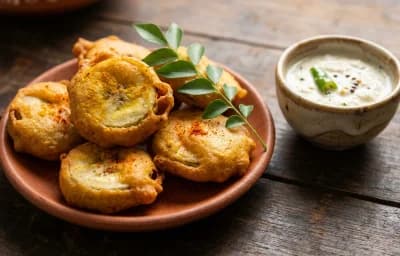
A classic Chettinad delicacy, these vegetarian 'meatballs' are made from raw plantain, coconut, and a fragrant blend of freshly ground spices. Crispy on the outside and tender on the inside, they make for an unforgettable appetizer or side dish.
Yes, plantains are very healthy. They are an excellent source of complex carbohydrates and resistant starch, providing sustained energy and promoting gut health. Plantains are also rich in potassium, vitamins A and C, and dietary fiber, all of which support heart health, immune function, and digestion.
Per 100g, plantains contain approximately 122 calories, 1.3g of protein, 31.89g of carbohydrates, and 0.37g of fat. They are particularly noted for their high carbohydrate content, primarily in the form of complex carbs and resistant starch.
Plantains can be part of a balanced weight loss diet due to their high fiber content, which promotes satiety and aids digestion. However, they are calorie-dense due to their carbohydrate content, so portion control is important. Opt for boiled or baked plantains over fried versions to reduce calorie and fat intake.
Yes, plantains are naturally gluten-free as they are a fruit, not a grain. They are also inherently vegan, being a plant-based food, making them suitable for individuals following these dietary restrictions.
Diabetics can eat plantains in moderation, but it's important to consider ripeness and cooking method. Green plantains have a lower glycemic index due to higher resistant starch, while ripe plantains have more simple sugars. Boiled or baked plantains are preferable to fried, and portion control is key to managing blood sugar levels.
Plantains must be cooked before eating and are versatile depending on their ripeness. Green plantains are starchy and often fried into savory chips (tostones) or boiled and mashed. Ripe, yellow, or black plantains are sweeter and can be baked, grilled, or fried (maduros) to a caramelized finish.
plantain is a versatile ingredient found in cuisines around the world. With 122 calories per 100g and 1.3 grams of protein, it's a nutritious addition to many dishes.
Explore more ingredients in the other category with complete nutrition information.
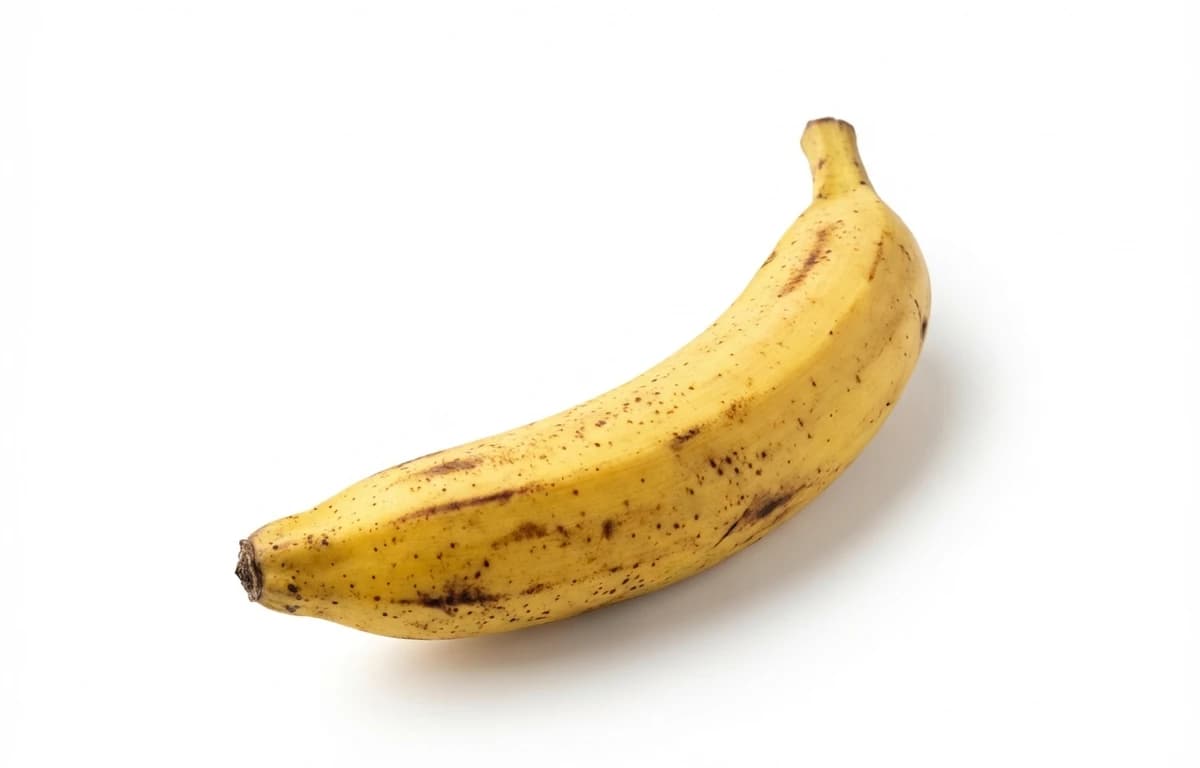
View all other →The taste of plantain varies significantly with ripeness. Green plantains are starchy, savory, and have a potato-like texture and mild flavor. As they ripen and turn yellow to black, they become progressively sweeter, softer, and develop a rich, banana-like flavor, though still firmer and less sweet than a dessert banana.
No, plantains are generally not eaten raw. Unlike dessert bananas, plantains are very starchy and firm when raw, making them unpalatable and difficult to digest. They require cooking to soften their texture and convert their starches into more digestible forms.
Store unripe (green) plantains at room temperature, similar to bananas, where they will ripen over several days. Once ripe (yellow with black spots), they can be stored in the refrigerator for up to a week to slow further ripening. Cooked plantains should be refrigerated in an airtight container for 3-4 days.
The main difference is ripeness, which dictates their culinary use and flavor. Green plantains are unripe, starchy, and savory, ideal for dishes like tostones or chips. Ripe plantains (yellow with black spots) are sweeter, softer, and used in dishes like maduros or baked preparations, as their starches have converted to sugars.