
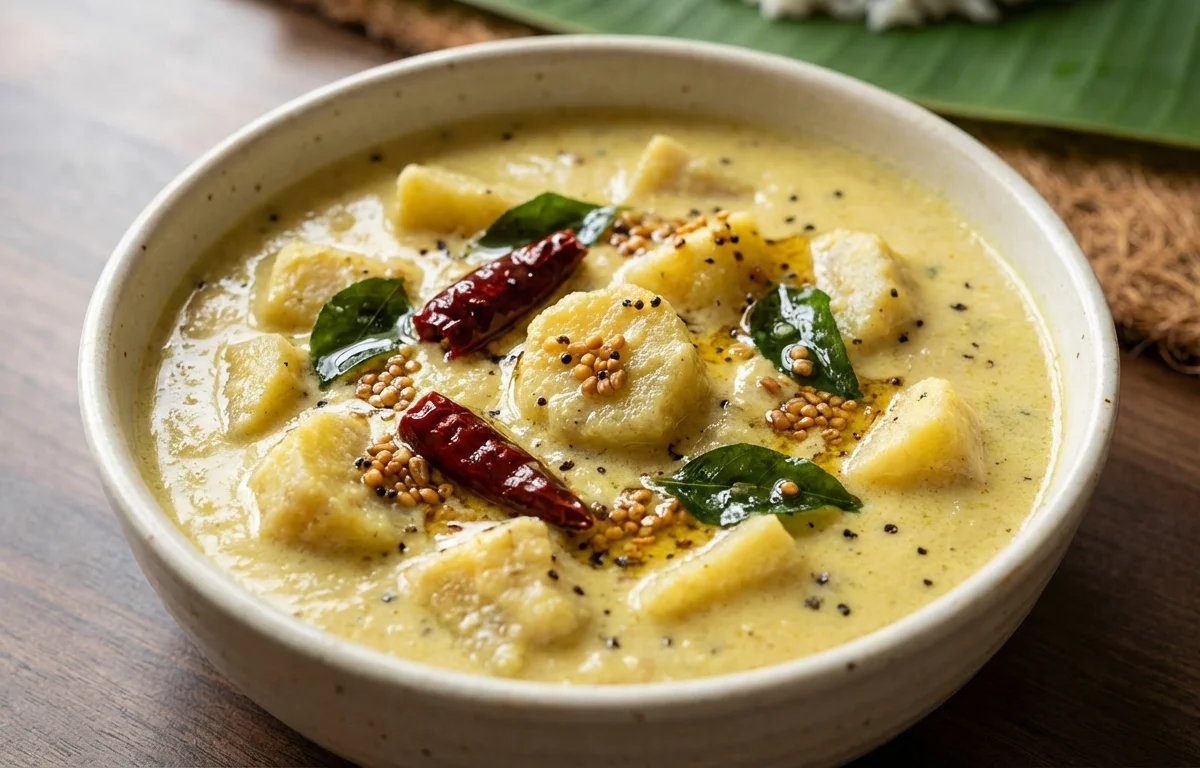
Kalan
A creamy, mildly spiced Kerala-style curry made with raw banana and yam simmered in a fragrant coconut paste, finished with thick sour yogurt. A must-have side dish for Onam Sadya, this dish balances earthy root vegetables with the tang of yogurt and the sweetness of coconut, all rounded off with a crackling coconut oil tempering of mustard seeds and curry leaves.
For 4 servings
- prep
Prepare the vegetables.
1.Peel the raw bananas and yam. Cut into bite-sized cubes.2.Place the cubed vegetables in a bowl of water to prevent discoloration.TIPRub a little coconut oil on your hands before peeling yam to avoid itching. - boil · ~15 min
Cook the vegetables with turmeric.
1.Drain the cubed banana and yam and transfer to a deep pan.2.Add 2 cups of water, turmeric powder, and salt.3.Bring to a boil, then reduce heat to medium and cook until vegetables are fork-tender (about 12-15 minutes).TIPDon't overcook—the vegetables should hold their shape and not turn mushy. - mix · ~2 min
Grind the coconut paste.
1.In a mixer grinder, combine grated coconut, cumin seeds, and green chilies.2.Add a splash of water and grind to a very smooth, fine paste. - simmer · ~6 min
Add coconut paste and simmer.
1.Once the vegetables are cooked, lower the flame to the lowest setting.2.Stir in the ground coconut paste and let it simmer gently for 5-6 minutes.3.The gravy will thicken slightly.TIPKeep the flame low—coconut paste can split if boiled vigorously. - mix · ~3 min
Incorporate the whisked yogurt.
1.Take the pan off the heat and let it cool for 2-3 minutes.2.Whisk the yogurt until completely smooth with no lumps.3.Gradually add the yogurt to the warm vegetable mixture, stirring continuously to prevent curdling.TIPAlways add yogurt off the heat and stir constantly. If the curry is too hot, the yogurt will split. - simmer · ~3 min
Gently heat the Kalan.
1.Return the pan to the lowest possible heat.2.Stir gently and warm the curry through for 2-3 minutes. Do not let it boil.3.Season with freshly ground black pepper.TIPWatch for steam rising gently; if it starts bubbling, remove from heat immediately to avoid curdling. - temper · ~2 min
Make the coconut oil tempering.
1.Heat coconut oil in a small tadka pan over medium heat.2.Add mustard seeds and let them splutter.3.Add fenugreek seeds and fry until they turn golden (10 seconds).4.Add dried red chilies and curry leaves. Fry until leaves are crisp and fragrant (15-20 seconds).TIPFenugreek seeds burn fast and turn bitter—watch the color closely. - assemble · ~5 min
Finish and serve.
1.Pour the sizzling tempering over the warm Kalan.2.Gently swirl it in—do not over-mix.3.Let it rest for 5 minutes so the flavors meld together.4.Serve warm with steamed rice.TIPKalan tastes even better after a few hours as the flavors deepen.
What to keep in mind.
7 tips from the recipe — small details that make a real difference to the final dish.
- 1Rub coconut oil on your hands before peeling yam to avoid skin irritation and itching.
- 2Cook vegetables just until fork-tender — they should hold their shape and not turn mushy.
- 3Always add yogurt off the heat and stir constantly; hot curry will cause it to curdle.
- 4Keep the flame low when simmering coconut paste — high heat can split the paste and ruin the texture.
- 5Watch fenugreek seeds closely during tempering; they burn fast and turn bitter in seconds.
- 6Let Kalan rest for 5 minutes after tempering so the flavors meld and deepen beautifully.
- 7Kalan tastes even better after a few hours — make it ahead for richer flavor.
Adapt it for your goals.
Vegan
Replace yogurt with thick coconut milk or a plant-based sour cream to keep the curry creamy and tangy while making it fully vegan.
low oilLow-oil
Skip the coconut oil tempering and instead dry-roast mustard seeds and curry leaves in a non-stick pan for a lighter version with the same aroma.
spicierSpicier
Add 1-2 more slit green chilies or a pinch of red chili powder when cooking the vegetables for a heat-forward Kalan.
high proteinHigh-protein
Stir in boiled chickpeas or cooked chana dal along with the coconut paste for added protein and a heartier texture.
Why this is on our healthy list.
Rich in Fiber
Raw banana and yam provide dietary fiber, supporting healthy digestion and promoting a feeling of fullness.
Gut-Friendly Probiotics
The yogurt in Kalan contains live cultures that aid digestion and help maintain a balanced gut microbiome.
Source of Complex Carbs
Root vegetables like raw banana and yam deliver slow-release energy, making Kalan a sustaining side dish.
Anti-Inflammatory Spices
Turmeric, cumin, and fenugreek contain compounds with anti-inflammatory properties that support overall wellness.
Frequently asked questions
The curry must be off the heat and slightly cooled — if it's too hot, the proteins in yogurt tighten and separate. Always remove the pan first and stir gently.



.webp)
.webp)