
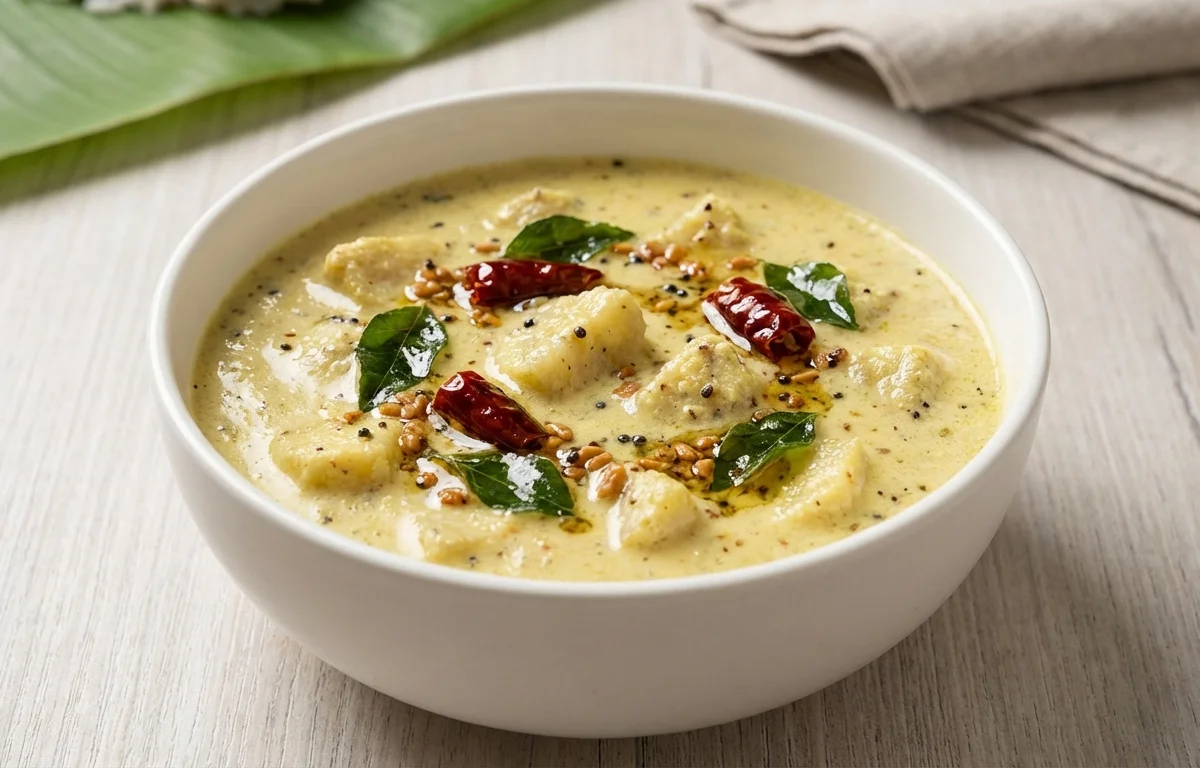
Kerala Kalan
A classic Kerala curry made with yogurt, coconut, black pepper, and vegetables like raw banana and yam. It cooks down to a thick, tangy, lightly spiced dish that is a staple on sadya feasts and tastes even better after it rests.
For 4 servings
- prep · ~10 min
Prep the vegetables and yogurt.
1.Peel the raw banana and yam, then cut them into thick bite-size cubes.2.Whisk the yogurt until smooth and keep it ready.3.Slit the green chili and measure the remaining ingredients. - mix · ~3 min
Grind the coconut paste.
Grind the grated coconut, cumin seeds, and black pepper with a little water to a smooth, thick paste.
TIPKeep the paste thick so the kalan stays rich and does not turn watery. - boil · ~15 min
Cook the vegetables.
1.Add the raw banana, yam, green chili, turmeric powder, salt, and water to a pot.2.Bring to a boil over medium heat.3.Cook until the vegetables are tender and most of the water has reduced.TIPDo not overcook the raw banana; the pieces should hold their shape. - simmer · ~5 min
Add the coconut paste and thicken the curry.
Stir the ground coconut paste into the cooked vegetables and simmer on low heat for 4 to 5 minutes, stirring often, until the mixture thickens.
- simmer · ~4 min
Stir in the yogurt gently.
Lower the heat completely and add the whisked yogurt. Stir continuously and cook gently without letting it boil, just until the curry looks creamy and slightly thicker.
TIPA hard boil can split the yogurt, so keep the heat low after adding it. - temper · ~2 min
Make the tempering.
1.Heat coconut oil in a small pan over medium heat.2.Add mustard seeds and let them splutter.3.Add fenugreek seeds, dried red chili, and curry leaves.4.Cook for a few seconds until fragrant.TIPFenugreek turns bitter quickly, so do not let it darken too much. - assemble · ~1 min
Pour the tempering over the kalan.
Pour the hot tempering over the thick yogurt curry and mix gently.
- rest · ~10 min
Let the kalan rest for 10 minutes.
- serve
Serve with rice as part of a Kerala meal.
What to keep in mind.
7 tips from the recipe — small details that make a real difference to the final dish.
- 1Cut the raw banana and yam into similar thick cubes so both finish cooking evenly without one turning mushy.
- 2Reduce the vegetable cooking liquid well before adding the coconut paste; kalan should be thick, not pourable like moru curry.
- 3After the yogurt goes in, keep the flame very low and stir constantly to prevent curdling or graininess.
- 4Use slightly sour yogurt for the classic tang, but whisk it smooth first so it blends into a creamy sauce.
- 5Temper the fenugreek only briefly; once it darkens too much, the whole curry can taste bitter.
- 6Let the kalan rest before serving, or chill and rewarm gently later; the tang and pepper deepen noticeably after sitting.
- 7If reheating leftovers, do it on the lowest heat and avoid boiling so the yogurt stays smooth.
Adapt it for your goals.
Sadya-style
Use only raw banana and yam, keep the curry quite thick, and allow it to rest before serving for a more traditional feast version.
more tangyMore-tangy
Use slightly more sour yogurt if you prefer a sharper, more mature kalan flavor that pairs especially well with plain rice.
milderMilder
Reduce the green chili and black pepper for a gentler version that still keeps the coconut and yogurt flavors prominent.
yam freeYam-free
Make it with only raw banana if yam is unavailable; the curry will still be thick, creamy, and true to the dish's character.
Why this is on our healthy list.
Good Source of Fiber
Raw banana, yam, coconut, and spices make this curry a fiber-rich side that feels satisfying alongside rice.
Contains Fermented Dairy
Yogurt adds tang, creaminess, and beneficial fermented dairy elements while balancing the richness of coconut.
Plant-Based Vegetable Variety
The combination of yam and raw banana brings different textures and a broader mix of plant nutrients to the meal.
Digestive Spice Support
Cumin, black pepper, fenugreek, and curry leaves contribute aroma and traditional digestive-supporting spice elements.
Frequently asked questions
The heat was likely too high. Add whisked yogurt only on very low heat and never let the curry boil after it goes in.



.webp)
.webp)