Loading...
Also known as:
Per 100g
Nutrition data source: USDA FoodData Central
Common measurement equivalents in grams

A classic Bengali stir-fry featuring tender pointed gourd and crispy potatoes, seasoned with nigella seeds. This simple and comforting side dish comes together quickly and pairs perfectly with dal and steamed rice.

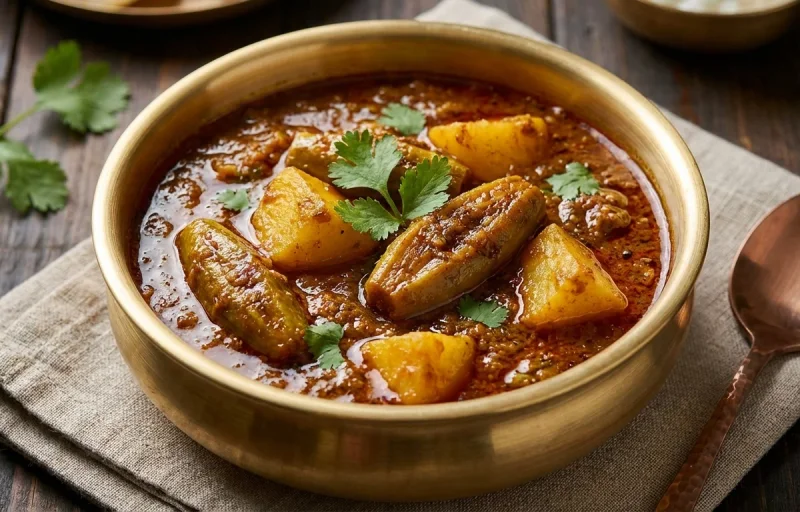
A classic Bengali comfort food featuring tender pointed gourd and potatoes slow-cooked in a rich, spicy masala. This semi-dry curry is packed with flavor and pairs perfectly with luchis or steamed rice.

A classic Odia curry where tender pointed gourd is cooked in a tangy and mildly spiced yogurt gravy. This comforting dish pairs perfectly with hot rice or rotis for a wholesome meal.

A classic Odia dish where tender pointed gourd is simmered in a pungent and flavorful mustard seed gravy. This rustic curry, with its unique sharp taste from mustard oil, is a staple in Odia households.
Yes, potala is very healthy. It's low in calories and fat, rich in dietary fiber, and a good source of vitamins A and C. It supports digestion, boosts immunity, and provides antioxidants, contributing to overall well-being.
Potala is low in calories (24 cal/100g) and fat (0.3g/100g), with a good amount of protein (2g/100g) and carbohydrates (2.2g/100g). It's particularly rich in dietary fiber, Vitamin C, Vitamin A, and various antioxidants like flavonoids and carotenoids.
Yes, potala is excellent for weight loss. It's very low in calories and high in water content and dietary fiber, which helps promote satiety and aids in healthy digestion, making it a filling yet light food choice.
Yes, potala is generally suitable for diabetics. Its low carbohydrate content (2.2g/100g) and high fiber content can help manage blood sugar levels, preventing sharp spikes and supporting stable glucose metabolism.
Yes, as a natural vegetable, potala is inherently vegan and gluten-free. It is a plant-based food suitable for those following these dietary restrictions and is free from animal products or gluten-containing grains.
Potala can be cooked in various ways, often stir-fried, curried, or added to stews. It can be sautéed with spices, boiled, or roasted. It's commonly used in South Asian cuisine, where it's often paired with other vegetables or lentils.
Potala has a mild, slightly bitter taste, often described as similar to bitter gourd but less intense. Its texture is firm when raw and becomes tender and somewhat spongy when cooked, absorbing flavors well.
potala is a versatile ingredient found in cuisines around the world. With 24 calories per 100g and 2 grams of protein, it's a nutritious addition to many dishes.
Explore more ingredients in the vegetable category with complete nutrition information.
View all vegetable →Explore more ingredients similar to potala.
The most-searched ingredients on CraftMyMeals.
Store fresh potala in a cool, dry place or in the refrigerator's crisper drawer. Placing it in a perforated plastic bag can help maintain its freshness for up to a week, preventing it from drying out or spoiling quickly.
Look for potala that is firm, bright green, and free from blemishes, soft spots, or yellowing. A fresh potala will feel heavy for its size and have a smooth, unwrinkled skin, indicating good quality.
While technically edible raw, potala is typically cooked to reduce its slight bitterness and improve its texture and palatability. Cooking also makes its nutrients more bioavailable and easier for the body to absorb.