
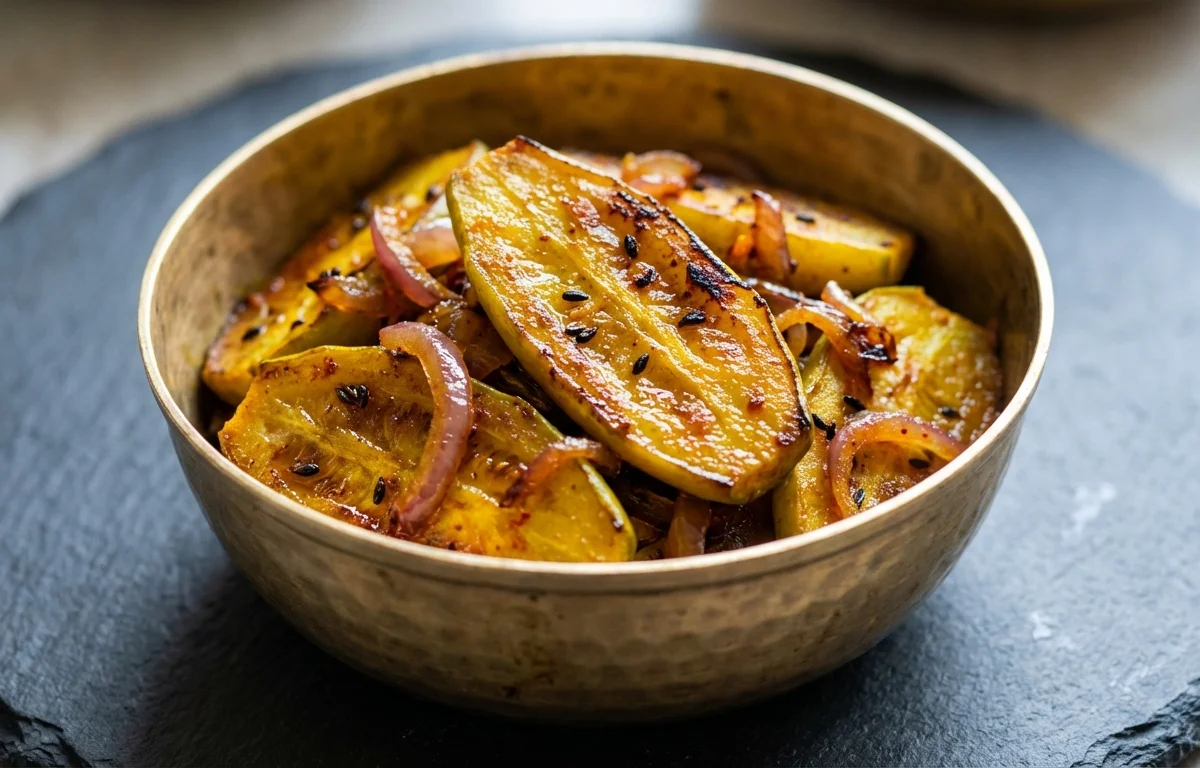
Potala Bhaja
A simple Bengali stir-fry of pointed gourd that turns lightly crisp at the edges and soft inside. Seasoned with just turmeric, salt, and a hint of chili, it is an everyday side that tastes wonderful with dal and rice.
For 4 servings
- prep · ~10 min
Prep the potol.
1.Wash the pointed gourd well and trim both ends.2.Peel the skin in alternating strips so some skin remains for texture.3.Slice each one lengthwise into halves or quarters, depending on size. - mix · ~2 min
Season the vegetable.
Place the sliced pointed gourd in a bowl with turmeric powder, red chili powder, and salt. Toss well so the pieces are lightly and evenly coated.
- fry · ~18 min
Fry the potol until tender and lightly crisp.
1.Heat mustard oil in a wide pan over medium heat until it just begins to smoke lightly, then lower the heat.2.Add the seasoned pointed gourd in a single layer as much as possible.3.Cook, turning every few minutes, until the pieces are tender inside and golden at the edges, 15 to 18 minutes.TIPKeep the heat at medium so the outside browns slowly without burning before the inside softens. - serve · ~1 min
Serve hot.
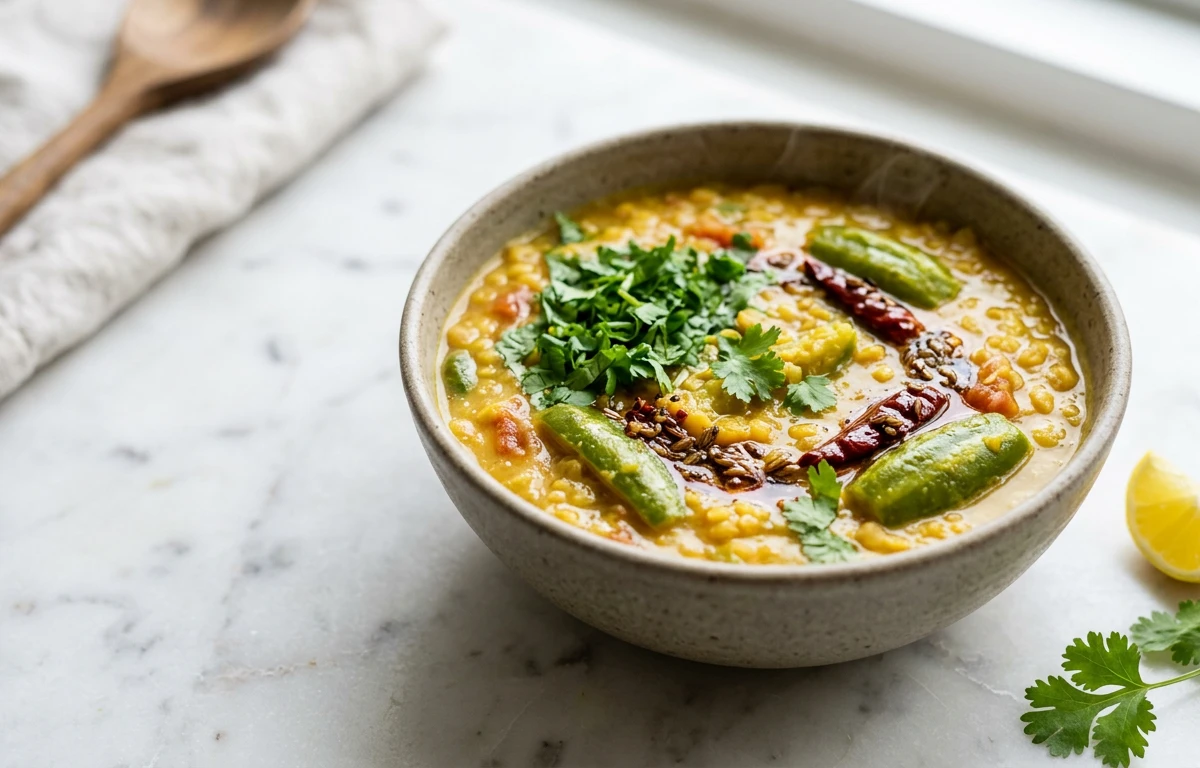
Transfer to a serving bowl and serve hot with plain rice and dal.
What to keep in mind.
7 tips from the recipe — small details that make a real difference to the final dish.
- 1Leave alternating strips of skin on the potol so it holds shape and gets a pleasant mix of soft and slightly firm texture.
- 2After tossing with salt and spices, let the slices sit for 5 minutes so the seasoning clings better before they hit the pan.
- 3Use a wide pan and keep the potol as close to a single layer as possible; crowding makes it steam instead of bhaja.
- 4Heat the mustard oil until just smoking, then reduce the flame before adding the potol to mellow the oil's sharp raw taste.
- 5Turn the pieces only every few minutes; constant stirring prevents the golden, lightly crisp edges that make this dish special.
- 6Cook until a knife slips in easily but the pieces are not collapsing, since overcooked potol can turn watery and dull.
- 7Leftovers reheat best in a skillet, not the microwave, so the edges regain some crispness.
Adapt it for your goals.
Low-oil
Use a well-seasoned nonstick or cast-iron pan and reduce the mustard oil slightly; you will get a lighter everyday bhaja with less richness.
jhalJhal
Increase the red chili powder a little for a spicier version that pairs especially well with plain rice and musur dal.
panch phoronPanch-phoron
Temper a small pinch of panch phoron in the hot mustard oil before adding the potol for a more aromatic Bengali home-style variation.
onion free satvikOnion-free satvik
This recipe is already a simple no-onion, no-garlic bhaja, ideal when you want a clean, minimal side dish.
Why this is on our healthy list.
Vegetable-forward side
Pointed gourd makes this a simple, plant-based side dish that adds vegetable variety to a rice-and-dal meal.
Lightly spiced and simple
With only turmeric, chili, and salt, the dish stays easy on the palate while still bringing color and flavor.
Moderate ingredient list
The short list of ingredients keeps the dish uncomplicated and lets the main vegetable remain the focus.
Frequently asked questions
No. Peeling in alternating strips is traditional here because it keeps some texture and helps the pieces stay intact while frying.




-curry.webp)
.webp)