Potala Besara
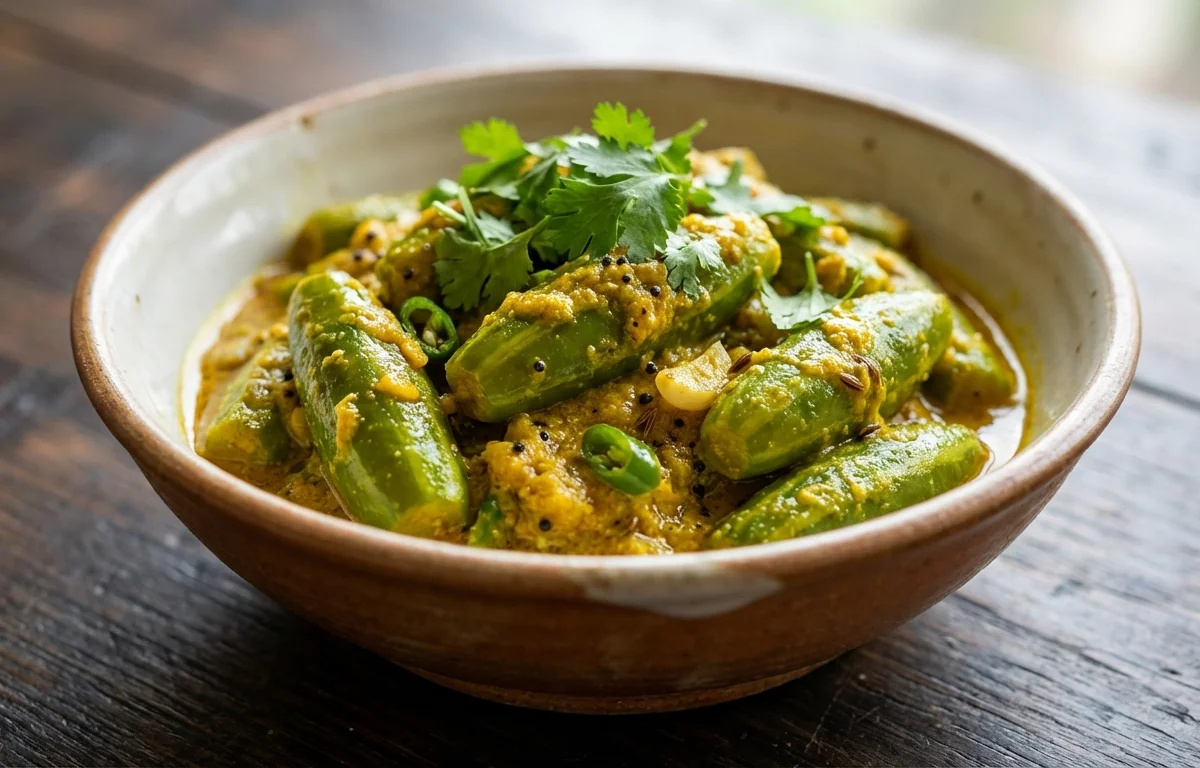
Tender pointed gourd cooked in a lightly spiced mustard and poppy seed paste, this classic Odia dish is simple, earthy, and full of gentle heat. It tastes especially good with plain rice and a little dal on the side.
For 4 servings
- prep · ~15 min
Soak the mustard and poppy seeds.
Soak the mustard seeds and poppy seeds in a little water for 15 minutes so they grind smoothly and lose some of their bitterness.
TIPA short soak helps the mustard paste turn smoother and less harsh. - mix · ~3 min
Grind the besara paste.
1.Drain the soaked mustard seeds and poppy seeds.2.Add them to a grinder with grated coconut, 1 green chili, turmeric powder, and a little water.3.Grind to a smooth, thick paste. - prep · ~5 min
Prepare the pointed gourd.
Peel the pointed gourd in alternating stripes, trim the ends, and slit each one lengthwise. Keep them whole so they hold their shape while cooking.
- saute · ~7 min
Cook the pointed gourd.
1.Heat mustard oil in a pan over medium heat.2.Add panch phoron and bay leaf and let them turn fragrant.3.Add the pointed gourd and sauté for 5 to 6 minutes until lightly blistered.4.Add salt and the remaining green chili, slit lengthwise.TIPCook on medium heat so the pointed gourd softens without burning the spices. - simmer · ~10 min
Add the mustard paste and cook gently.
Lower the heat and add the ground mustard paste with the remaining water. Mix gently, cover, and cook for 8 to 10 minutes until the pointed gourd is tender and the masala lightly coats it.
TIPDo not boil hard after adding mustard paste, or it can turn bitter. - serve
Serve the Potala Besara hot.
What to keep in mind.
6 tips from the recipe — small details that make a real difference to the final dish.
- 1Soak the mustard and poppy seeds just long enough to soften; over-soaking can dull the sharp mustard flavor.
- 2Peel the pointed gourd in alternating stripes so it cooks evenly while still holding its shape in the pan.
- 3Blister the potala lightly before adding the paste; this gives better texture and prevents it from tasting watery.
- 4Keep the mustard paste thick while grinding, or the final gravy can become thin instead of coating the vegetables.
- 5Once the besara paste goes in, cook on low heat and avoid a rolling boil so the mustard stays mellow, not bitter.
- 6If making ahead, reheat very gently with a splash of water; harsh reheating can split the mustard sauce.
Adapt it for your goals.
Low-oil
Use less mustard oil and add a spoonful of water while sautéing the potala; good if you want a lighter everyday version.
spicierSpicier
Add an extra green chili to the paste or tempering for more heat without changing the classic Odia character.
potato addedPotato-added
Add cubed potatoes with the pointed gourd for a heartier, more filling besara that pairs especially well with rice and dal.
no poppy seedNo-poppy-seed
Skip the poppy seeds and increase coconut slightly if poppy seeds are unavailable; the gravy will still be creamy with mustard flavor.
Why this is on our healthy list.
Vegetable-Forward Main
Pointed gourd makes this dish light yet satisfying, adding fiber and plant nutrients in a simple, minimally processed form.
Good Fats from Seeds and Coconut
Mustard seeds, poppy seeds, coconut, and mustard oil add richness and help make the dish filling without relying on heavy cream.
Spice-Based Flavoring
Green chili, turmeric, panch phoron, and mustard build strong flavor naturally, so the dish stays vibrant with modest ingredients.
Frequently asked questions
Mustard paste often turns bitter if it is boiled hard or cooked on high heat. Simmer it gently after adding to the pan.